Commercial Acrylic Roof Coatings in Longmont, CO
Acrylic roof coatings are the value-leading coating chemistry in commercial roofing, significantly less expensive per gallon than silicone, easier to apply, and capable of delivering excellent cool-roof reflectivity for energy-conscious commercial buildings. For Longmont, CO commercial flat roofs with adequate drainage and aging surfaces, commercial acrylic roof coatings can extend service life by 10 to 15 years, qualify for ENERGY STAR ratings, and stop surface-level leaks at a fraction of the cost of full replacement. Acrylic isn’t the right answer for every commercial roof, but when the conditions fit, it produces a strong cost-per-year outcome.
Baseline Roofing and Solar specifies and applies commercial acrylic roof coating systems across Longmont, CO and communities throughout Colorado. We’re certified to install acrylic systems from the major manufacturers, and because we’re certified across silicone, metal, and full-membrane systems too. We’ll tell you straight whether acrylic is genuinely the right call for your specific roof, or whether silicone (better for ponding water) or replacement (better for failed systems) would actually serve you better.
This page covers what acrylic coatings actually deliver, where they win versus silicone and other coatings, the real limitations to understand before choosing acrylic, the application process, and how acrylic systems perform in Colorado’s specific climate.
What an Acrylic Roof Coating Actually Is
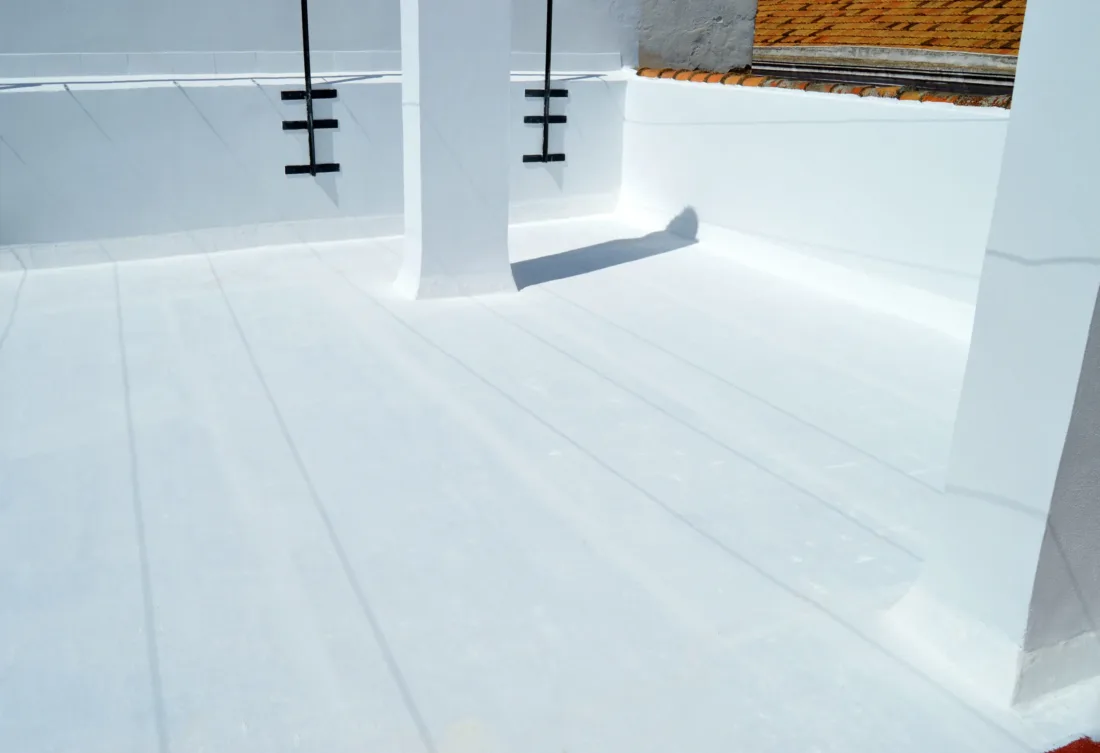
Acrylic roof coatings are water-based, elastomeric liquid membranes formulated from acrylic polymer resins suspended in water. Once applied to a properly prepared substrate and allowed to dry (water evaporates, leaving a continuous polymer film behind), the cured coating forms a flexible, reflective, fully-adhered protective layer over the existing roof system.
Acrylics are the most widely used coating chemistry in commercial roofing nationally, primarily because of their cost advantage and ease of application. The water-based formulation means cleanup is straightforward, application doesn’t require specialized equipment for most projects, and worker exposure to volatile solvents is minimal. For projects where the application conditions and roof requirements line up, acrylic delivers solid performance at a competitive price.
The Real Advantages of Acrylic Coatings in Longmont, CO
Acrylic has specific advantages that make it the right call on the right roofs.
Class-leading reflectivity for cool-roof savings.
White acrylic coatings carry initial solar reflectance values typically above 0.85 and high thermal emittance, comparable to silicone and qualifying for ENERGY STAR ratings on most major systems. Reflectivity reduces summer cooling loads on the building below, lowers HVAC energy use, and meets cool-roof code requirements where applicable.
Significantly lower upfront cost than silicone.
Acrylic material costs 30% to 50% less per gallon than silicone, and labor isn’t materially different. On a typical commercial flat roof, the installed cost of an acrylic system can run 20% to 40% lower than equivalent silicone application. For roofs where ponding isn’t an issue, that cost difference adds up to real savings.
Easier application than silicone.
Acrylic is water-based and forgiving on application technique. Cleanup is straightforward (water, before the coating fully dries). The coating doesn’t have silicone’s moisture-cure complexity, application is simply about getting the right film build, in good weather, with proper substrate prep. Most acrylic systems also tolerate a wider range of substrate temperatures than silicone.
Stays cleaner than silicone over time.
Cured acrylic doesn’t have the slight surface tackiness that silicone has, so it picks up less airborne dirt over years of exposure. White acrylic roofs typically retain their reflectivity better than white silicone roofs, useful when long-term cool-roof performance is a priority.
Future flexibility for recoating.
Unlike silicone, an acrylic-coated roof isn’t locked into one chemistry forever. When the coating needs to be redone in 10 to 15 years, the recoat can be acrylic again, or you can switch to a different system entirely if circumstances have changed. This flexibility is a real advantage for owners who want to keep their options open.
Lower VOCs and easier environmental compliance.
Water-based acrylics carry significantly lower VOC content than solvent-based coatings, which simplifies compliance with environmental regulations and reduces worker exposure on the project.
The Honest Limitations of Acrylic Coatings
Acrylic has real trade-offs we’d rather flag up front than have you discover later.
Poor ponding water resistance.
This is the headline limitation. Standing water on cured acrylic causes the coating to soften, swell, and eventually lose adhesion. For commercial flat roofs with persistent ponding, which is common on aging Longmont, CO buildings with original drainage that no longer matches actual rainfall, acrylic is the wrong chemistry. Silicone handles ponding; acrylic doesn’t. Don’t put acrylic on a ponding roof.
Shorter service life than silicone.
Acrylic systems typically deliver 10 to 15 years of service life with manufacturer warranties in the same range. Silicone systems commonly run 15 to 20+ years. On a per-year cost basis, acrylic can still come out ahead due to its lower upfront cost, but the recoating interval is shorter.
Multiple coats required for proper film build.
Most acrylic systems require two or three application passes to reach the manufacturer-specified mil thickness. Silicone often achieves the required thickness in a single pass. The extra labor on acrylic application offsets some of the material cost savings.
Weather-sensitive application window.
Acrylic needs warm, dry weather to cure properly, typically substrate temperatures above 50°F and rising, and no rain for 24 to 48 hours after application depending on the product. Cold weather extends cure times significantly, and rain during cure can wash uncured coating off the roof. Application windows in Longmont, CO are limited to warmer months.
More vulnerable to UV degradation than silicone in extreme exposure.
Modern acrylic formulations have excellent UV resistance, but silicone is still measurably better. On Longmont, CO’s high-altitude commercial roofs with full sun exposure, this difference shows up over the system’s service life.
Where Acrylic Coatings Work Best
Acrylic is the right call in these specific situations:
- Commercial flat roofs with positive slope and good drainage (no ponding water)
- Aging single-ply membranes (TPO, EPDM, PVC) with surface-level wear and adequate drainage
- Modified bitumen and built-up roofs with sound underlying systems
- Metal commercial roofs being restored (where elastomeric acrylic systems excel)
- Buildings prioritizing cool-roof reflectivity and ENERGY STAR compliance
- Budget-constrained projects where the cost difference vs silicone matters
- Properties where future flexibility on recoat chemistry is valued
Acrylic is not the right answer when ponding water is present, when the roof has saturated insulation or system-wide failure, or when the project requires the longest possible service life regardless of upfront cost.
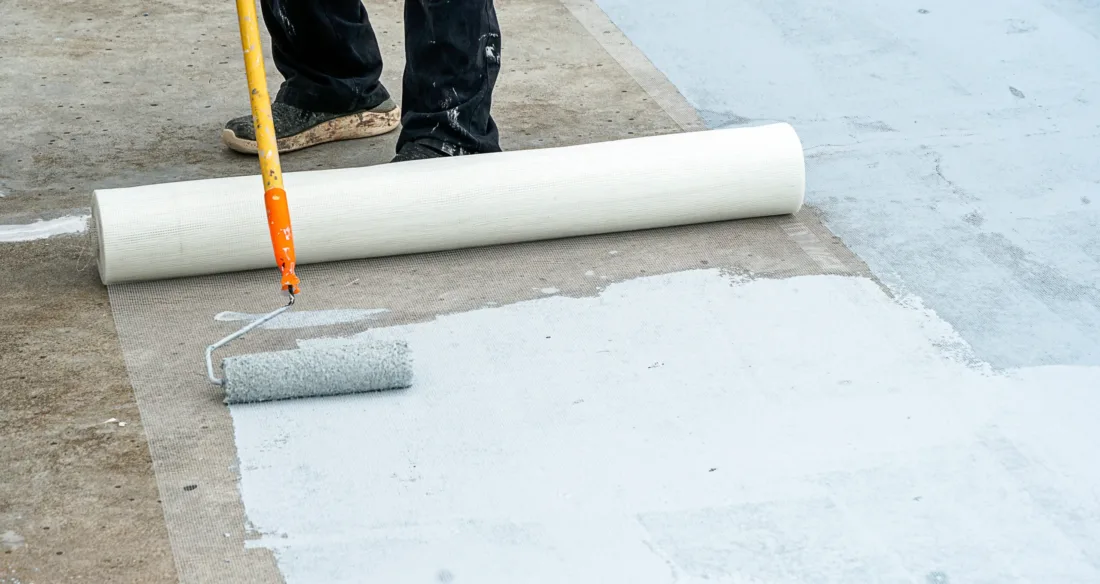
How We Apply Acrylic Coating Systems
Acrylic application is more forgiving than silicone, but “more forgiving” isn’t the same as “foolproof.” Most acrylic failures we see on roofs originally done by other contractors trace back to the same set of mistakes: poor surface prep, wrong primer, too few coats, applying in marginal weather. Our process avoids all of them.
- Roof inspection and substrate confirmation. We confirm the existing roof is suitable for acrylic coating, particularly verifying drainage, since ponding disqualifies acrylic.
- Repairs and detail work. Damaged seams, flashings, and penetrations are repaired before coating begins.
- Surface preparation. The roof is power-washed to remove dirt, oxidation, biological growth, and contaminants. Acrylic adhesion depends on a genuinely clean substrate.
- Primer application. Most acrylic systems require a manufacturer-approved primer for reliable adhesion, particularly on aged single-ply membranes, modified bitumen, and metal substrates.
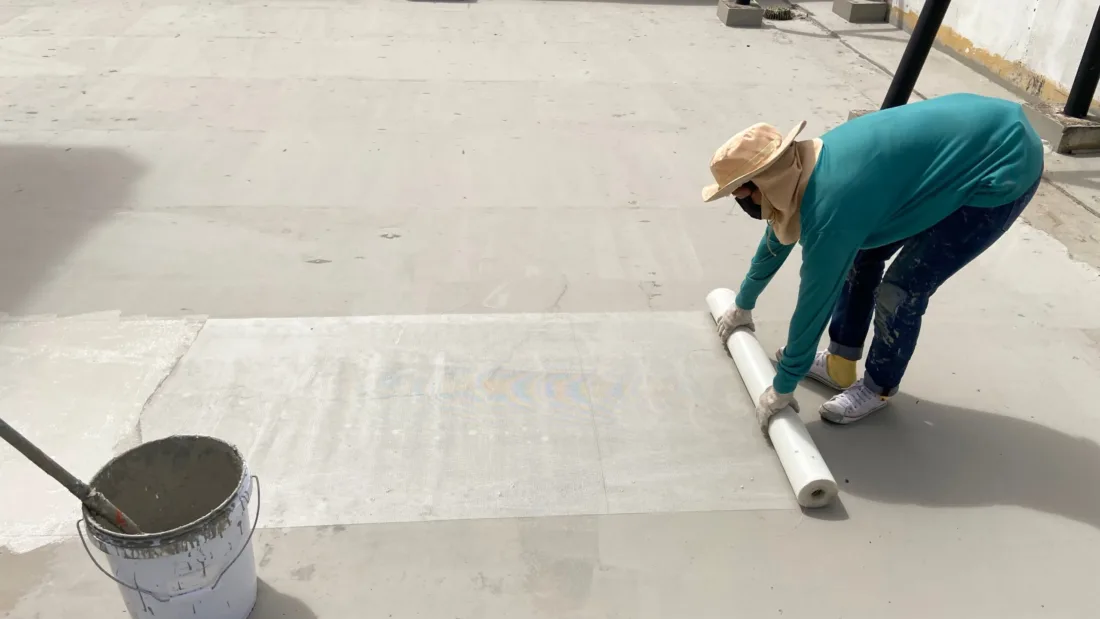
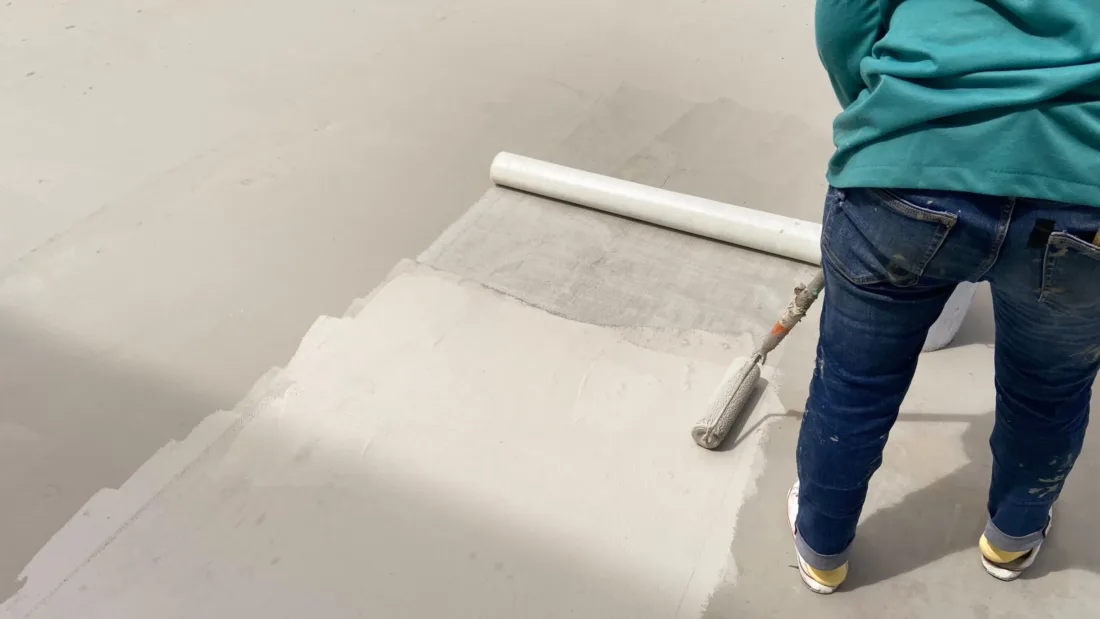
- Detail reinforcement. Seams, penetrations, and high-stress areas are reinforced with manufacturer-approved fabric embedded in acrylic at the detail step.
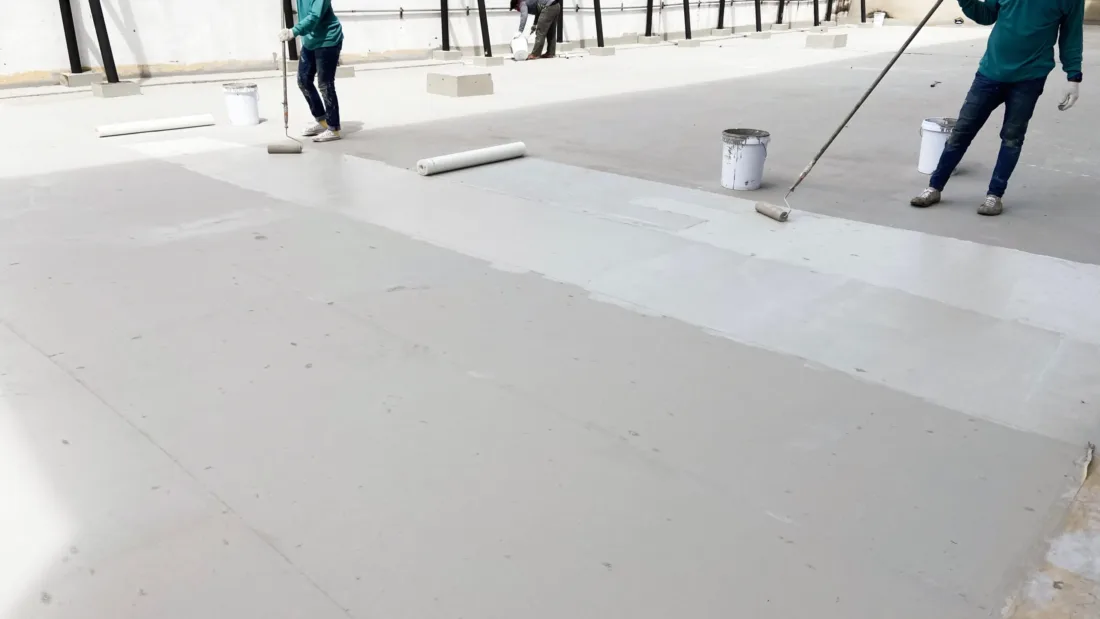
- First coat (base coat). Applied at the manufacturer-specified mil thickness, allowed to cure to handling cure before the next coat.
- Second coat (top coat). Applied to reach total system thickness, with the top coat typically a different color or product to verify full coverage.
- Cure window protection. The roof is protected from rain and traffic during cure, typically 24 to 72 hours depending on temperature and humidity.
- Inspection and warranty registration. Final inspection, photo documentation, manufacturer warranty registration, and our workmanship warranty in writing.
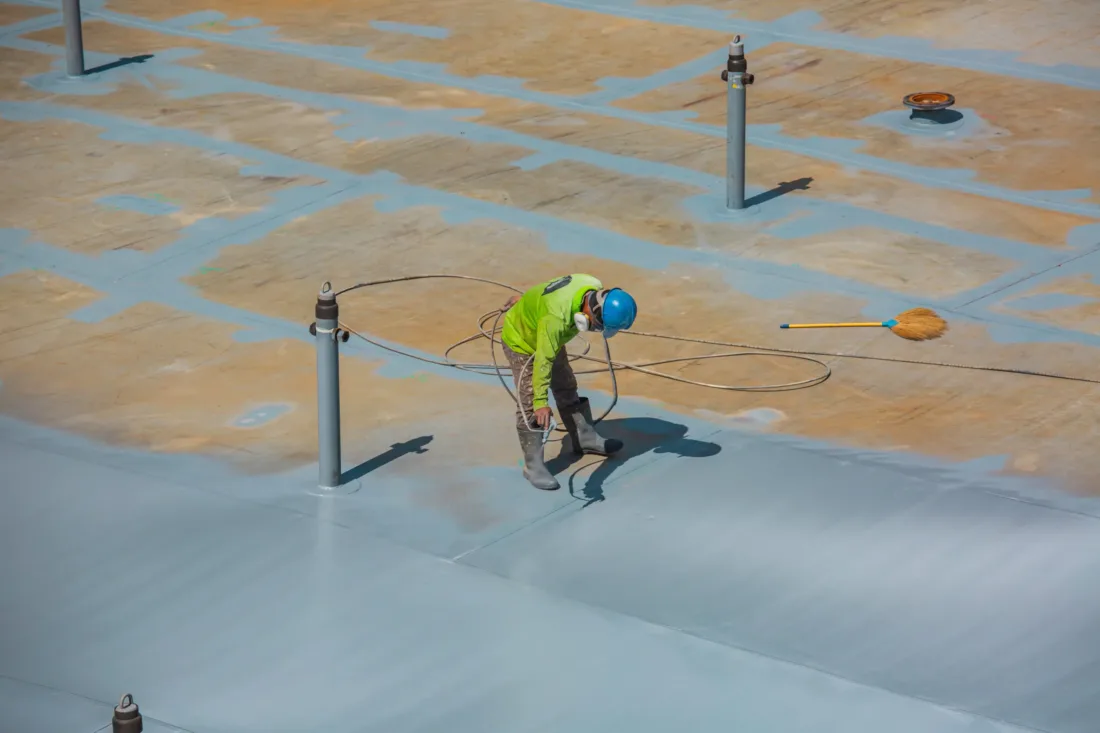
Acrylic Coatings and Longmont, CO’s Climate
Colorado’s climate has a complicated relationship with acrylic coatings, strong fit on some factors, marginal on others.
High-altitude UV: marginal.
Modern acrylic UV stabilizers handle Longmont, CO UV reasonably well, but silicone is measurably better at altitude. On full-sun roofs facing Longmont, CO’s high-elevation UV intensity for the full 15+ year service life, silicone’s UV stability advantage matters.
Cool-roof reflectivity: excellent fit.
Longmont, CO’s hot summers make cool-roof reflectivity genuinely valuable. White acrylic systems deliver some of the highest sustained reflectance of any commercial coating chemistry, and they hold reflectivity longer than white silicone (which picks up dirt). For energy-focused projects, this is acrylic’s strongest argument in this climate.
Freeze-thaw cycles: acceptable.
Cured acrylic handles Longmont, CO’s freeze-thaw cycles adequately when applied at full system thickness with proper detail reinforcement. Cracking and adhesion failure during freeze-thaw is mostly a function of inadequate film build or skipped detail work, not acrylic chemistry itself.
Ponding water: incompatible.
This is the dealbreaker. Many older Longmont, CO commercial roofs have ponding issues. On those roofs, acrylic is the wrong chemistry, silicone is the answer, or replacement if the underlying roof needs it.
Frequently Asked Questions: Commercial Acrylic Roof Coatings in Longmont, CO
-
How long does an acrylic roof coating last in Longmont, CO?
Properly applied acrylic systems with manufacturer warranties typically deliver 10 to 15 years of service life in Longmont, CO. Service life depends heavily on substrate condition, application quality, and exposure, full sun roofs at altitude age coatings faster than shaded or partially-protected roofs.
-
Acrylic vs. silicone: which is better for my Longmont, CO commercial roof?
It depends on three things: drainage, budget, and service-life expectations. If your roof has ponding water, silicone is the clear answer, acrylic doesn’t tolerate ponding. If drainage is good and budget matters, acrylic delivers strong cost-per-year value. If you want the longest-possible service life and ponding-immune performance regardless of cost, silicone wins. We assess your specific roof and tell you which fits.
-
Will an acrylic coating qualify for ENERGY STAR or cool-roof rebates?
Most major manufacturers’ white acrylic coating systems carry ENERGY STAR ratings and meet cool-roof code requirements. Specific rebates and tax incentives vary by program, year, and jurisdiction, talk to your tax advisor or local utility about what’s currently available in your area.
-
Can acrylic be applied over my existing TPO/EPDM/PVC/modified bitumen/BUR roof?
Yes, acrylic is compatible with most major commercial substrates with proper surface preparation and primer where required. We confirm compatibility and specify the correct primer during the inspection.
-
How much does acrylic roof coating cost compared to replacement?
Acrylic coating typically costs 50% to 70% less per square foot than full tear-off and replacement, depending on the underlying roof condition and prep work required. The cost-per-year math frequently favors acrylic when the underlying roof is sound and drainage is good.
-
How disruptive is acrylic application to my building operations?
Significantly less disruptive than tear-off and replacement. There’s no debris, no demolition, no roof opened to weather. Crews work on the roof with minimal noise penetration into the building below. Most commercial properties remain fully operational throughout the application process.
-
Can I recoat an acrylic roof with silicone later?
Yes, this is one of acrylic’s advantages. Unlike silicone (which locks the roof into silicone-only future recoats), an acrylic-coated roof can be recoated with acrylic, silicone, or a different chemistry as conditions change. This flexibility makes acrylic attractive for owners who want to keep options open over the roof’s life.
Get an Acrylic Roof Coating Estimate in Longmont, CO
If your commercial flat roof has good drainage, surface aging, or just needs more service life before a full replacement makes sense, and you want strong cool-roof reflectivity at a competitive cost, an acrylic coating system may be the right answer. Baseline Roofing and Solar inspects, specifies, and applies commercial acrylic coating systems across Longmont, CO and surrounding Colorado communities, and we’ll tell you straight whether acrylic is right for your specific roof.
-
More Acrylic Roof Coatings Locations +
- Acrylic Roof Coatings in Colorado
- Acrylic Roof Coatings in Arvada, CO
- Acrylic Roof Coatings in Aurora, CO
- Acrylic Roof Coatings in Berthoud, CO
- Acrylic Roof Coatings in Boulder, CO
- Acrylic Roof Coatings in Brighton, CO
- Acrylic Roof Coatings in Broomfield, CO
- Acrylic Roof Coatings in Castle Pines, CO
- Acrylic Roof Coatings in Castle Rock, CO
- Acrylic Roof Coatings in Centennial, CO
- Acrylic Roof Coatings in Cherry Creek, CO
- Acrylic Roof Coatings in Cherry Hills Village, CO
- Acrylic Roof Coatings in Colorado Springs, CO
- Acrylic Roof Coatings in Commerce City, CO
- Acrylic Roof Coatings in Englewood, CO
- Acrylic Roof Coatings in Erie, CO
- Acrylic Roof Coatings in Firestone, CO
- Acrylic Roof Coatings in Fort Collins, CO
- Acrylic Roof Coatings in Frederick, CO
- Acrylic Roof Coatings in Golden, CO
- Acrylic Roof Coatings in Greeley, CO
- Acrylic Roof Coatings in Greenwood Village, CO
- Acrylic Roof Coatings in Gunbarrel, CO
- Acrylic Roof Coatings in Highlands Ranch, CO
- Acrylic Roof Coatings in Lafayette, CO
- Acrylic Roof Coatings in Lakewood, CO
- Acrylic Roof Coatings in Littleton, CO
- Acrylic Roof Coatings in Lone Tree, CO
- Acrylic Roof Coatings in Longmont, CO
- Acrylic Roof Coatings in Louisville, CO
- Acrylic Roof Coatings in Loveland, CO
- Acrylic Roof Coatings in Mead, CO
- Acrylic Roof Coatings in Niwot, CO
- Acrylic Roof Coatings in Northglenn, CO
- Acrylic Roof Coatings in Parker, CO
- Acrylic Roof Coatings in Superior, CO
- Acrylic Roof Coatings in Thornton, CO
- Acrylic Roof Coatings in Westminster, CO
- Acrylic Roof Coatings in Wheat Ridge, CO
- Acrylic Roof Coatings in Windsor, CO