Roof Inspections in Lone Tree, CO
A roof inspection is one of the highest-value, lowest-cost things a Lone Tree, CO homeowner can do to protect their largest financial investment. A thorough inspection identifies problems before they become expensive, failed sealants before they cause leaks, lifted shingles before wind takes them off, hail damage before it ages out of the insurance claim window, ice damming risk before damage piles up at the eaves. For homes in Lone Tree, CO and across Colorado, where high-altitude UV, severe hail, high winds, and freeze-thaw cycles age roofs faster than in milder climates, knowing what’s actually happening on your roof matters.
Baseline Roofing and Solar provides residential roof inspections across Lone Tree, CO and communities throughout Colorado. We do honest inspections, meaning we report what we actually find, recommend what the roof actually needs (which is sometimes nothing), and give you a documented report you can use for insurance, real estate transactions, warranty compliance, or your own peace of mind. We’re not interested in turning every inspection into a replacement quote. We’re interested in building the kind of long-term homeowner relationships where you call us first the next time you need anything roof-related.
This page covers the different types of residential roof inspections we perform, what gets checked during a thorough inspection, the difference between free assessments and paid inspections (both have legitimate uses), Lone Tree, CO-specific climate factors that drive inspection priorities, and the inspection report you get when we’re done.
Why Roof Inspections Matter More in Lone Tree, CO Than Most Markets
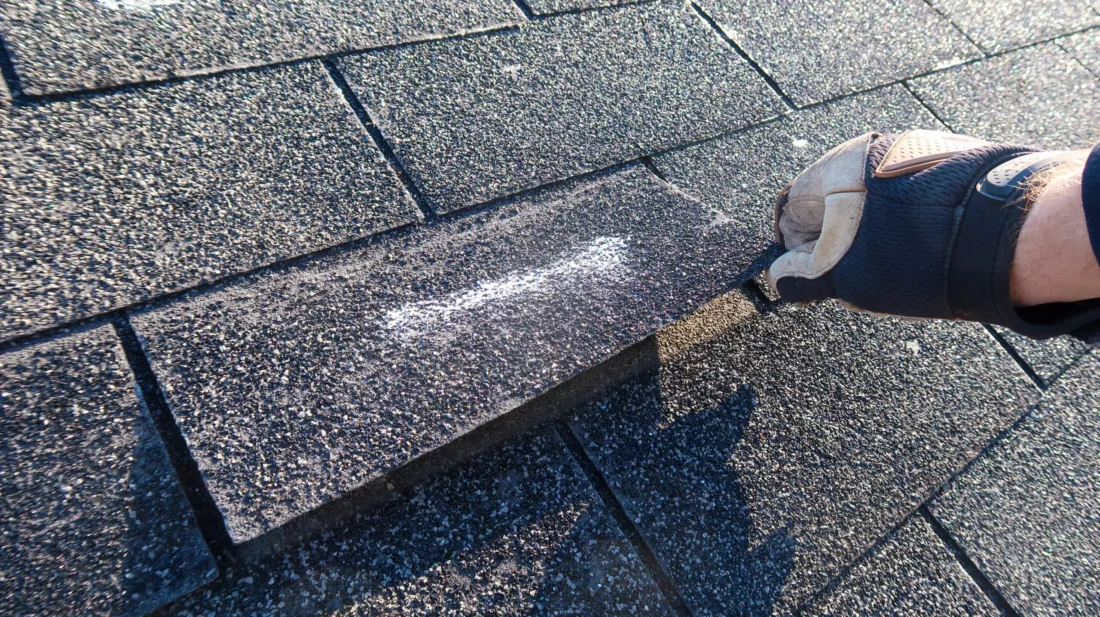
Roofs in milder climates can sometimes go years without a problem and without inspection. That’s not a safe assumption in Lone Tree, CO. The combination of conditions across Colorado, severe hail seasons, high-altitude UV, winds that regularly exceed 60 mph, and dramatic freeze-thaw cycles, produces specific damage patterns that quietly compound when no one is checking.
Some of what an inspection catches before it becomes expensive:
- Hail damage you can’t see from the ground. Colorado hail seasons leave residential roofs with damage that’s not always obvious from the driveway. Insurance claims for hail damage have time limits, and damage that goes unreported within the policy window often won’t be covered later.
- Lifted shingles before wind takes them off. Shingles whose self-sealing strips have failed lift and lay back down quietly with each wind cycle until one big gust takes them off. An inspection catches the lift; emergency repair after the fact is more expensive than just resecuring.
- Failed sealants and aging components. Pipe boots, sealants around skylights, and other rubber components age fast at altitude. Catching them at year 8 prevents the leak at year 9.
- Ice damming risk in time to address it. Inadequate insulation or ventilation produces ice damming. Catching the conditions before the next big snow event lets you address them, adjusting attic ventilation, adding insulation, without the damage that ice damming causes.
- Decking issues from hidden moisture. Slow leaks that haven’t reached the interior yet are still rotting the underlying decking. An inspection catches them before the decking damage spreads.
- Warranty compliance issues. Many manufacturer warranties have specific maintenance and inspection requirements. An inspection that identifies and addresses issues protects the warranty for the full term.
Types of Residential Roof Inspections We Perform
Different situations call for different kinds of roof inspections. The scope, what we look for, and the report you receive vary based on why the inspection is being done.
Annual Maintenance Inspection
Routine inspection performed once a year (or every two years on relatively new roofs in good condition) to identify aging, minor damage, and emerging issues before they become major. Best timing: late spring after hail season and before fall, or early fall before winter. Many manufacturer warranties recommend or require periodic inspection to remain valid. This is the lowest-cost, highest-value inspection most Lone Tree, CO homeowners can do.
Pre-Purchase Real Estate Inspection
Detailed inspection performed for buyers during the home-purchase process to assess the condition of the existing roof. Goes beyond what a generalist home inspector typically provides, a roof-specific specialist looks at flashings, ventilation, decking conditions visible from the attic, and the actual remaining service life of the system. Documentation supports purchase negotiations on roof condition or repair credits. Worth the cost on any home where the roof condition could be a meaningful factor in the deal.
Pre-Listing Seller Inspection
Inspection performed before listing a home for sale to identify any roof issues that should be addressed (or disclosed) before going to market. Sellers benefit from knowing the roof condition before buyers point things out, and from having documentation that demonstrates the roof has been professionally evaluated. A pre-listing inspection often pays for itself by avoiding surprises during buyer due diligence.
Post-Storm Damage Assessment
Inspection after a significant hail, wind, or storm event to identify damage and document conditions for an insurance claim. We document damage thoroughly with photos and notes for the carrier, write a manufacturer-spec scope of work, and coordinate with adjusters when appropriate. Time-sensitive, most insurance policies have specific notification windows after a covered event.
Mid-Life Inspection (10 to 15 Year Roof)
Targeted inspection on roofs around the midpoint of their expected service life. The goal is identifying any issues that have emerged in the first decade, pipe boot wear, flashing aging, shingle wear patterns, ventilation issues, and recommending targeted maintenance to maximize the remaining service life.
Warranty Compliance Inspection
Inspection performed in the context of an existing manufacturer warranty, either to satisfy maintenance requirements that keep the warranty valid, or to document conditions when filing a manufacturer warranty claim on a roof we didn’t originally install. Documentation has to meet specific manufacturer standards.
Pre-Solar Installation Inspection
Inspection performed before a new solar installation to confirm the roof has adequate remaining service life for the solar array’s expected lifespan. Installing solar on a roof that needs replacement in the next few years is a costly mistake, the array has to come off and go back on. A pre-solar inspection identifies whether the roof can support the array long-term or whether replacement should happen first.
Post-Installation/New Roof Verification Inspection
Independent inspection of recently installed work, often performed when a homeowner has concerns about workmanship on a roof installed by another contractor, or when warranty disputes have come up. Provides documentation of the actual installation quality.
What’s Actually Inspected During a Thorough Roof Inspection
A real roof inspection is more thorough than just walking around the roof and looking. Here’s what we check on every standard inspection.
Roof Surface Conditions
- Shingle condition, granule loss, curling, cupping, buckling, lifting, missing, hail or impact damage
- Wear patterns, areas of concentrated aging, UV damage, weather exposure
- Manufacturer defects or installation issues, exposed nails, off-pattern installation, fastener problems
- Ridge cap condition and sealing
- Valley conditions and drainage
Flashings and Penetrations
- Step flashing at walls and dormers
- Chimney flashing, counter-flashing, step flashing, sealants
- Skylight flashing and seal condition
- Pipe boots, rubber condition, sealant condition, cracks
- Vent flashing and seal condition
- Drip edge installation and condition
Roof Geometry Issues
- Ridge line conditions
- Hip and ridge cap conditions
- Valley waterproofing and condition
- Eave conditions and ice-damming risk
- Saddle and cricket conditions where applicable
Underlying Conditions (Where Accessible)
- Decking conditions visible from the attic
- Insulation condition and adequacy
- Attic ventilation, intake/exhaust balance, blockages, performance
- Signs of moisture intrusion in the attic, staining, mold, deterioration
- Structural conditions visible from the attic, rafter condition, sagging, insect damage
Drainage and Gutter Interface
- Gutter condition and slope
- Eave drainage and ice-and-water shield coverage
- Downspout connections
- Drip edge integration with gutters
Documentation
- Photos of all significant findings
- Notes on conditions that need attention
- Notes on conditions that are fine but worth monitoring
- Recommendations with priority levels
Free Inspections vs. Paid Inspections: An Honest Take
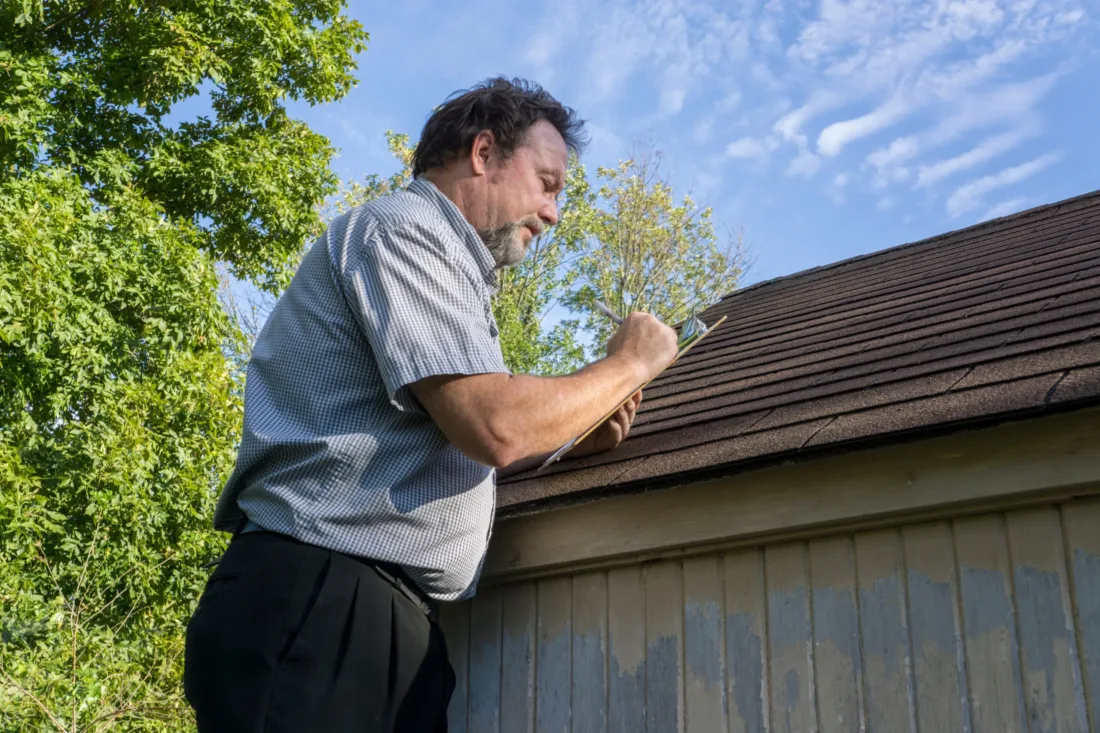
“Free roof inspection” is one of the most common offers in residential roofing, particularly after storms. Some are legitimate. Some are sales pitches dressed up as inspections. Some paid inspections are valuable. Knowing the difference helps you choose what fits your situation.
Free assessments, when they’re appropriate.
We provide free assessments to existing customers, free assessments in connection with planned project estimates, and free initial assessments after major storm events to identify whether full damage documentation is warranted. These are legitimate and useful. There’s no charge to take a look and give you our honest assessment of conditions.
Free assessments, when to be cautious.
After major storm events, contractors who didn’t exist in Lone Tree, CO before the storm offer aggressive door-to-door free inspections. The motivation is signing up storm-driven replacement work. Some of these are legitimate. Many are not. Free inspections from storm chasers tend to find damage that requires replacement on every roof they look at, regardless of actual condition. If you didn’t initiate the contact and the contractor isn’t local, be skeptical.
Paid inspections, when they’re worth it.
Pre-purchase real estate inspections, pre-listing inspections, warranty disputes, post-installation verification of work done by other contractors, and any inspection where you specifically want documented results from an independent third party, these typically warrant paid inspection because the inspector’s interest is independent of any work that might come from the findings. Paid inspections come with a written, detailed report.
Why we offer both.
We provide free assessments where appropriate (existing customers, project estimates) and paid inspections where the documentation matters (real estate, warranty disputes, third-party verification). The right answer depends on what you actually need from the inspection.
Lone Tree, CO-Specific Inspection Priorities
Some of what we look for on a Lone Tree, CO area roof inspection isn’t what we’d prioritize in milder climates. Specific Lone Tree, CO-driven inspection priorities:
Hail damage indicators.
Even if you don’t recall a specific damaging storm, residential roofs in Lone Tree, CO and the surrounding area often have hail damage that wasn’t noticed at the time. Granule loss in unusual patterns, dimples or impact marks on shingle surfaces, and damage to soft metal accessories (vent caps, gutters, downspouts) all suggest hail history that may still be claimable depending on policy and timing.
Pipe boot condition (UV-aged rubber).
Pipe boot rubber degrades faster at Lone Tree, CO’s altitude. We check every pipe boot for cracks, hardening, and pulled-back rubber, replacement candidates show up reliably starting around year 7 to 8 on most Lone Tree, CO homes.
Self-sealing strip integrity.
Shingle self-sealing strips bond to the shingle below using heat from sun exposure. Failed seals show up as lifted shingle edges, particularly on slopes that don’t get good sun. Aged shingles where seals have failed are at high wind-uplift risk.
Ice-and-water shield coverage.
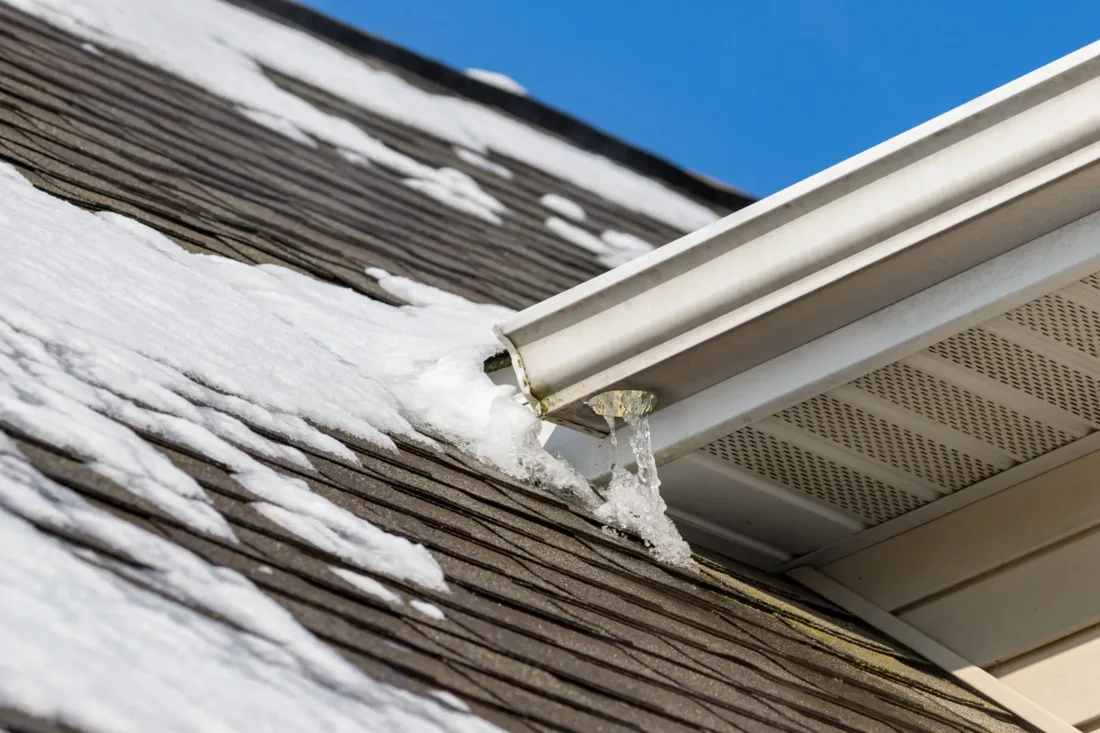
From the attic, we check whether ice-and-water shield was installed at eaves and other vulnerable areas. Older roofs sometimes have inadequate coverage, which becomes a problem when ice damming occurs.
Attic ventilation balance.
Inadequate or unbalanced attic ventilation drives moisture problems, premature shingle aging, and ice damming. We check soffit intake, ridge or gable exhaust, and the balance between them. Ventilation issues on Lone Tree, CO homes are surprisingly common, often introduced by ill-considered insulation work blocking soffit vents.
Wind-uplift damage indicators.
severe gusts produce wind-uplift stress on roofs. Lifted shingle edges, missing tabs, and creased shingles all suggest wind damage that may be insurable and that affects the long-term integrity of the roof.
Decking moisture in the attic.
From the attic, we look for staining on the underside of decking, frost in winter, and any indicators of moisture intrusion. Catching this early often means a small targeted repair instead of a major restoration.

The Inspection Report You Receive
Every Baseline roof inspection produces a documented written report. The format scales to the inspection type, but the basics are consistent.
What’s included in the standard report:
- Date of inspection and weather conditions
- Inspector identification and credentials
- Roof type, age (where known), and observed condition
- Findings organized by severity, critical issues first, monitor-only items later
- Photo documentation of all significant findings
- Recommendations with priority levels and approximate timing
- Estimate of roof’s expected remaining service life
- Notes on warranty status and compliance considerations
Additional content for specialty inspections:
- Pre-purchase inspections include observations relevant to the buyer’s decision and negotiation
- Insurance inspections include damage documentation in the format adjusters expect
- Warranty inspections include documentation of conditions relevant to the manufacturer’s claim process
- Post-installation inspections include workmanship findings against manufacturer specifications
The report is yours, keep it for your records. Copies often help with future insurance claims, real estate transactions, and warranty disputes.
Frequently Asked Questions: Roof Inspection in Lone Tree, CO
-
How much does a roof inspection cost in Lone Tree, CO?
Cost depends on the inspection type and scope. Free assessments are appropriate for existing customers, project estimates, and post-storm initial reviews. Paid inspections (real estate, warranty, third-party verification) typically run from a few hundred dollars depending on roof size, complexity, and report depth. We provide pricing information based on what you actually need before scheduling.
-
How often should I get my roof inspected?
Annual inspection is reasonable for most Lone Tree, CO homes. After major storm events (hail, wind, etc.), a damage-assessment inspection should happen within the policy notification window. Pre-purchase and pre-listing inspections happen on the real estate transaction timeline. Mid-life inspections (around year 10 to 15) help maximize remaining service life.
-
Should I get a roof inspection before buying a Lone Tree, CO home?
Almost always yes. Generalist home inspectors typically provide limited roofing assessment. A roof-specialist inspection identifies issues that affect the home’s value, future maintenance costs, insurance considerations, and remaining service life. The relatively small inspection cost is worth the information for any meaningful real estate transaction.
-
Will my roof inspection report help with insurance claims?
Yes, when the inspection is performed in the context of damage documentation. We document storm damage in the format adjusters expect, with photos, measurements, and notes that support your claim. We don’t negotiate the claim itself (not legal for contractors in Colorado), but we provide what’s needed to support it.
-
Should I let storm-chasing contractors do free inspections after a storm?
Be cautious. Some are legitimate; many are not. If you didn’t initiate contact and the contractor isn’t local, the inspection is more of a sales pitch than an honest assessment. Free inspections from storm chasers tend to find damage requiring replacement on every roof they look at, regardless of actual condition. Local, licensed, manufacturer-certified contractors are the ones to call after storms.
-
Can a roof inspection be done in winter?
Yes, with limitations. Snow on the roof restricts what can be inspected from the surface. Attic-side inspection is unaffected. For comprehensive surface inspection, scheduling around clear weather is preferable. After winter storms specifically, we can do interior inspection for damage indicators and schedule the roof-side inspection when conditions allow.
-
How long does a roof inspection take?
Standard residential inspections typically take 60 to 90 minutes for the on-site work, depending on roof size, complexity, and conditions. Comprehensive inspections (real estate, warranty, post-installation verification) can take longer. Report writing happens after the on-site work; you typically receive the written report within a day or two of the inspection.
Schedule a Roof Inspection in Lone Tree, CO
Whether you need an annual maintenance check, a pre-purchase inspection on a home you’re buying, post-storm damage assessment, warranty compliance documentation, or a third-party verification of recent work, Baseline Roofing and Solar is ready to help. We do honest inspections, meaning we report what we actually find and recommend what the roof actually needs, even when that’s nothing.
-
More Residential Roof Inspection Locations +
- Residential Roof Inspection in Colorado
- Residential Roof Inspection in Arvada, CO
- Residential Roof Inspection in Aurora, CO
- Residential Roof Inspection in Berthoud, CO
- Residential Roof Inspection in Boulder, CO
- Residential Roof Inspection in Brighton, CO
- Residential Roof Inspection in Broomfield, CO
- Residential Roof Inspection in Castle Pines, CO
- Residential Roof Inspection in Castle Rock, CO
- Residential Roof Inspection in Centennial, CO
- Residential Roof Inspection in Cherry Creek, CO
- Residential Roof Inspection in Cherry Hills Village, CO
- Residential Roof Inspection in Colorado Springs, CO
- Residential Roof Inspection in Commerce City, CO
- Residential Roof Inspection in Englewood, CO
- Residential Roof Inspection in Erie, CO
- Residential Roof Inspection in Firestone, CO
- Residential Roof Inspection in Fort Collins, CO
- Residential Roof Inspection in Frederick, CO
- Residential Roof Inspection in Golden, CO
- Residential Roof Inspection in Greeley, CO
- Residential Roof Inspection in Greenwood Village, CO
- Residential Roof Inspection in Gunbarrel, CO
- Residential Roof Inspection in Highlands Ranch, CO
- Residential Roof Inspection in Lafayette, CO
- Residential Roof Inspection in Lakewood, CO
- Residential Roof Inspection in Littleton, CO
- Residential Roof Inspection in Lone Tree, CO
- Residential Roof Inspection in Longmont, CO
- Residential Roof Inspection in Louisville, CO
- Residential Roof Inspection in Loveland, CO
- Residential Roof Inspection in Mead, CO
- Residential Roof Inspection in Niwot, CO
- Residential Roof Inspection in Northglenn, CO
- Residential Roof Inspection in Parker, CO
- Residential Roof Inspection in Superior, CO
- Residential Roof Inspection in Thornton, CO
- Residential Roof Inspection in Westminster, CO
- Residential Roof Inspection in Wheat Ridge, CO
- Residential Roof Inspection in Windsor, CO