Commercial Hail Storm Damage Roof Replacement in Greenwood Village, CO
When a hailstorm or severe windstorm damages a commercial flat roof beyond what repair can reasonably address, the right answer is full replacement, usually funded substantially or entirely through the property’s insurance. Commercial storm and hail damage flat roof replacement is one of the most consequential projects a Greenwood Village, CO commercial property owner will manage, because the scope decisions made during the insurance claim process determine not just what gets paid for, but what the new roof system will look like for the next 20 to 30 years. Done right, a storm-driven replacement produces a better roof than the one before, including code upgrades and impact-resistant materials that materially reduce vulnerability to the next storm.
Baseline Roofing and Solar handles storm-driven commercial flat roof replacement projects across Greenwood Village, CO and surrounding Colorado communities. We are licensed, fully insured, and certified by every major commercial roofing manufacturer (Carlisle, Versico, GAF, Mule-Hide, Firestone, Johns Manville, and others). On insurance-funded replacements, we document the storm damage thoroughly, write replacement scopes that reflect what the building actually needs, identify code-upgrade coverage that’s commonly missed, and execute the replacement to manufacturer specification so the new system carries its full warranty.
On this page. We’ll explain when storm damage warrants full replacement rather than repair, how Actual Cash Value versus Replacement Cost Value affects the financial outcome, the code upgrade coverage that’s commonly under-utilized, the case for upgrading to impact-resistant systems while you have the roof open, the storm replacement process from claim through close-out, and what to look for in a contractor for this kind of work.
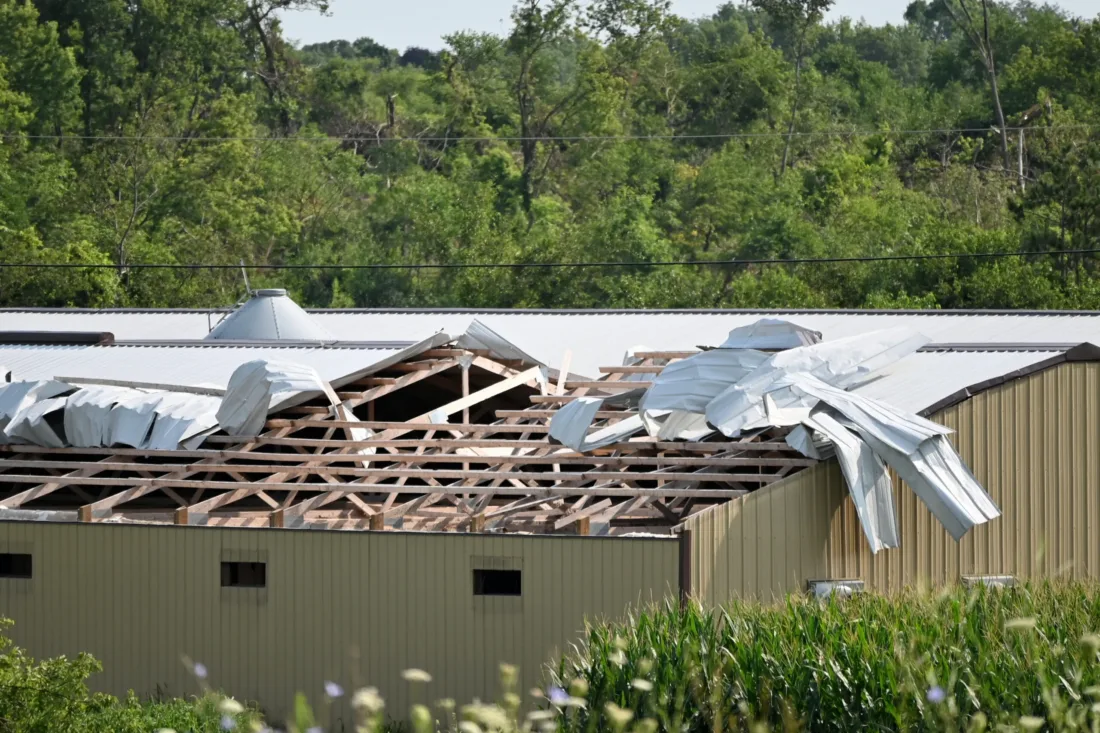
When Storm Damage Warrants Full Roof Replacement
Most storm damage on a commercial flat roof can be repaired. Some can’t, and the difference matters because partial repair on a system that has actually failed system-wide produces a roof that keeps leaking and a property owner who’s spent money to delay an inevitable replacement. Replacement is typically the right call when one or more of the following is true.
- Hail damage is widespread. When the membrane shows damage across the entire roof, not just specific areas, repair becomes uneconomical. At some threshold, patching dozens or hundreds of impacts produces a worse result than replacement.
- The system was already at the end of its service life. Hail or wind damage on a roof that already had only a few years of service life left is usually not worth repairing. Insurance often covers replacement in these cases when the damage is the proximate cause of failure.
- Insulation is saturated. Wet insulation under storm-damaged membrane requires removal regardless of what’s done with the membrane above. Once the insulation is being replaced, replacing the membrane along with it is typically the most cost-effective path.
- Multiple storms have layered damage. Colorado hail seasons sometimes produce two or three significant storm events in a single year. Cumulative damage across multiple events frequently warrants replacement when any single event might have been repairable.
- Structural or deck damage is involved. When storm impact has compromised the roof deck, through falling debris, severe hail, or structural damage, replacement allows full inspection and repair of the substrate that repair work cannot.
- Repair cost approaches replacement cost. When the cost of properly addressing storm damage approaches the cost of full replacement, replacement is almost always the better long-term value. The new system carries a fresh manufacturer warranty and resets the service-life clock.
Our inspection report and damage documentation will tell you straight which path your roof actually needs. We don’t push replacement when repair will produce the same long-term outcome.
How Insurance Pays for a Storm-Driven Replacement: ACV, RCV, and Recoverable Depreciation
Storm-driven commercial roof replacements are typically funded through the property’s insurance, but how much the carrier ultimately pays depends substantially on whether the policy is written on Actual Cash Value (ACV) or Replacement Cost Value (RCV) basis. The difference can be tens of thousands of dollars on a single project.
Replacement Cost Value (RCV)
RCV policies pay the actual cost to replace the damaged roof, generally without depreciation, though most RCV policies pay the depreciated amount up front and release the “recoverable depreciation” once the work is complete and final invoicing is submitted. RCV is the substantially better outcome for property owners and is the most common structure on commercial property policies in good standing.
Actual Cash Value (ACV)
ACV policies pay the cost to replace the roof minus depreciation based on age and condition. A 20-year-old commercial roof on an ACV policy may pay only a fraction of what replacement actually costs, because most of the original roof’s value has depreciated over its service life. ACV is sometimes the only available option on older roofs or under specific policy endorsements.
Why It Matters Up Front
On RCV claims, completing the work and properly invoicing for the recoverable depreciation is what triggers the full payment. Property owners who take the initial ACV check and don’t complete the replacement leave significant insurance proceeds on the table. We help structure the project, the scope, and the documentation so that the recoverable depreciation flows back as the work is completed.
This is policy-specific.
Every policy is different, with its own depreciation schedules, deductibles, and endorsements. Read your specific policy or ask your insurance broker. We’re a roofing contractor, not insurance professionals. And we don’t represent ourselves as insurance advisors.
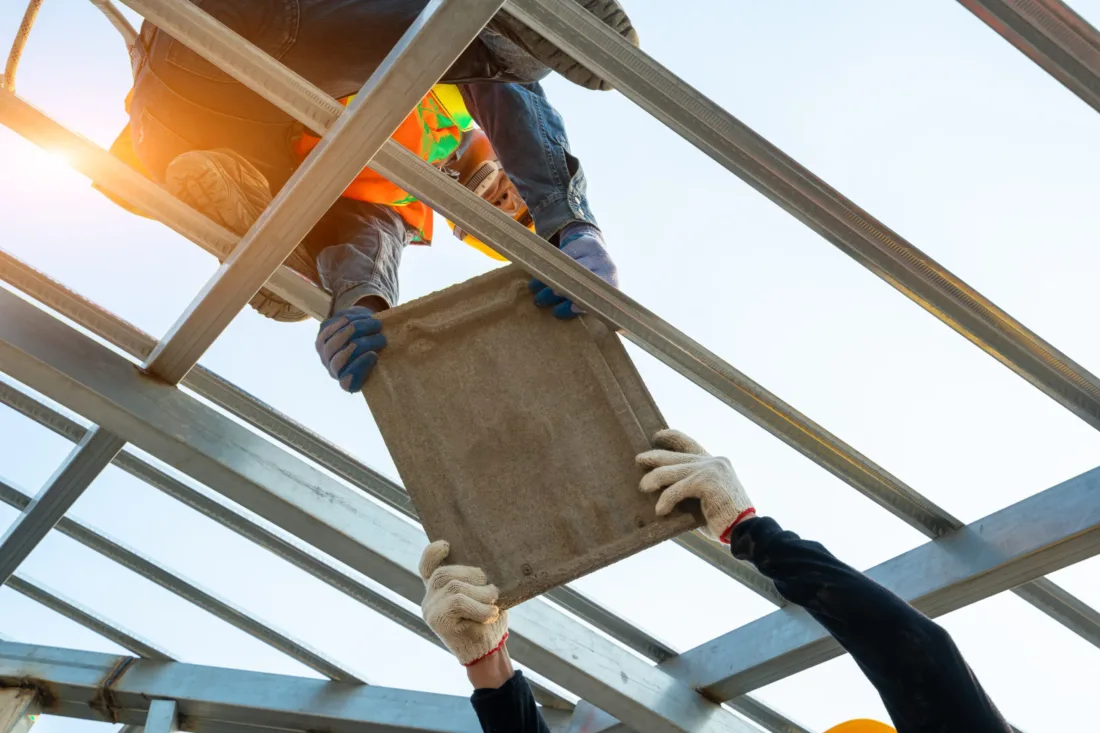
Code Upgrades and Law-and-Ordinance Coverage During Replacement
This is one of the most commonly under-utilized areas of commercial property insurance. Many, though not all, commercial property policies include a “Law and Ordinance” endorsement (sometimes called “Building Ordinance or Law Coverage”) that pays for code-required upgrades during the replacement of damaged property. On commercial roof replacements, that can mean tens of thousands of dollars of additional coverage that property owners often don’t realize they have.
Common code-upgrade items on commercial roof replacements:
- Energy code insulation upgrades, Colorado has progressively raised commercial R-value requirements; older roofs are typically below current code
- Tapered insulation systems, current code in many jurisdictions requires positive slope to drains, which older roofs may not have
- Wind-uplift compliance, current code requires fastening patterns and edge metal details that meet ANSI/SPRI ES-1 standards for the building’s exposure category
- Cool-roof requirements, many Colorado jurisdictions require specific reflectivity levels on commercial roofs
- Fire rating compliance, current code may require specific assembly fire ratings that older systems don’t meet
- Drainage improvements, additional drains or overflow drains where existing drainage is undersized for current code
When we write the replacement scope for an insurance-funded project, we identify code-required upgrades and document them as part of the proposal. If your policy includes Law and Ordinance coverage, those items become part of the supplement to the carrier. If your policy doesn’t include this coverage, or has limited coverage, at least you know what the code-required upgrades are and can decide how to pay for them. Either way, current code requirements are not optional during a replacement, so this conversation has to happen.
Impact-Resistant System Upgrades for Hail-Prone Buildings
If your commercial roof has been damaged badly enough by hail to warrant full replacement, you have a once-in-a-couple-decades opportunity: the chance to upgrade to an impact-resistant system that materially reduces vulnerability to the next major hailstorm. Given that Greenwood Village, CO and the surrounding Colorado region are inside Colorado’s hail belt and recurring damage events are likely over the new roof’s service life, this opportunity is worth considering carefully.
UL 2218 Impact Ratings
Roofing systems are tested for impact resistance under UL 2218 (steel ball drop test) on a Class 1 through Class 4 scale, with Class 4 representing the highest level of impact resistance commercially available. Class 4 systems are designed to resist substantial damage from large hail events that would significantly damage Class 1 or unrated systems.
Impact-Resistant Single-Ply Systems
Several manufacturers produce impact-resistant TPO and PVC membranes, often using thicker top-ply construction or fleece-backed reinforcement that significantly improves hail resistance. These systems install similarly to standard single-ply systems but offer materially better long-term performance in hail-prone environments.
Polyester-Reinforced and Fabric-Backed Systems
Polyester reinforcement and fabric backing on single-ply systems both improve impact resistance compared to standard scrim-only constructions. The cost premium is typically modest while the performance improvement against hail is substantial.
Insurance Premium Considerations
Many commercial property insurance carriers offer premium discounts for buildings with Class 4 or otherwise impact-rated roof assemblies. The discount varies by carrier, by region, and by specific policy, but on hail-prone Greenwood Village, CO buildings the discount can be meaningful enough to recover a portion of the upgrade cost over the life of the system. Talk to your insurance broker about specific discounts available on your policy.
When the Upgrade Makes Sense
Impact-resistant systems generally cost 5% to 20% more than standard equivalents, depending on the system and project specifics. On a roof that just took significant hail damage and is being replaced anyway, the math typically works in favor of the upgrade, particularly when factoring in reduced future repair costs, lower insurance premiums where available, and the simple fact that the roof is going to face more hail over its service life. We’ll walk you through the pricing for the impact-resistant version of your specified system as part of any storm-driven replacement quote.
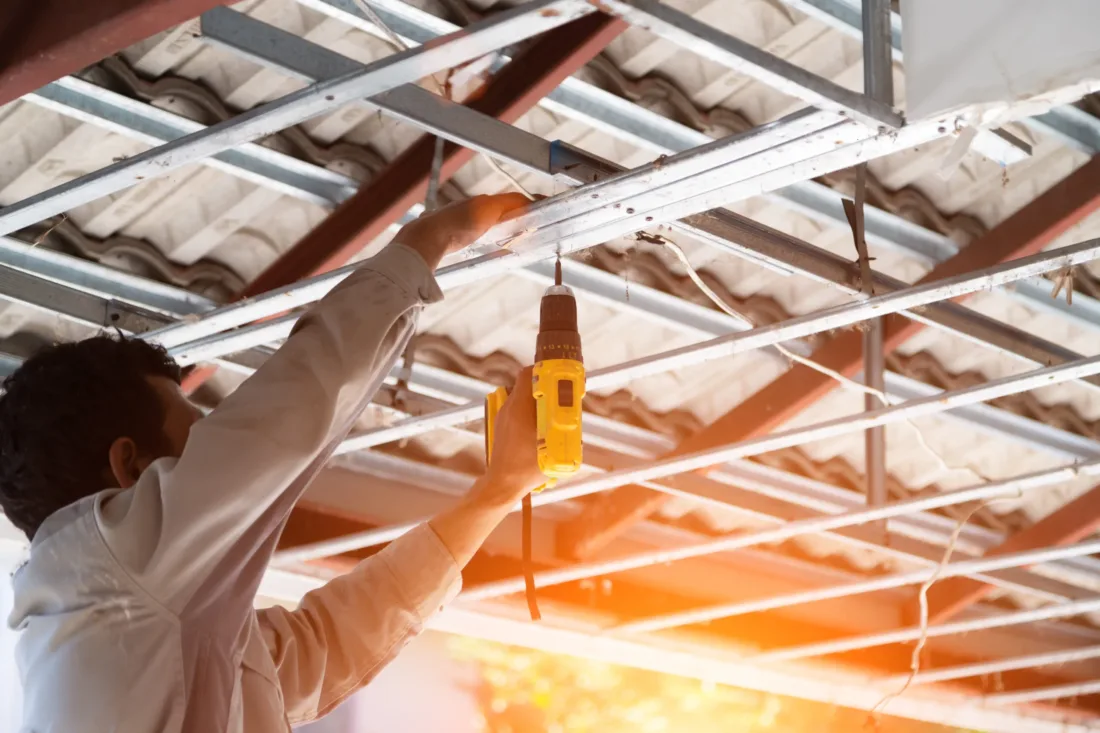
The Storm-Driven Commercial Roof Replacement Process
Storm-driven replacement projects have an additional dimension that routine end-of-life replacement projects don’t: the insurance claim process. Here’s how the full sequence runs, from initial damage through final close-out.
- Damage event and post-storm inspection. After the storm, we inspect the roof and document damage thoroughly with photos, measurements, and a written report.
- Notification and claim opening. You contact your insurance carrier or broker to open a claim. The carrier assigns an adjuster.
- Joint inspection with the adjuster. We coordinate to be on-site when the carrier’s adjuster inspects the roof. Joint inspection produces more accurate scope and pricing.
- Replacement scope development. Where the damage warrants full replacement, we develop a written replacement scope that includes manufacturer-spec materials, code-required upgrades, and any optional impact-resistant upgrades you want to consider.
- Claim approval and supplements. The carrier approves a scope and pays the depreciated portion (on RCV policies). Where additional damage or scope is identified, we provide documentation for supplemental claim consideration.
- Contract and scheduling. Once the claim is approved, we contract the work and schedule the project around weather windows and your operational needs.
- Tear-off and inspection. The existing roof is torn off, materials are hauled off site, and the deck and substrate are inspected for damage. Any deck or structural issues are addressed before the new system is installed.
- New system installation. Insulation, the new membrane or coating system, flashings, and edge metal are installed to manufacturer specification, preserving the manufacturer warranty.
- Final inspection and warranty registration. We walk the completed roof with you, document the installation with photos, register the manufacturer warranty in the building owner’s name, and provide our workmanship warranty in writing.
- Final invoicing and depreciation recovery. On RCV policies, final invoicing triggers the release of recoverable depreciation. We provide the documentation needed to support that final payment from the carrier.
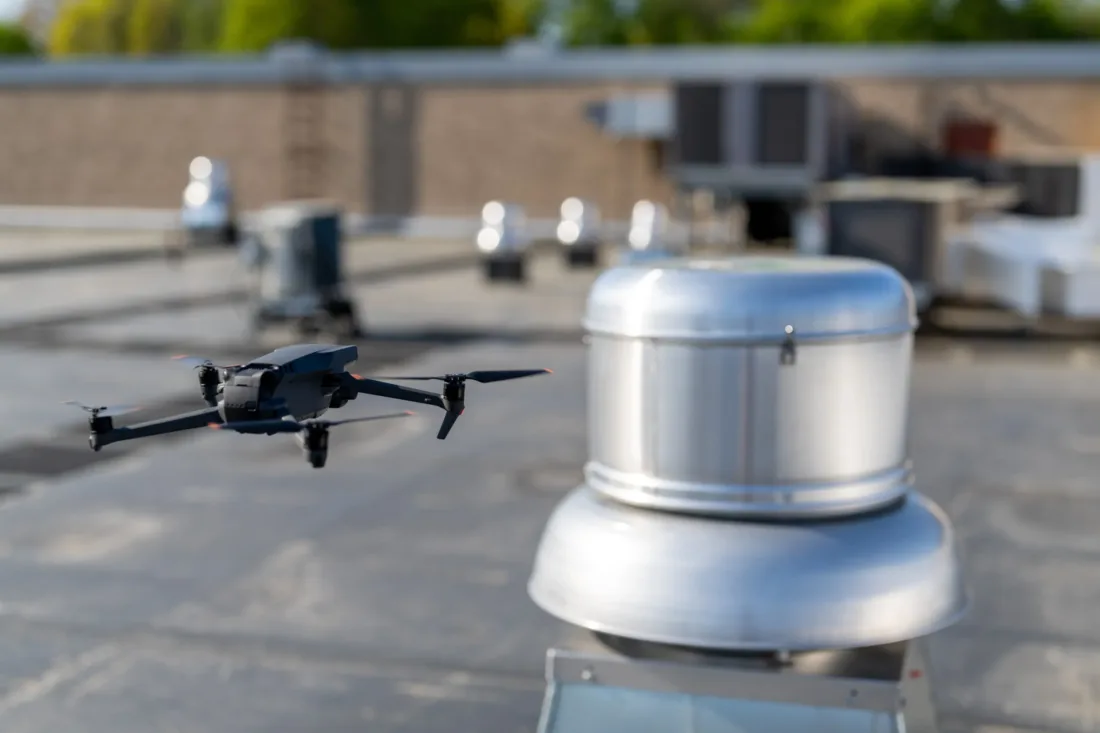
Why Choose Baseline for Storm-Driven Commercial Roof Replacement
Manufacturer-certified across every major commercial system.
We hold certifications across all the major commercial manufacturers, which means we can install whatever replacement system the building actually needs and the new roof carries its full long-term manufacturer warranty.
Insurance-experienced scope writing.
We write replacement scopes that reflect what the building actually needs, including code-required upgrades and supplements that are commonly missed. A scope written by a manufacturer-certified contractor carries weight with insurance carriers because we can actually perform the work to spec.
Owner-led, locally accountable.
Baseline is a Colorado-based contractor with permanent operations on Colorado. We’re not going anywhere when storms move on. That permanence matters when warranty questions come up two, five, or ten years after the replacement is complete.
Solar coordination.
If your building has rooftop solar, we coordinate the detach-and-reset of the array as part of the replacement scope so you don’t have to manage two contractors. The array is removed before tear-off, the new roof is installed, and the array is reset and re-commissioned at completion.
Honest about scope and outcome.
We don’t push replacement when repair will produce the same long-term outcome. We don’t promise specific insurance claim results (which would be illegal under Colorado law anyway). And we don’t oversell impact-resistant upgrades that don’t make economic sense for your specific building. Honest, manufacturer-certified, locally accountable. That’s the standard we hold ourselves to.
Frequently Asked Questions: Commercial Storm & Hail Damage Flat Roof Replacement in Greenwood Village, CO
-
Will my insurance pay for a full commercial roof replacement after a storm?
Most commercial property insurance policies cover storm-driven replacement when the damage from a covered event makes the existing system uneconomical to repair. Coverage details, deductibles, and depreciation handling vary substantially by policy. We document the damage thoroughly and write a replacement scope that reflects what the building needs, but the claim is between you and your carrier, we cannot guarantee specific claim outcomes.
-
How long does a storm-driven roof replacement take?
Insurance approval typically takes a few weeks from claim opening through approved scope, sometimes longer on contested or supplement-heavy claims. Once the claim is approved, the actual work runs from one week to several weeks depending on the size of the roof, the system, weather, and complexity. We give you a written timeline as part of the contract and update you proactively if conditions change.
-
What’s the difference between ACV and RCV on a roof claim?
Replacement Cost Value (RCV) policies pay the actual cost to replace the roof, typically with the depreciation released as recoverable upon completion of the work. Actual Cash Value (ACV) policies pay the depreciated value of the roof, which on older roofs can be a fraction of replacement cost. RCV produces dramatically better outcomes for property owners. Read your policy or ask your broker about your specific coverage.
-
Should I upgrade to an impact-resistant system during replacement?
It’s worth strongly considering on Greenwood Village, CO area commercial buildings. Class 4 impact-rated systems and reinforced single-ply membranes offer materially better hail performance than standard systems, often at a 5%-20% premium. Insurance premium discounts where available and reduced repair costs over the system’s service life often make the math work favorably, especially given that Greenwood Village, CO buildings are likely to face additional hail events over the new roof’s life.
-
Can I add code upgrades to my insurance-paid replacement?
If your policy includes Law and Ordinance coverage, code-required upgrades during the replacement are typically covered up to the policy’s specific limits. We identify the code-required upgrades during scope development. Items the policy doesn’t cover can still be added to the project at your cost. We’ll quote them transparently as separate line items.
-
Can you handle solar panel detach and reset during a replacement?
Yes. We coordinate the detach-and-reset of existing rooftop solar arrays as part of the replacement scope, so you don’t need to manage two separate contractors. The array is removed before tear-off, the new roof is installed, and the array is reset and re-commissioned at completion.
-
Why not use the storm-chaser contractor that’s offering a great price?
Storm-chasing operations don’t stick around. Out-of-state contractors that follow major storms typically leave the Greenwood Village, CO area within a year of finishing local work, sometimes within months. Their warranties are theoretically valid; in practice they’re worthless because the company can’t be reached when called. On a 20-30 year warranted system, you need a contractor that’s actually still here to honor the warranty. Local Colorado-based contractors with verifiable history, manufacturer certifications, and permanent operations are the right answer for storm-driven replacement work.
Get a Storm-Driven Commercial Roof Replacement Estimate in Greenwood Village, CO
If your commercial property has hail or storm damage that warrants full roof replacement, the right next step is a thorough damage inspection, an honest assessment of repair-versus-replacement, and a written replacement scope that reflects what the building actually needs, including code upgrades and impact-resistant upgrade options. Baseline Roofing and Solar handles storm-driven replacement projects across Greenwood Village, CO and surrounding Colorado communities, with the manufacturer certifications, insurance experience, and local accountability that this kind of work specifically requires.
-
More Commercial Storm & Hail Damage Roof Replacement Locations +
- Commercial Storm & Hail Damage Roof Replacement in Colorado
- Commercial Storm & Hail Damage Roof Replacement in Arvada, CO
- Commercial Storm & Hail Damage Roof Replacement in Aurora, CO
- Commercial Storm & Hail Damage Roof Replacement in Berthoud, CO
- Commercial Storm & Hail Damage Roof Replacement in Boulder, CO
- Commercial Storm & Hail Damage Roof Replacement in Brighton, CO
- Commercial Storm & Hail Damage Roof Replacement in Broomfield, CO
- Commercial Storm & Hail Damage Roof Replacement in Castle Pines, CO
- Commercial Storm & Hail Damage Roof Replacement in Castle Rock, CO
- Commercial Storm & Hail Damage Roof Replacement in Centennial, CO
- Commercial Storm & Hail Damage Roof Replacement in Cherry Creek, CO
- Commercial Storm & Hail Damage Roof Replacement in Cherry Hills Village, CO
- Commercial Storm & Hail Damage Roof Replacement in Colorado Springs, CO
- Commercial Storm & Hail Damage Roof Replacement in Commerce City, CO
- Commercial Storm & Hail Damage Roof Replacement in Englewood, CO
- Commercial Storm & Hail Damage Roof Replacement in Erie, CO
- Commercial Storm & Hail Damage Roof Replacement in Firestone, CO
- Commercial Storm & Hail Damage Roof Replacement in Fort Collins, CO
- Commercial Storm & Hail Damage Roof Replacement in Frederick, CO
- Commercial Storm & Hail Damage Roof Replacement in Golden, CO
- Commercial Storm & Hail Damage Roof Replacement in Greeley, CO
- Commercial Storm & Hail Damage Roof Replacement in Greenwood Village, CO
- Commercial Storm & Hail Damage Roof Replacement in Gunbarrel, CO
- Commercial Storm & Hail Damage Roof Replacement in Highlands Ranch, CO
- Commercial Storm & Hail Damage Roof Replacement in Lafayette, CO
- Commercial Storm & Hail Damage Roof Replacement in Lakewood, CO
- Commercial Storm & Hail Damage Roof Replacement in Littleton, CO
- Commercial Storm & Hail Damage Roof Replacement in Lone Tree, CO
- Commercial Storm & Hail Damage Roof Replacement in Longmont, CO
- Commercial Storm & Hail Damage Roof Replacement in Louisville, CO
- Commercial Storm & Hail Damage Roof Replacement in Loveland, CO
- Commercial Storm & Hail Damage Roof Replacement in Mead, CO
- Commercial Storm & Hail Damage Roof Replacement in Niwot, CO
- Commercial Storm & Hail Damage Roof Replacement in Northglenn, CO
- Commercial Storm & Hail Damage Roof Replacement in Parker, CO
- Commercial Storm & Hail Damage Roof Replacement in Superior, CO
- Commercial Storm & Hail Damage Roof Replacement in Thornton, CO
- Commercial Storm & Hail Damage Roof Replacement in Westminster, CO
- Commercial Storm & Hail Damage Roof Replacement in Wheat Ridge, CO
- Commercial Storm & Hail Damage Roof Replacement in Windsor, CO