Roof Insurance Claims in Golden, CO
Most residential roof replacements in Golden, CO are funded, fully or partially, by homeowner insurance after hail or wind damage. Golden, CO’s place in Colorado’s hail belt means most homes will face an insurance-driven roof claim at least once during the homeowner’s tenure, and many will face multiple claims. Navigating roof insurance claims successfully, getting the damage properly documented, the right scope of work covered, and the project completed without compounding problems, depends heavily on having a roofing contractor who understands Colorado contractor and insurance laws, supports your claim within the legal limits of what contractors can actually do, and helps you avoid the predatory practices that target storm-state homeowners.
Baseline Roofing and Solar supports residential roof insurance claims across Golden, CO and surrounding Colorado communities. We document damage thoroughly, write manufacturer-spec replacement scopes, coordinate with insurance adjusters during their inspections, and stay in compliance with the specific Colorado statutes that govern what residential roofing contractors can and cannot do on insurance work. We don’t negotiate claims (that’s not legal for a contractor in Colorado). We don’t waive deductibles (illegal, and a clear sign of an unethical contractor when offered). We don’t promise specific outcomes (no contractor legitimately can). What we do is provide the documentation and the workmanship that make a successful claim and a successful project.
This page covers how the residential insurance claim process actually works, what Baseline does (and doesn’t do) within your claim, the deductible and ACV/RCV concepts that affect what you actually receive, common claim issues that come up on Golden, CO homes, the storm chaser warnings that become critical in claim contexts, and how to work with your insurance carrier or broker through the process.

How the Residential Roof Insurance Claim Process Works
The general flow of a residential roof insurance claim in Colorado looks like this. Specific procedures vary by carrier, by policy, and by circumstance, your broker or carrier walks you through the specifics.
- Damage event. Hail, wind, falling tree, or other covered event causes damage to your roof. The clock starts on any policy notification deadline.
- Initial homeowner assessment. You notice the damage, visible roof damage from the ground, water leaking inside, debris in the yard, or storm reports for your area suggesting damage is likely.
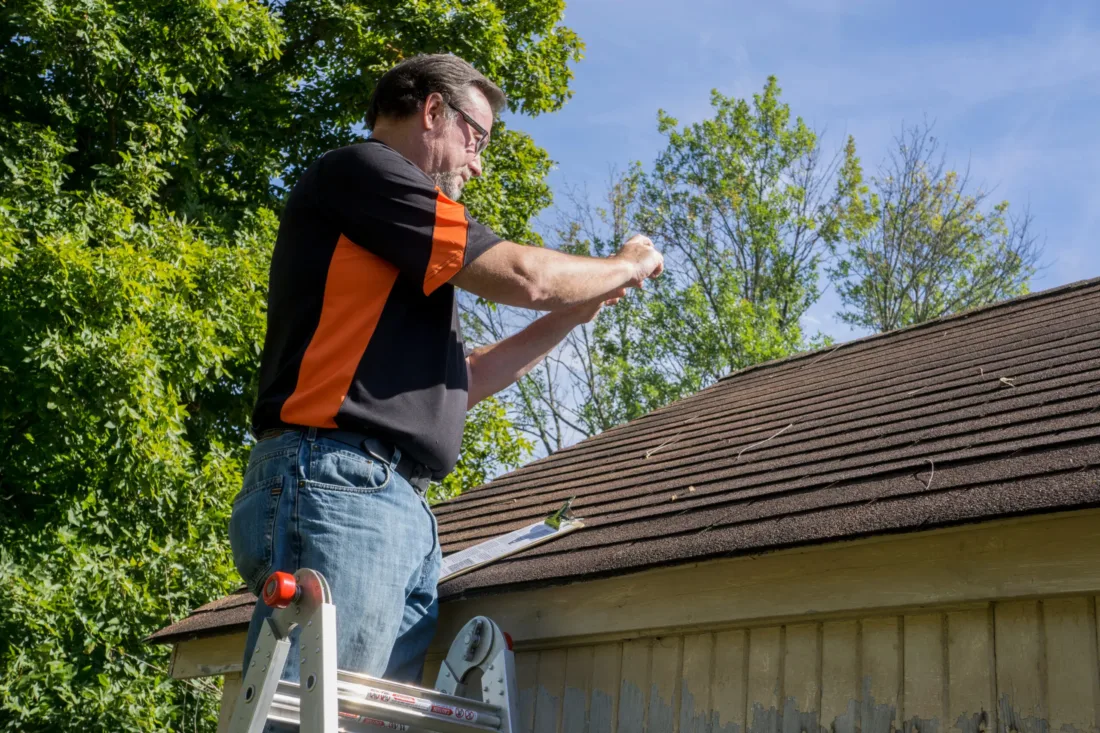
- Contractor inspection. A qualified, local roofing contractor inspects the roof in detail, documents damage with photos and notes, and provides a damage assessment. This step is what determines whether a claim makes sense.
- Claim filing. You contact your insurance carrier or broker to open a claim. The carrier assigns a claim number and an adjuster.
- Adjuster inspection. The carrier’s adjuster inspects the roof to assess covered damage. We coordinate to be on-site during the adjuster’s inspection when possible, to walk the roof together and ensure the adjuster sees what we identified.
- Carrier estimate. The carrier produces an estimate based on what the adjuster documented. This estimate often becomes the basis for the claim payment.
- Scope review. We compare the carrier’s estimate to what’s actually needed for a manufacturer-spec replacement. If items are missing or under-scoped, we document the gap with our own scope and supporting evidence.
- Supplements (where appropriate). If the carrier’s estimate is missing legitimate scope items (extended decking damage discovered during tear-off, manufacturer-required materials not included, code-required upgrades), we document and submit supplements through the carrier’s process. Supplements are common and often approved.
- Project execution. We complete the roof replacement to manufacturer specification.
- Final documentation and depreciation release. We submit final invoices, certificate of completion, and any other documentation the carrier needs to release the depreciation portion of the claim. This is when you receive the remainder of your settlement.
- Deductible payment. You pay your policy deductible. Per Colorado law, this is your responsibility, and no legitimate contractor will offer to waive or absorb it.
What Baseline Does in Your Insurance Claim: Within Colorado Law
Colorado law (SB 12-038 / C.R.S. § 6-22-101 et seq.) establishes specific limits on what roofing contractors can do in residential insurance work. We comply with those limits, and the things we do within them are genuinely valuable in supporting a successful claim.
We document damage thoroughly.
Photos with proper documentation, measurements of damage, notes on damage patterns and severity, identification of related issues (matching shingle availability, code compliance considerations, extended damage). Strong damage documentation is the foundation of every successful claim.
We write a manufacturer-spec scope of work.
A complete written scope identifies the manufacturer, product, accessories, underlayment, ice-and-water shield, ventilation, flashings, and other items required for a properly installed replacement roof. The scope is what we propose to install, what the carrier evaluates, and what the manufacturer warranty requires.
We coordinate with adjusters on-site.
When possible, we coordinate to be on-site during the adjuster’s inspection. We walk the roof with the adjuster, point out damage we’ve documented, discuss the scope of work, and ensure the adjuster has what they need to write an accurate estimate. This isn’t claim negotiation. It’s coordination on the work itself.
We document supplemental damage as it’s discovered.
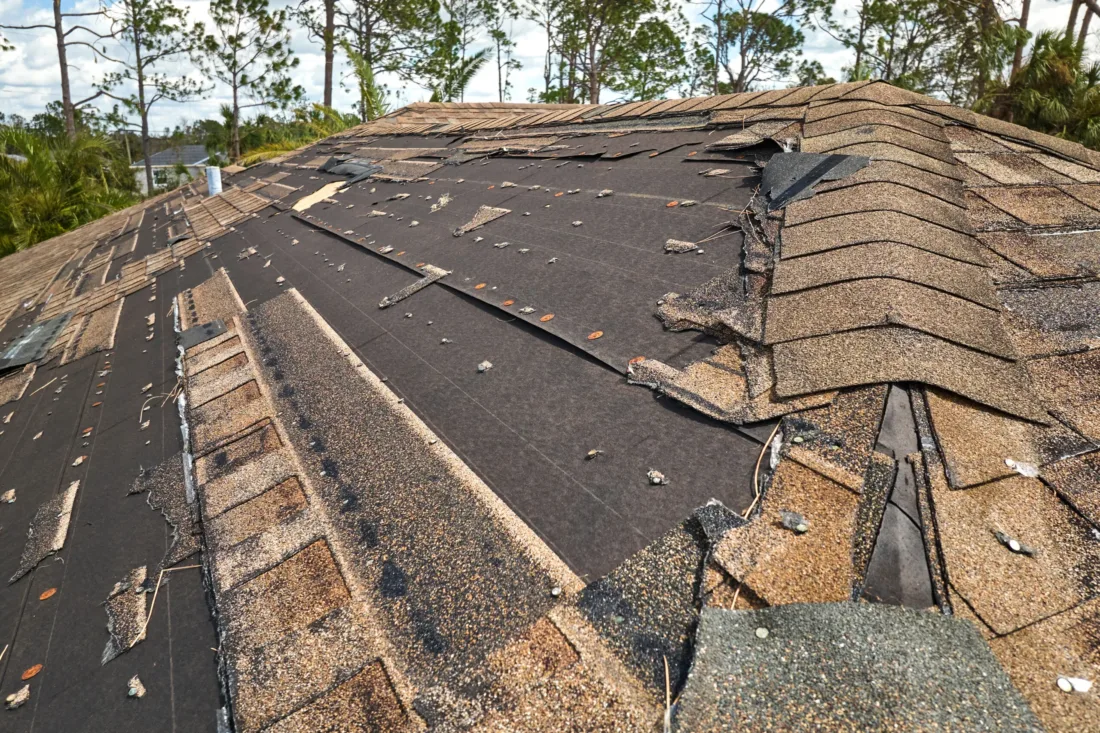
Some roof damage isn’t fully visible until tear-off begins. Rotted decking, additional water damage, code-required upgrades that weren’t initially identified, these get documented as discovered, with photos and detailed notes, and submitted to the carrier as supplements through the proper process.
We provide all documentation the claim needs.
Final invoices, certificate of completion, manufacturer warranty registrations, and any other documentation the carrier requires to release final payment. Strong documentation throughout the project supports the claim end-to-end.
We comply with Colorado-required contract language.
Colorado law requires specific language in residential roofing contracts on insurance work, including notice of right to rescind, deductible-payment language, and other provisions. Our contracts comply with these requirements as standard.
What We Don’t Do: and Why That Matters
We don’t negotiate insurance claims.
Under Colorado law, roofing contractors are not licensed to negotiate insurance claims on the homeowner’s behalf. We can document, scope, and coordinate, but the claim itself is between you and your carrier. Anyone offering to “fight your insurance company” or “handle your claim” as a contractor is operating outside Colorado law. If you need actual claim negotiation (and sometimes that’s appropriate), the licensed professional for that role is a public adjuster, not a roofing contractor.
We don’t waive or rebate insurance deductibles.
Waiving an insurance deductible, “we’ll cover your deductible,” “we’ll absorb it in the price,” “we’ll bill the carrier for it”, is illegal in Colorado, and it can constitute insurance fraud. Any contractor offering to waive your deductible is asking you to participate in an illegal scheme, and ethical contractors don’t make that offer. The deductible is your responsibility to pay; legitimate contractors don’t promise otherwise.
We don’t promise specific claim outcomes.
No contractor can legitimately promise that your claim will be approved, that a specific dollar amount will be paid, or that your insurance carrier will agree with a particular scope. The carrier makes those decisions based on your policy and the documented damage. Anyone promising specific outcomes is selling you certainty they cannot legally deliver.
We don’t ask you to sign Assignment of Benefits forms in panic.
Assignment of Benefits (AOB) forms transfer your rights to insurance proceeds to the contractor. They have legitimate uses in some specific situations, but they’re often misused to take control of your claim away from you. We don’t pressure homeowners into signing AOB forms, particularly in emergency or storm-state contexts.
We don’t inflate scopes to cover deductibles.
Some contractors inflate their proposal scope to cover the homeowner’s deductible, billing the carrier for work that isn’t actually being done, then “forgiving” the deductible amount. This is insurance fraud and can result in criminal charges for both contractor and homeowner. We don’t operate that way. And we recommend you walk away from any contractor who proposes it.
ACV vs. RCV: The Distinction That Affects What You Receive
Most homeowner insurance policies use one of two replacement-cost concepts for roof damage: Actual Cash Value (ACV) or Replacement Cost Value (RCV). The difference materially affects how much you actually receive on your claim.
Actual Cash Value (ACV).
ACV pays the depreciated value of the damaged roof. If your roof is 10 years old and the carrier calculates it has lost 40% of its useful life, an ACV settlement on a $20,000 replacement might pay $12,000 (the $20,000 replacement cost minus $8,000 in depreciation). ACV is generally the floor of what your policy pays.
Replacement Cost Value (RCV).
RCV pays the full cost of replacing the damaged roof with a comparable new one, without depreciation deduction. On RCV policies, depreciation is typically held back initially (the carrier pays ACV up front) and released after the work is completed and final documentation is submitted. To collect the depreciation portion, you typically have to actually complete the work, not just take the cash.
Why this matters for your claim.
Read your policy carefully to understand which type you have. If your policy is ACV-only, you may not have full replacement coverage for an aged roof, and you may need to budget for the gap between the settlement and the full replacement cost. If your policy is RCV, completing the work properly (with proper documentation and final invoices) is what releases the full settlement value.
Cosmetic damage exclusions on metal roofs.
Some policies have specific exclusions for cosmetic damage on metal roofs, meaning hail dents that don’t affect the roof’s function may not be covered even when the metal is visibly damaged. If you have a metal roof, check your policy for this exclusion.
Common Claim Issues on Golden, CO Residential Roofs
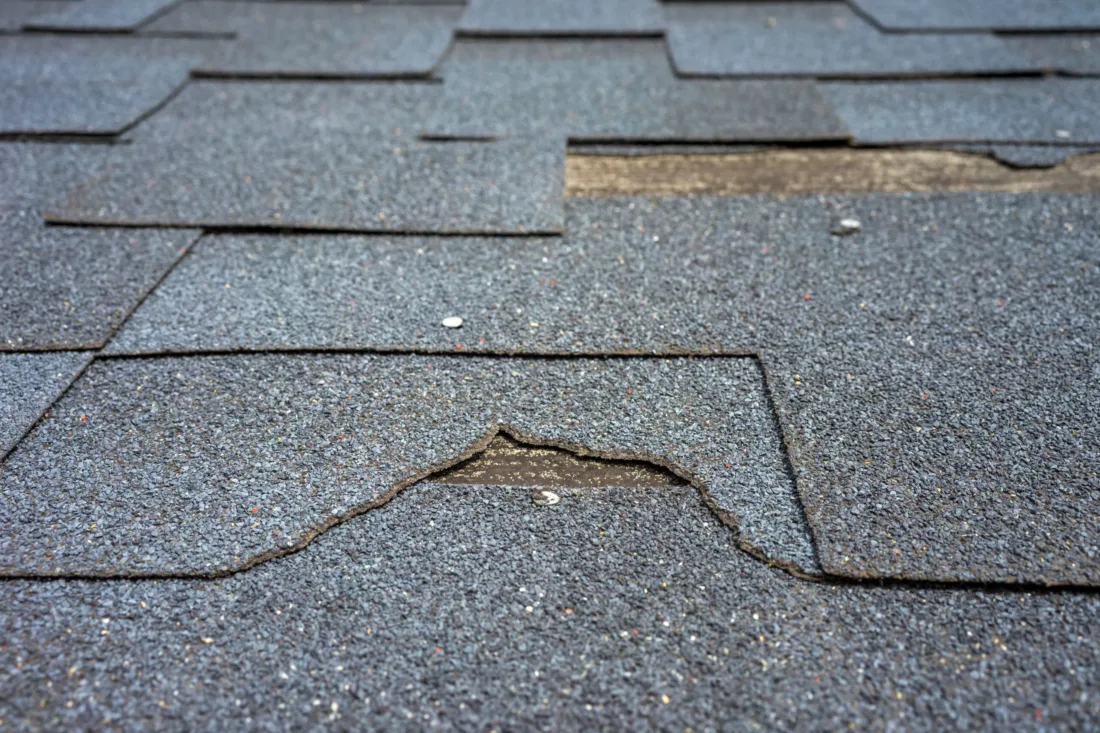
Specific claim issues come up over and over on Golden, CO area residential roofs. Knowing what to expect helps you navigate them.
Adjuster missed damage.
Adjusters inspect dozens of roofs per week during peak storm season. Sometimes legitimate damage isn’t fully captured in the initial estimate. We coordinate to be on-site when possible to point out damage during the adjuster’s visit. And we document supplements when damage is missed or discovered later.
Scope items not included.
Carrier estimates sometimes miss scope items required for a manufacturer-spec installation, proper underlayment, ice-and-water shield, ventilation upgrades, code-required items. Documenting these gaps and submitting supplements is part of how a complete claim gets approved.
Material matching.
On localized damage claims, matching the existing shingle product can be difficult, particularly on older roofs where the original product may be discontinued. Most Colorado policies have a “matching” clause that addresses this; specific policy language varies.
Code-required upgrades.
Local building codes sometimes require upgrades during replacement, additional ice-and-water shield, improved ventilation, drip edge requirements, that weren’t in the original roof. Most policies cover code-required upgrades through Building Code/Ordinance and Law coverage; check your specific policy.
Depreciation calculation.
Carrier depreciation calculations sometimes use age assumptions that don’t match the actual roof age. Documented installation records (warranty paperwork, original invoices) sometimes adjust the depreciation calculation.
Cosmetic damage exclusions.
As mentioned above, metal roof cosmetic damage exclusions are a recurring issue. If your policy has this exclusion, hail-dented metal that’s still functional may not be covered.
Storm Chasers and Residential Insurance Claims
Red flags in residential insurance claim contexts:
- Door-to-door solicitation immediately after a storm with offers to “handle the insurance claim”
- Promises to “waive your deductible”, illegal in Colorado, insurance fraud
- Pressure to sign Assignment of Benefits (AOB) forms before talking to your carrier
- Promises of specific claim approval amounts or outcomes
- Out-of-state license plates and contractor information
- Demands for substantial deposits or full payment before insurance approval
- Pressure to sign a contract on the spot before getting other estimates
- Inflated scopes designed to cover the deductible, insurance fraud
- Vague answers about Colorado licensing, insurance, and contractor compliance
What a legitimate insurance-claim roofing relationship looks like:
- Local contractor with verifiable Colorado address and history predating the most recent storm
- Transparent about Colorado contractor law and what they can/can’t do
- Documents damage thoroughly without inflating scope
- Coordinates with your adjuster respectfully and within the contractor role
- Compliant Colorado contracts with required language
- Clear about deductible being your responsibility, never offers to waive it
- Willing to wait while you talk to your carrier and consider your options
Internal link: link to Roofing Contractor Golden, CO page for full storm chaser warning content.

Working With Your Insurance Carrier
The most successful residential insurance claims involve a homeowner who’s actively engaged with their own claim, not one who’s handed it off to a contractor or third party. Some practical points:
- Read your policy. Before any storm event, read your homeowner policy. Understand your deductible, ACV vs RCV coverage, cosmetic damage exclusions on metal roofs, building code coverage, and notification deadlines.
- Use your broker. If you have an insurance broker. They’re a useful first contact when something happens. Brokers can help you understand your coverage, connect you with the carrier, and provide guidance on the claim process.
- Open the claim quickly. Most policies have specific notification timelines. Don’t let deadlines slip while you shop contractors, open the claim first, then take time to choose your contractor properly.
- Document everything from the start. Photos and video of damage, dates and times, weather conditions, written notes on what happened. Better documentation supports a stronger claim.
- Save all receipts. Emergency mitigation costs (tarping, water mitigation), inspection costs, and any out-of-pocket expenses are often covered. Keep all receipts and documentation.
- Don’t sign things in panic. Storm-state homeowners are pressured to sign contracts, AOB forms, and other documents in the rush of emergency response. Slow down. Get other opinions. Talk to your insurance carrier first. Make decisions when you have time to think.
- Consider a public adjuster for complex claims. If your claim is being denied, undervalued, or otherwise problematic in ways a contractor can’t legitimately address, a licensed public adjuster is the appropriate professional. Public adjusters are licensed, regulated, and legally allowed to negotiate claims on your behalf, which contractors are not.
Frequently Asked Questions: Roof Insurance Claims in Golden, CO
-
Will my insurance cover hail damage on my Golden, CO roof?
Most homeowner insurance policies cover hail damage subject to your deductible and policy terms. Some policies have specific exclusions (cosmetic damage on metal, certain age-related limitations). Read your policy and talk to your broker to understand your specific coverage.
-
How long do I have to file a roof damage claim after a storm?
Most homeowner policies have specific notification timelines after a covered event, typically requiring notification within a defined period (often a year, sometimes shorter). Check your specific policy. Don’t wait, open the claim early in the process even if you’re still figuring out the contractor side.
-
Can a roofing contractor negotiate my insurance claim in Colorado?
No. Under Colorado law, roofing contractors are not licensed to negotiate insurance claims. We can document damage, write scopes, and coordinate with adjusters on the work itself, but the claim itself is between you and your carrier. If you need claim negotiation, the appropriate professional is a licensed public adjuster.
-
Can a contractor waive my deductible to make the claim easier?
No, and any contractor offering to do so is asking you to participate in insurance fraud. Waiving or rebating insurance deductibles is illegal in Colorado, and the practice can result in criminal charges. The deductible is your responsibility, and legitimate contractors don’t offer to waive or absorb it.
-
What’s the difference between ACV and RCV on my homeowner policy?
Actual Cash Value (ACV) pays the depreciated value of the damaged roof. Replacement Cost Value (RCV) pays the full replacement cost without depreciation deduction, typically with depreciation released after work is completed. Read your specific policy to understand which type you have and what’s required to collect the full benefit.
-
Should I sign an Assignment of Benefits (AOB) form for the contractor?
Be very cautious. AOB forms transfer your rights to insurance proceeds to the contractor and can take control of your claim away from you. They have legitimate uses in some specific situations, but they’re often misused. Don’t sign one in panic, don’t sign one without reading carefully, and talk to your insurance carrier or broker before agreeing.
-
What if my insurance carrier denies my roof claim?
Claim denials happen, sometimes legitimately (the damage isn’t covered under the policy), sometimes incorrectly (the adjuster missed damage, the scope was misunderstood). For denied claims, the path forward is typically through your carrier’s appeal process or, in more complex situations, through a licensed public adjuster who can negotiate on your behalf. We can document the damage, but the claim handling is between you and your carrier.
Get a Free Roof Damage Assessment in Golden, CO
If you suspect your Golden, CO home has hail or wind damage that may be claim-eligible, the first step is a thorough damage assessment. Baseline Roofing and Solar provides free initial assessments to identify whether full damage documentation is warranted. And we support residential insurance claims within Colorado’s contractor and insurance laws, meaning we document, scope, and coordinate properly without making promises we cannot legally deliver.
Disclaimer: This page provides general information, not legal or insurance advice. Read your specific homeowner policy carefully. Consult with your insurance broker or a licensed public **adjuster for advice on your specific situation. Baseline Roofing and Solar is a roofing contractor and complies with Colorado SB 12-038 / C.R.S. § 6-22-101 et seq.
-
More Residential Roof Insurance Claims Locations +
- Residential Roof Insurance Claims in Colorado
- Residential Roof Insurance Claims in Arvada, CO
- Residential Roof Insurance Claims in Aurora, CO
- Residential Roof Insurance Claims in Berthoud, CO
- Residential Roof Insurance Claims in Boulder, CO
- Residential Roof Insurance Claims in Brighton, CO
- Residential Roof Insurance Claims in Broomfield, CO
- Residential Roof Insurance Claims in Castle Pines, CO
- Residential Roof Insurance Claims in Castle Rock, CO
- Residential Roof Insurance Claims in Centennial, CO
- Residential Roof Insurance Claims in Cherry Creek, CO
- Residential Roof Insurance Claims in Cherry Hills Village, CO
- Residential Roof Insurance Claims in Colorado Springs, CO
- Residential Roof Insurance Claims in Commerce City, CO
- Residential Roof Insurance Claims in Englewood, CO
- Residential Roof Insurance Claims in Erie, CO
- Residential Roof Insurance Claims in Firestone, CO
- Residential Roof Insurance Claims in Fort Collins, CO
- Residential Roof Insurance Claims in Frederick, CO
- Residential Roof Insurance Claims in Golden, CO
- Residential Roof Insurance Claims in Greeley, CO
- Residential Roof Insurance Claims in Greenwood Village, CO
- Residential Roof Insurance Claims in Gunbarrel, CO
- Residential Roof Insurance Claims in Highlands Ranch, CO
- Residential Roof Insurance Claims in Lafayette, CO
- Residential Roof Insurance Claims in Lakewood, CO
- Residential Roof Insurance Claims in Littleton, CO
- Residential Roof Insurance Claims in Lone Tree, CO
- Residential Roof Insurance Claims in Longmont, CO
- Residential Roof Insurance Claims in Louisville, CO
- Residential Roof Insurance Claims in Loveland, CO
- Residential Roof Insurance Claims in Mead, CO
- Residential Roof Insurance Claims in Niwot, CO
- Residential Roof Insurance Claims in Northglenn, CO
- Residential Roof Insurance Claims in Parker, CO
- Residential Roof Insurance Claims in Superior, CO
- Residential Roof Insurance Claims in Thornton, CO
- Residential Roof Insurance Claims in Westminster, CO
- Residential Roof Insurance Claims in Wheat Ridge, CO
- Residential Roof Insurance Claims in Windsor, CO