Commercial Hail & Storm Damage Roof Inspection in Frederick, CO
Frederick, CO and the surrounding Colorado region sit squarely inside Colorado’s hail belt, one of the most active hail corridors in North America, and severe windstorms regularly drive 60+ mph gusts across the area. After every major storm, commercial roofs across the region take damage that ranges from minor surface bruising to widespread membrane fracture. The trouble is that commercial storm and hail damage is rarely visible from inside the building. Roofs that look fine from the parking lot can be substantially compromised, and the leaks often don’t start until weeks or months later, which is frequently after the policy’s reporting window has closed.
Baseline Roofing and Solar provides post-storm commercial roof inspections across Frederick, CO and surrounding Colorado communities. After hail events, severe windstorms, falling-debris incidents, and major weather, we inspect the roof thoroughly, document any damage with insurance-grade photos and measurements, identify the failure modes, and produce a written report you can submit to your insurance carrier. We are licensed, insured, and certified by every major commercial roofing manufacturer, which means we know what hail and wind damage actually looks like on each commercial system. And we know what carriers are looking for in claim documentation.
On this page. We’ll walk through why post-storm inspection matters, what hail damage and wind damage actually look like on each commercial roof type, what our inspection process looks like, what documentation you receive, and how to avoid the predatory “storm chaser” contractors that descend on Frederick, CO after every major hail event.
Why Post-Storm Roof Inspection Matters in Frederick, CO
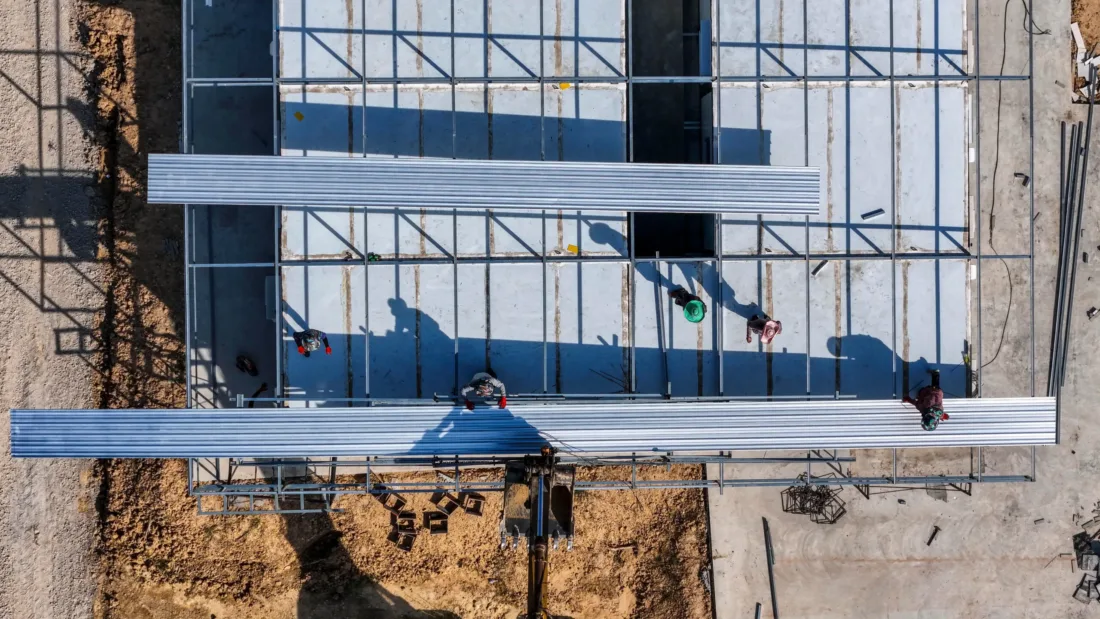
Most commercial property owners only think about their roof when it starts leaking. With hail and wind damage. That’s a problem, because by the time the leak shows up inside the building, three things have often already happened, all of them bad.
- The insurance reporting window may have closed. Most commercial property policies require prompt notification of damage. Hail damage that surfaces six months after the storm is much harder to claim than hail damage documented within days of the event.
- Wet insulation has accumulated. Hail-fractured membranes leak slowly at first. By the time water shows up inside the building, insulation is often saturated, adding tens of thousands of dollars to the repair scope.
- Subsequent storms have layered new damage on top of old. When multiple storms hit in a season, distinguishing damage from each event becomes difficult and can split or weaken the claim.
Inspecting promptly after a major hail or wind event captures the damage while it’s clean, fresh, and documentable. If significant damage is found, you have a clear basis to file a claim. If little or no damage is found. You’ve spent an hour confirming your roof is fine and you can move on. Either way, the inspection produces a documented record of the roof’s post-event condition that has real value going forward.
When to schedule a post-storm inspection:
- Within days of a hailstorm where hail of one inch or larger fell in your area
- After any windstorm with sustained winds or gusts above 50 mph
- After a tornado or severe thunderstorm warning that affected your property
- After visible debris (trees, branches, equipment) has impacted the roof
- After neighboring properties have filed successful insurance claims from the same storm
- Anytime new leaks have started inside the building following weather
What Hail Damage Looks Like on Commercial Roofs
Hail damage shows up differently on different commercial roof systems. What’s obvious on a metal roof can be subtle on a single-ply membrane, and what’s catastrophic on built-up roofing may be barely visible on EPDM. Knowing what to look for on each system is part of why manufacturer-certified inspection matters.
Hail Damage on TPO Roofing
On TPO membranes, hail strikes typically appear as circular impact marks where the surface coating has been stretched, fractured, or chipped away from the reinforcement scrim. Severe strikes can puncture the membrane outright. Marginal hail damage may not leak immediately but compromises the reinforcement and accelerates UV degradation at the impact sites.
Hail Damage on EPDM Roofing
EPDM rubber membranes are relatively elastic, which gives them better impact resistance than some other systems, but hail still causes damage. Look for splatter marks where the surface has been bruised, depressions where impacts have stretched or torn the membrane, and punctures at adhered seams or aged areas. Aging EPDM is significantly more vulnerable to hail damage than freshly installed material.
Hail Damage on PVC Roofing
PVC membranes show hail damage similarly to TPO, circular impact marks, surface fracture, and outright punctures on heavier strikes. Aged PVC can become brittle and damage more dramatically than newer material. Heat-welded seams sometimes split at the impact site and need careful inspection.
Hail Damage on Modified Bitumen
On modified bitumen and asphalt-based systems, hail damage shows up as granule loss (where the surface granules have been knocked away by impact), dimpling, and impact fractures. Granule loss exposes the underlying asphalt to UV and accelerates degradation system-wide, even if the membrane hasn’t yet started leaking.
Hail Damage on Built-Up Roofing (BUR)
Built-up roofs typically have a gravel surface that absorbs much of the hail energy, but severe hail can still embed gravel into the membrane, fracture the underlying plies, and damage flashings. Gravel displacement after a storm, bare patches where the gravel has been blown or knocked off, is one of the clearest indicators of significant hail or wind.
Hail Damage on Spray Foam (SPF)
Spray foam roofs are typically protected by a coating layer over the foam itself. Hail damage shows up as coating fractures, exposed foam at impact points, and depressions where impacts have crushed the foam beneath the coating. Damage to the coating allows UV and moisture to attack the foam directly.
Hail Damage on Metal Commercial Roofing
Metal roof hail damage is a specific category, and a specific insurance challenge. Hail leaves visible dents and dimples on metal panels, but many policies have cosmetic damage exclusions on metal roofs that exclude purely cosmetic dents from coverage. Functional damage, punctures, seam separation, fastener pull-out, paint system damage, is typically still covered. We document both, and we’ll tell you straight what we believe is functional versus cosmetic.
What Wind and Storm Damage Looks Like on Commercial Roofs
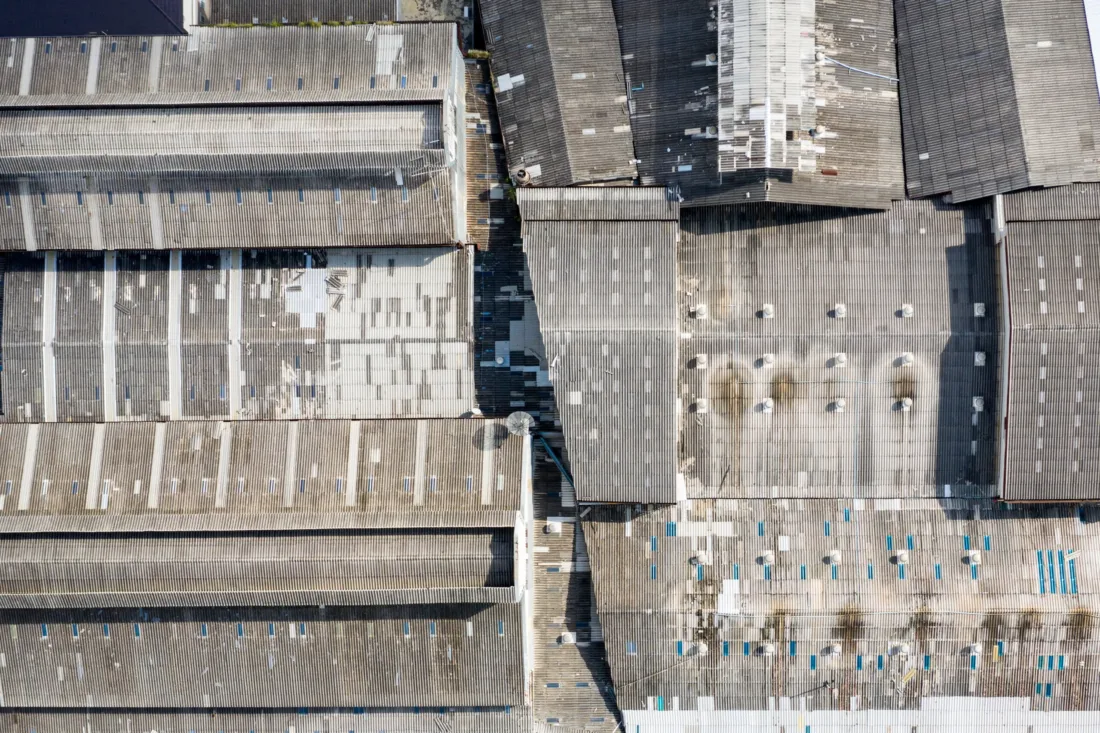
Wind damage attacks commercial roofs from the edges. Once wind gets under a membrane or behind edge metal, the damage propagates quickly. Common wind damage patterns we look for include:
- Lifted, peeled, or torn membrane, particularly at edges, corners, and roof penetrations
- Bent, blown-off, or detached edge metal, gravel stops, and parapet caps
- Damaged or displaced rooftop equipment, HVAC units, vent stacks, satellite dishes
- Loose or missing fasteners visible at edges and corners
- Gravel displacement on built-up roofs
- Flashing damage at parapet walls, equipment curbs, and penetrations
- Damage from wind-driven debris, branches, hailstones, debris from neighboring properties
- Stress-tear patterns where the membrane has been pulled away from fasteners or seams
Wind damage on commercial roofs is often less obvious than hail damage but can be more catastrophic, once wind has compromised the membrane attachment, the next storm can take entire sections of the roof off.

Our Post-Storm Commercial Roof Inspection Process
A post-storm inspection is more focused than a routine maintenance inspection. The objective is documentation, not just finding damage, but documenting it in the format that supports the insurance claim. Here’s how we work.
- Initial conversation. We confirm the storm event date, the building location, the roof system if known, and any leaks or damage you’ve already observed. This sets context for the inspection.
- Weather event verification. We cross-reference reported storm activity, hail size, and wind speeds for your specific location and date, useful documentation for the claim.
- Roof inspection. A qualified inspector accesses the roof and systematically inspects the entire surface, with particular attention to areas most vulnerable to hail and wind damage. Drone imagery is used where appropriate for thorough coverage.
- Damage identification and measurement. Each area of damage is photographed, measured, and documented, the type of damage, its severity, the affected area, and the failure mode.
- System-specific assessment. We evaluate damage in the context of the specific roof system. What constitutes major damage on TPO is different from what constitutes major damage on built-up roofing. Manufacturer certifications matter here.
- Interior assessment where accessible. Where ceiling tiles, attic spaces, or deck soffits are accessible, we look for water staining, wet insulation, or damaged interior finishes.
- Written report production. We produce a written inspection report with executive summary, photo documentation, damage descriptions, severity ratings, repair recommendations, and a scope of work suitable for insurance claim submission.
- Adjuster coordination if needed. If you file a claim, we can coordinate to be on-site during the carrier’s adjuster inspection to discuss our findings and the recommended scope of repair.
What You Receive From a Post-Storm Inspection
Post-storm inspection documentation is more rigorous than routine inspection documentation because it has to support an insurance claim. Every post-storm inspection at Baseline produces:
- A comprehensive written report. Executive summary, system identification, condition assessment, damage descriptions, and prioritized recommendations.
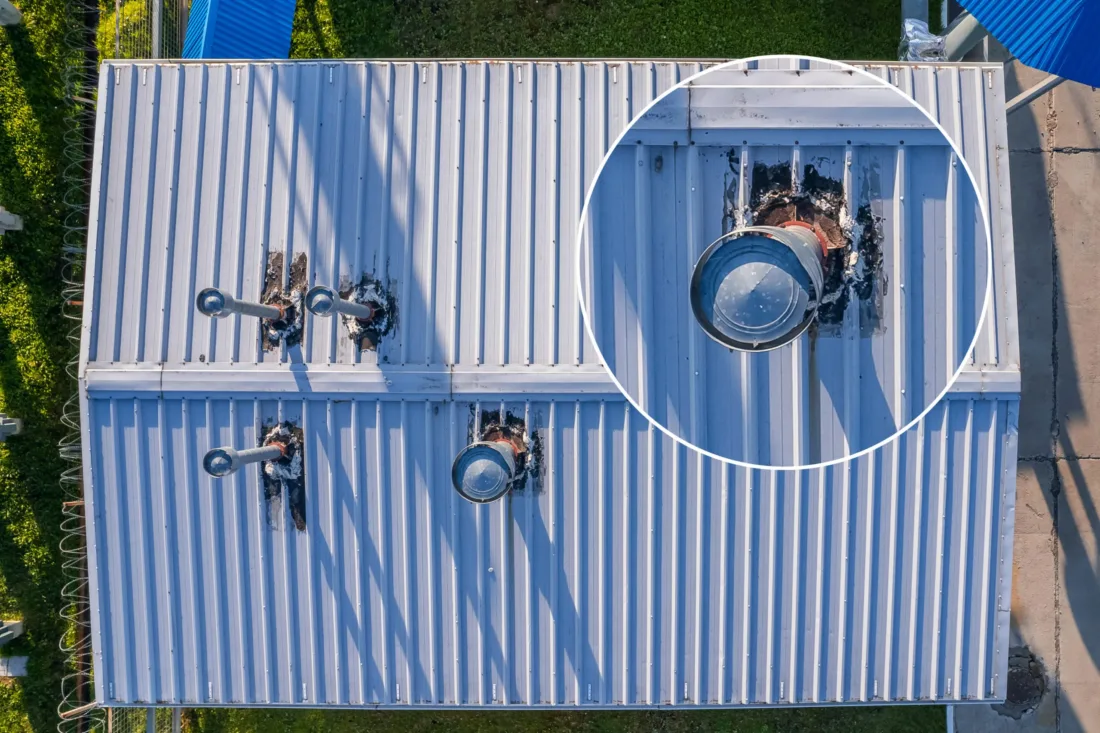
- Insurance-grade photo documentation. Wide shots of the roof, close-ups of each damage area, scaled photos showing damage size, and reference photos showing undamaged areas of the same roof for comparison.
- Measurements of damaged areas. Square footage of damage, count of impact strikes, dimensions of torn or lifted membrane, and other quantitative documentation that supports the claim.
- Weather event correlation. Date and approximate time of the storm, hail size if available, wind speeds, and the basis for attributing the damage to the specific event.
- Recommended scope of work. A written scope of repair or replacement work needed to restore the roof, with manufacturer-spec materials and code-required upgrades identified.
- Severity assessment. Plain-language assessment of whether damage is localized (repair scope), system-wide (replacement scope), or somewhere in between.
Avoiding Storm Chasers and Out-of-State Contractors
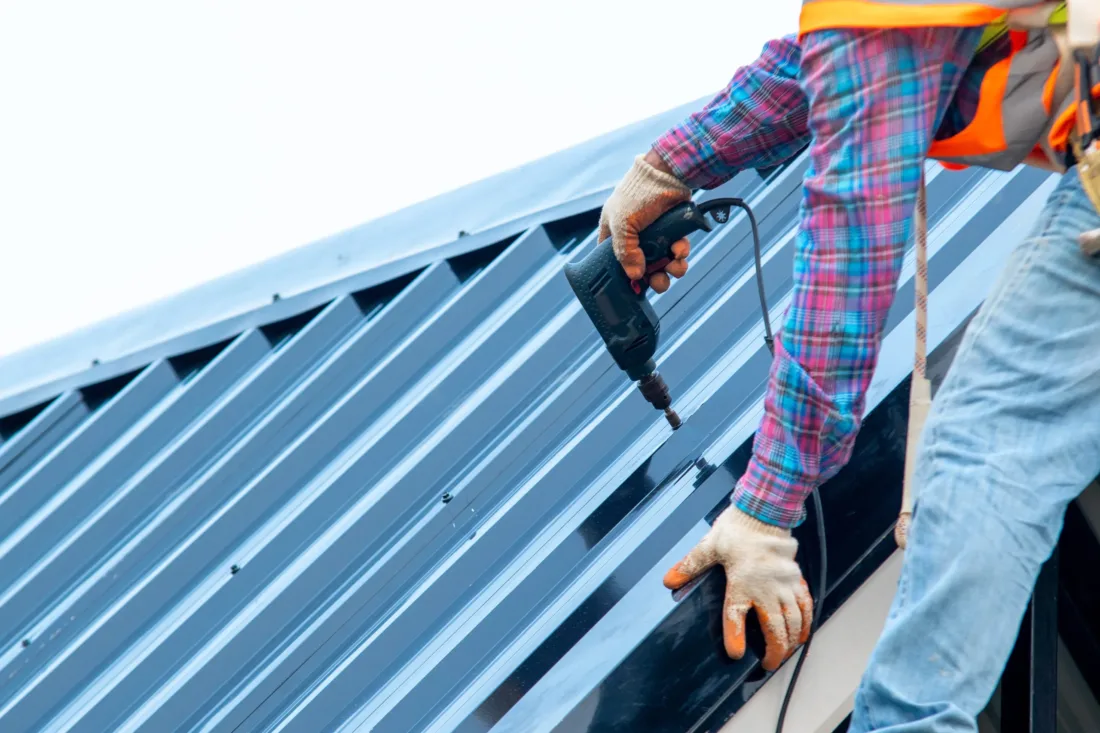
Heads-up: After every major hail or windstorm in Frederick, CO, out-of-state contractors flood the area going door-to-door offering “free roof inspections” and promising to handle your insurance claim. Some are legitimate. Many are not. Knowing the difference protects your building, your warranty, and your wallet.
Frederick, CO’s hail and storm exposure makes it a recurring destination for storm-chasing roofing operations. These are companies, often based out of state, that follow major storms across the country, set up temporary operations in the affected area, knock on doors and chase claims, and move on once the work is done. The legitimate ones complete reasonable work. The bad ones leave warranties they can’t honor, walk away from warranty calls, and leave property owners holding the bag when problems surface a year or two later.
Red flags that should make you walk away:
- Out-of-state license plates and out-of-state phone numbers
- Door-to-door solicitation immediately after a storm
- Pressure to sign a contract on the spot before getting other estimates
- Offers to “waive your deductible”, this is illegal in Colorado
- Vague or refused answers about Colorado licensing, insurance, and certifications
- No verifiable physical address, no website, or a website that’s days old
- Contracts that don’t comply with Colorado’s specific roofing law requirements (SB 12-038 / C.R.S. § 6-22-101 et seq.)
- Promises of specific insurance claim outcomes, no contractor can legally guarantee an insurance result
What to look for in a legitimate Frederick, CO commercial roofing contractor:
- A verifiable physical address in Colorado
- A history of work in Frederick, CO and the surrounding area that predates the most recent storm
- Manufacturer certifications across major commercial systems
- Current Colorado licensing and insurance with certificates of insurance available on request
- Contracts that comply with Colorado’s roofing law requirements
- References from previous Frederick, CO area commercial clients you can actually call
- Honest answers about what the inspection finds, including answers you may not want to hear
Baseline Roofing and Solar is based in Colorado. Our owner has spent more than 15 years in the roofing industry, most of it serving Colorado, and the company isn’t going anywhere when storms move on. That permanence matters when warranty calls come up two, five, or ten years after the work is done.
Frequently Asked Questions: Commercial Storm & Hail Damage Roof Inspection in Frederick, CO
-
Is a post-storm commercial roof inspection free?
In most cases, yes. When you’re considering work as a result of storm damage and contacting us as a property owner, the post-storm inspection is included at no cost as part of the assessment. Larger forensic inspections, third-party inspections for property managers documenting condition without intent to repair through us, and pre-purchase post-storm inspections are sometimes priced separately. We’ll always tell you up front what the inspection cost will be.
-
How quickly should I schedule an inspection after a hailstorm?
As soon as practically possible, ideally within days of the event, and certainly before the next major storm. Most commercial property insurance policies require prompt notification of damage. Inspection within days of the event also captures damage while it’s fresh and clearly attributable to the storm in question.
-
Will an inspection guarantee my insurance will pay for repairs?
No. We document damage and write repair scopes, but the insurance claim is between you and your carrier. What we can do is provide thorough, professional documentation that gives you the best basis to support the claim. We never promise specific claim outcomes. That’s not legal for a contractor to do, and it’s not how the claim process actually works.
-
Can hail damage be invisible from inside my building?
Yes, and this is one of the most important reasons to schedule post-storm inspection. Hail can fracture or compromise commercial roof membranes without producing visible interior leaks for weeks or months. By the time the leak surfaces, the insurance claim window may have closed and the damage to insulation may be substantial. Don’t wait for visible leaks to inspect.
-
What size hail causes commercial roof damage?
Hail of approximately one inch in diameter or larger is generally capable of damaging commercial roof membranes, though damage thresholds vary by system, system age, and impact angle. Aged single-ply membranes can be damaged by smaller hail than fresh material. We don’t rely on a single threshold, we inspect when there’s any reasonable chance of damage.
-
Can you inspect a commercial roof you didn’t install?
Yes. The vast majority of post-storm inspections we perform are on roofs originally installed by other contractors. We’re certified across every major commercial manufacturer, which means we know how to inspect each system properly regardless of who installed it.
-
How long does a post-storm commercial roof inspection take?
On-site time typically runs one to three hours depending on the size and complexity of the roof. For larger commercial buildings, drone imagery accelerates the process while improving documentation quality. The written report is delivered within a few business days of the inspection, faster on time-sensitive insurance situations.
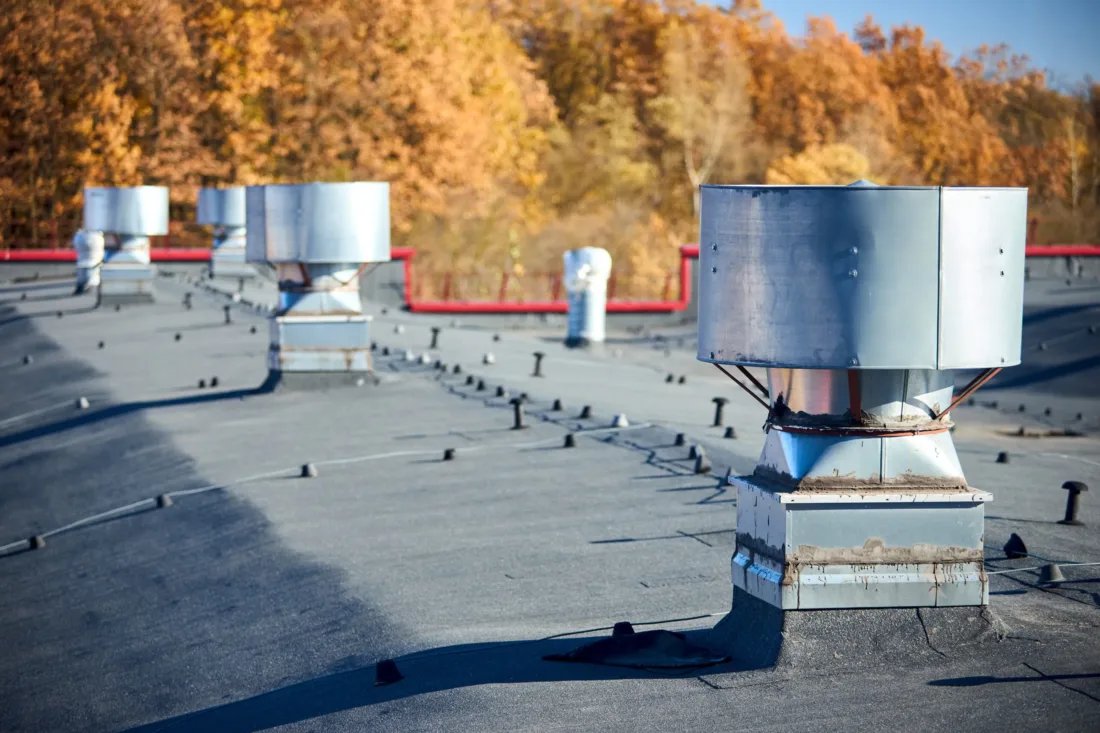
Schedule a Post-Storm Commercial Roof Inspection in Frederick, CO
If a major hail or windstorm has hit your area in the past several weeks, schedule an inspection. The cost is typically nothing, the process takes a few hours, and the inspection produces a documented record of your roof’s post-storm condition that has real value whether you ultimately file a claim or not. Baseline Roofing and Solar inspects commercial roofs across Frederick, CO and surrounding Colorado communities. And we tell you straight what we find, even when the answer is “your roof is fine.”
-
More Commercial Storm & Hail Damage Roof Inspection Locations +
- Commercial Storm & Hail Damage Roof Inspection in Colorado
- Commercial Storm & Hail Damage Roof Inspection in Arvada, CO
- Commercial Storm & Hail Damage Roof Inspection in Aurora, CO
- Commercial Storm & Hail Damage Roof Inspection in Berthoud, CO
- Commercial Storm & Hail Damage Roof Inspection in Boulder, CO
- Commercial Storm & Hail Damage Roof Inspection in Brighton, CO
- Commercial Storm & Hail Damage Roof Inspection in Broomfield, CO
- Commercial Storm & Hail Damage Roof Inspection in Castle Pines, CO
- Commercial Storm & Hail Damage Roof Inspection in Castle Rock, CO
- Commercial Storm & Hail Damage Roof Inspection in Centennial, CO
- Commercial Storm & Hail Damage Roof Inspection in Cherry Creek, CO
- Commercial Storm & Hail Damage Roof Inspection in Cherry Hills Village, CO
- Commercial Storm & Hail Damage Roof Inspection in Colorado Springs, CO
- Commercial Storm & Hail Damage Roof Inspection in Commerce City, CO
- Commercial Storm & Hail Damage Roof Inspection in Englewood, CO
- Commercial Storm & Hail Damage Roof Inspection in Erie, CO
- Commercial Storm & Hail Damage Roof Inspection in Firestone, CO
- Commercial Storm & Hail Damage Roof Inspection in Fort Collins, CO
- Commercial Storm & Hail Damage Roof Inspection in Frederick, CO
- Commercial Storm & Hail Damage Roof Inspection in Golden, CO
- Commercial Storm & Hail Damage Roof Inspection in Greeley, CO
- Commercial Storm & Hail Damage Roof Inspection in Greenwood Village, CO
- Commercial Storm & Hail Damage Roof Inspection in Gunbarrel, CO
- Commercial Storm & Hail Damage Roof Inspection in Highlands Ranch, CO
- Commercial Storm & Hail Damage Roof Inspection in Lafayette, CO
- Commercial Storm & Hail Damage Roof Inspection in Lakewood, CO
- Commercial Storm & Hail Damage Roof Inspection in Littleton, CO
- Commercial Storm & Hail Damage Roof Inspection in Lone Tree, CO
- Commercial Storm & Hail Damage Roof Inspection in Longmont, CO
- Commercial Storm & Hail Damage Roof Inspection in Louisville, CO
- Commercial Storm & Hail Damage Roof Inspection in Loveland, CO
- Commercial Storm & Hail Damage Roof Inspection in Mead, CO
- Commercial Storm & Hail Damage Roof Inspection in Niwot, CO
- Commercial Storm & Hail Damage Roof Inspection in Northglenn, CO
- Commercial Storm & Hail Damage Roof Inspection in Parker, CO
- Commercial Storm & Hail Damage Roof Inspection in Superior, CO
- Commercial Storm & Hail Damage Roof Inspection in Thornton, CO
- Commercial Storm & Hail Damage Roof Inspection in Westminster, CO
- Commercial Storm & Hail Damage Roof Inspection in Wheat Ridge, CO
- Commercial Storm & Hail Damage Roof Inspection in Windsor, CO