Commercial Roof Inspection in Firestone, CO
A commercial roof inspection is the single highest-leverage thing a property owner or facility manager can do to protect a commercial roof investment. A thorough inspection catches small problems while they’re still cheap to fix, documents the condition of the roof for insurance and resale, identifies hail and storm damage that may not be visible from inside the building, and tells you honestly how much service life is left in the existing system. Skipping inspections is one of the most common (and most expensive) mistakes commercial property owners make in Firestone, CO.
Baseline Roofing and Solar provides commercial roof inspections across Firestone, CO and communities throughout Colorado. We inspect every major commercial system, TPO, EPDM, PVC, modified bitumen, built-up, spray foam, metal, and coated systems. And we deliver written inspection reports with photos, condition documentation, and clear, prioritized recommendations. Our team is certified by every major commercial manufacturer, which means we know what to look for on each system type and what conditions threaten warranty coverage.
On this page. We’ll walk through the different reasons commercial property owners need roof inspections, when to schedule one, what we actually inspect, what you get back from the inspection, and how we use modern tools to inspect more thoroughly than a flashlight-and-clipboard walk-around can deliver.
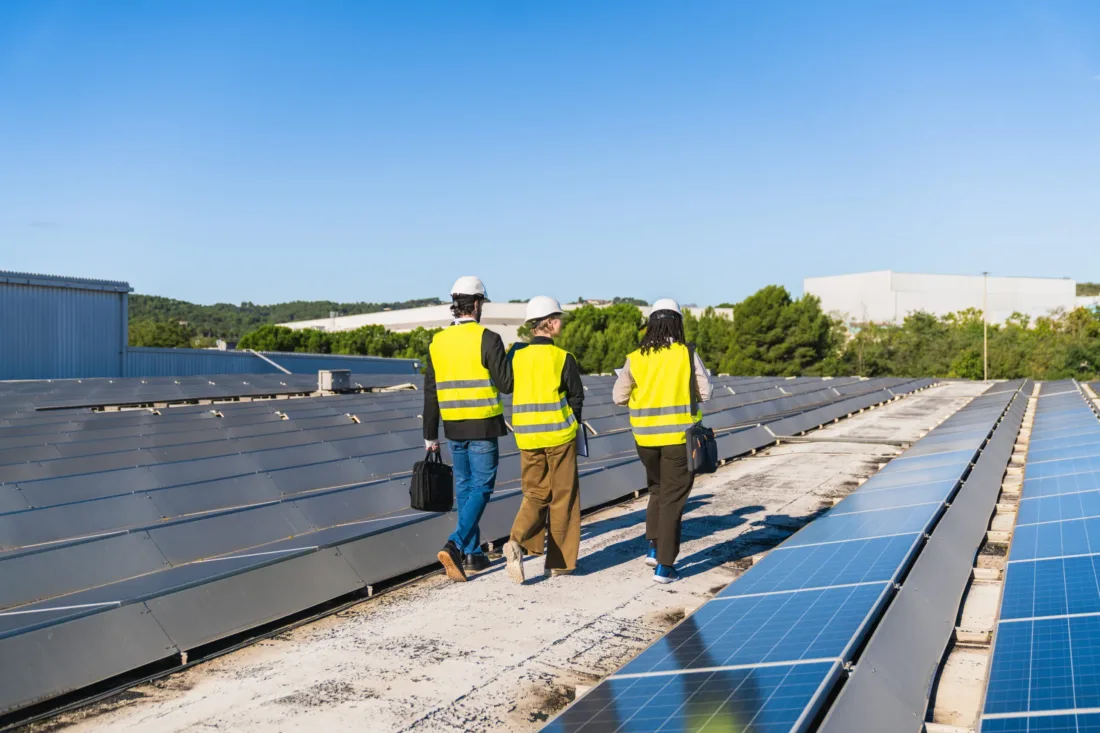
Why Commercial Roof Inspection Matters in Firestone, CO
Commercial roofs in Firestone, CO work harder than commercial roofs in most other parts of the country. Colorado’s hail belt exposure, high-elevation UV intensity, 50-degree temperature swings in a single day, high winds, and Colorado freeze-thaw cycle all combine to age commercial roofs faster than the same system would age in a milder climate. That’s the bad news. The good news is that almost every premature failure on a Firestone, CO commercial roof gives warning signs months or years before the catastrophic leak, if someone is actually looking.
Routine inspections deliver concrete value in five specific ways:
- Catch issues while repairs are cheap. A failing seam caught early is a $500 repair. The same seam ignored for two years can mean saturated insulation, interior damage, mold remediation, and a $20,000+ bill.
- Maximize useful service life. Roofs on a maintenance and inspection program routinely deliver service life at the upper end of the manufacturer’s range. Roofs that are ignored often fail years before they should.
- Protect the manufacturer warranty. Most commercial roofing warranties require periodic inspection and maintenance to remain valid. Skip those, and you may be paying for repairs the warranty would have covered.
- Document the asset for insurance and resale. Inspection reports are evidence of condition, evidence of maintenance, and the foundation of any post-storm insurance claim. Buildings with documented inspection histories sell faster and at higher prices.
- Catch storm damage early. After major hail or wind events across Colorado, post-storm inspections identify damage that may not be visible from inside the building until weeks later, when the insurance reporting window may have closed.
When to Schedule a Commercial Roof Inspection
There are five common scenarios where commercial property owners and managers need an inspection. Knowing which applies to your situation helps us scope the visit appropriately.
Scheduled Maintenance Inspections
Most commercial roofs benefit from inspection at least once a year, and twice a year, typically spring (post-winter) and fall (pre-winter), is the gold standard. Annual or semi-annual inspections catch developing problems before they become emergencies and document ongoing condition for insurance and warranty purposes.
Post-Storm Inspections
After every significant hail event, severe windstorm, or major weather incident, your commercial roof should be inspected. Hail damage in particular is often invisible from inside the building until weeks or months later, and most insurance policies have reporting deadlines that are shorter than that. A post-storm inspection within days of the event documents damage while it’s fresh and gives you a clean record for any insurance claim.
Pre-Purchase / Due Diligence Inspections
Before buying a commercial property, the roof condition is one of the largest single variables in the value of the building. A due diligence inspection identifies remaining service life, current issues, and likely capital expenditure timeline. The cost of the inspection is trivial compared to the cost of buying a building with a roof that needs to be replaced in the first year of ownership.
Pre-Sale Inspections
On the seller side, an inspection report in advance of listing surfaces issues you can address proactively, supports the asking price, and limits the negotiating leverage that buyers often try to claim around “unknown” roof condition.
Insurance and Warranty Inspections
Some commercial property insurance policies require periodic roof inspection as a condition of coverage. Most manufacturer warranties on commercial roofs also require documented periodic inspection to remain in force. We provide the documentation needed for both.
What We Actually Inspect on a Commercial Roof
A real commercial roof inspection is more than a quick walk around the perimeter. Here’s the systematic checklist our team works through on every commercial roof inspection in Firestone, CO.
Roof Surface and Membrane
- Overall membrane condition: cracking, blistering, ponding, UV degradation, mechanical damage
- Seam condition: separation, fishmouthing, cold-flow, lifting, weld or bond failures
- Punctures, tears, and abrasions
- Hail damage indicators: surface fractures, granule loss, dimpling, splatter marks
- Coating condition (where applicable): cracking, peeling, chalking, thinning
Flashings and Penetrations
- Pipe boots and vent stacks
- HVAC equipment curbs and rooftop unit flashings
- Skylights, hatches, and access points
- Conduit, cable, and antenna penetrations
- Sealant condition at all transitions
Drainage System
- Roof drains, scuppers, and overflow drains
- Drain rings, strainers, and clamping rings
- Evidence of ponding water or backup
- Slope to drain and tapered insulation effectiveness
- Gutter and downspout condition where applicable
Edges and Terminations
- Edge metal, gravel stops, and parapet caps
- Termination bars at walls and parapets
- Counter-flashing at adjoining walls
- Wind uplift indicators at edges and corners
Insulation and Substrate (Indirect Indicators)
- Visible deflection or sagging
- Soft spots underfoot indicating wet insulation
- Where moisture survey is appropriate, infrared or capacitance survey
- Deck condition where visible from underside
Interior Indicators
- Ceiling stains, water marks, and active leaks
- Insulation damage in attic spaces or above-ceiling areas
- Deck condition from below where accessible
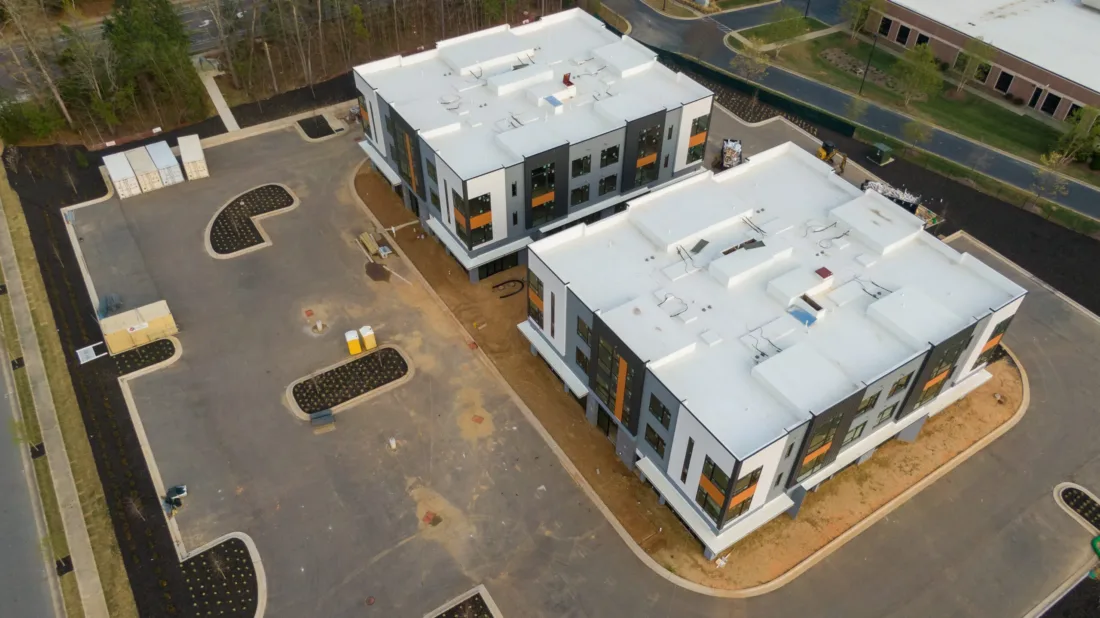
What You Receive From a Commercial Roof Inspection
An inspection is only as valuable as the documentation that comes out of it. Every commercial roof inspection at Baseline produces a written report with the following:
- Executive summary. Plain-language overview of the roof’s overall condition, expected remaining service life, and our top recommendations.
- Photo documentation. Photos of the roof overall and close-ups of every issue identified during the inspection. This is essential for insurance claims and for resale documentation.
- Condition assessment by section. A systematic walkthrough of membrane, seams, flashings, drains, edges, and penetrations with notes on each.
- Identified issues with severity ratings. Each issue rated by severity (immediate attention, recommended within 6-12 months, monitor, etc.) so you can prioritize.
- Repair and maintenance recommendations. Specific actions to address what we found, with rough cost ranges where appropriate.
- Maintenance recommendations. Suggested inspection frequency, preventive maintenance steps, and timing for future service.
- Capital planning input. Honest assessment of when full replacement is likely needed, so you can plan and budget accordingly.
On insurance-related inspections, we also provide damage documentation in the format your carrier needs to evaluate the claim, measurements, descriptions of failure modes, and weather event correlation.
How We Use Modern Inspection Technology
A flashlight and a clipboard catch what’s visible. Modern inspection tools catch what isn’t, and on commercial roofs, what isn’t visible is usually the bigger problem. Where appropriate, our inspections use:
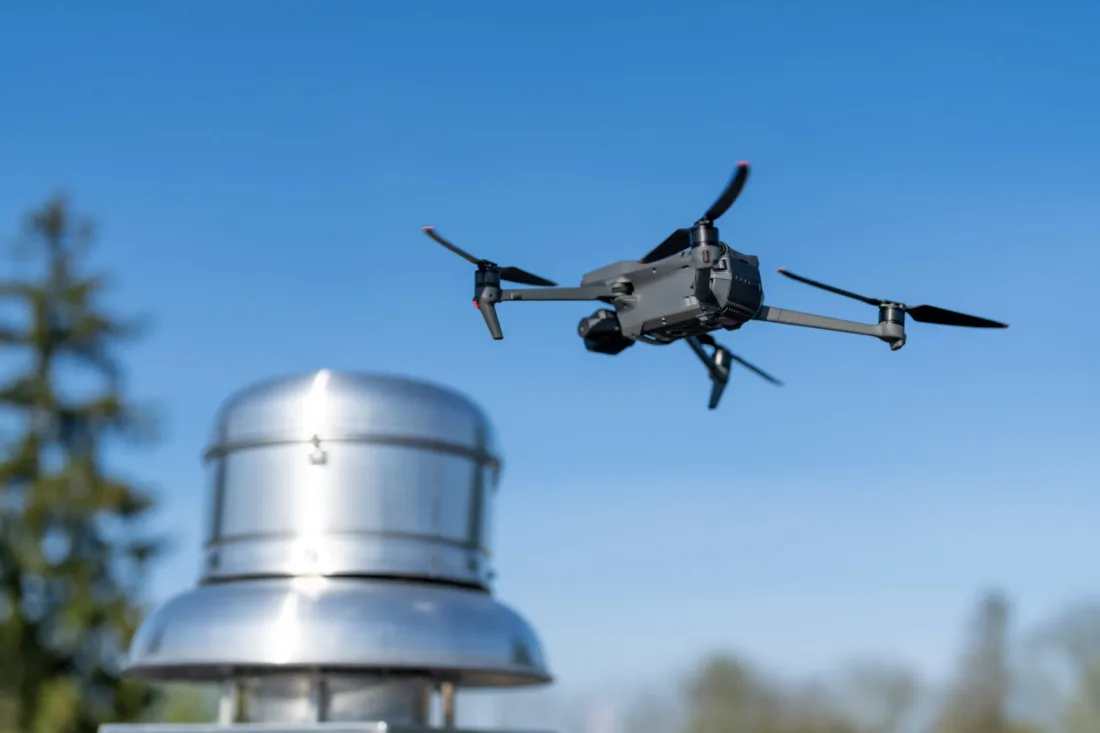
Drone imagery.
Drone surveys allow us to inspect large commercial roofs more thoroughly and more safely than a foot survey alone, identify issues at edges and on tall buildings without lift equipment, and produce high-resolution overhead imagery for the inspection report. Drone imagery is particularly valuable for documenting hail damage patterns and roof-wide conditions.
Infrared thermography.
Infrared cameras detect temperature differences that reveal wet insulation underneath an apparently sound membrane. Wet insulation is invisible from above and below, but it accelerates membrane degradation and points to active or past leak paths. IR surveys are most effective on warm days followed by cool nights, Firestone, CO has many of those.
Capacitance moisture meters.
Capacitance and impedance meters provide spot moisture readings on roofing assemblies, confirming or ruling out moisture in the substrate. Useful as a follow-up to IR surveys or when conditions don’t allow effective thermal imaging.
Core sampling (where warranted).
On larger investigations or due diligence inspections of high-value buildings, removing a small core of the roof assembly and inspecting it directly is sometimes the right call. We patch the core to manufacturer specification when complete.

Free Estimates vs. Paid Inspections: An Honest Distinction
Many roofing companies in Firestone, CO offer “free roof inspections” as a sales tool. We do too, when you’re considering replacement, repair, or another service from us, the on-site assessment is included at no cost. That’s straightforward.
But there’s a real difference between a free sales-driven walkthrough and a paid forensic or due-diligence inspection. Free assessments are oriented around developing a proposal for work we’d do for you. Paid inspections, for example, before buying a building, for an insurance claim where you need third-party documentation, or for a comprehensive condition report on a roof you don’t intend to repair right away, involve more time, more documentation, and more thorough use of the inspection tools above. We’ll tell you up front which one your situation calls for and what the pricing looks like for the level of inspection you actually need.
Frequently Asked Questions: Commercial Roof Inspection in Firestone, CO
-
How often should a commercial roof be inspected in Firestone, CO?
At minimum, once a year. The gold standard is twice a year, once in spring after the worst of the freeze-thaw cycle and snow loading, and once in fall before winter sets in. Additional inspections after major hail events, windstorms, or significant weather incidents are essential, since hail damage in particular often isn’t visible from inside the building.
-
How long does a commercial roof inspection take?
A typical commercial roof inspection takes one to three hours on site, depending on the size of the roof, the system, and the level of detail required. Larger or more complex inspections, particularly forensic and due-diligence inspections, may take longer. The written report is typically delivered within a few business days of the inspection.
-
How much does a commercial roof inspection cost in Firestone, CO?
Pricing depends on the type of inspection. A free assessment for a property owner considering work is included at no cost. Paid inspections, pre-purchase, forensic, comprehensive condition reports, are priced based on roof size and inspection scope. We’ll quote the inspection up front before scheduling so you know exactly what you’re getting and what you’re paying.
-
Can you inspect a roof you didn’t install?
Yes. Most of the inspections we perform are on roofs originally installed by other contractors. We’re certified across every major commercial manufacturer, so we can identify the system, assess its condition, and document our findings against the manufacturer’s specifications regardless of who installed it.
-
Do you provide documentation that I can submit to my insurance carrier?
Yes. Inspection reports following hail, wind, or storm damage include the photo documentation, measurements, and damage descriptions that insurance carriers need to evaluate claims. We can coordinate directly with your insurance adjuster if needed.
-
Will an inspection void my warranty?
No, the opposite. Most manufacturer warranties on commercial roofs require documented periodic inspection to remain valid. Our inspection reports satisfy that requirement and protect your warranty coverage.
-
What’s the difference between a roof inspection and an estimate?
An estimate is focused on pricing specific work you’re considering, replacement, repair, or another service. An inspection is focused on documenting condition independent of any particular work. The two often overlap, but the deliverables and the depth of documentation differ. If you need a comprehensive condition report rather than a price for specific work, ask for an inspection rather than an estimate.
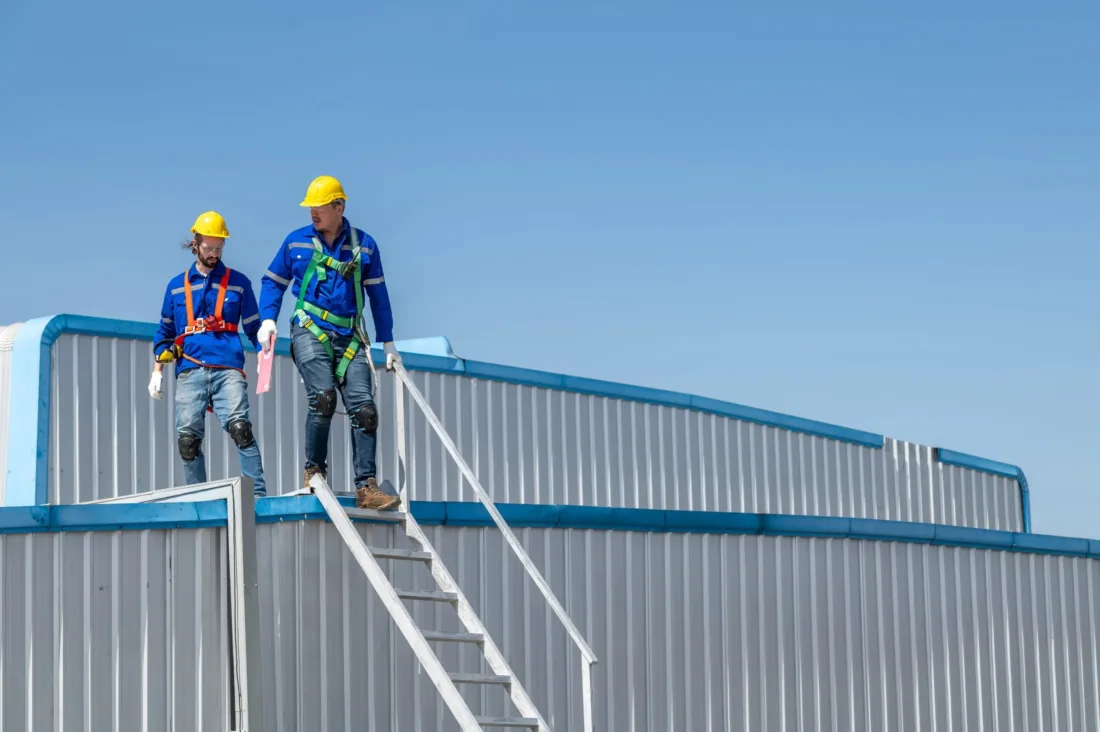
Schedule Your Commercial Roof Inspection in Firestone, CO
Whether you need an annual maintenance inspection, a post-storm assessment, a pre-purchase due-diligence report, or comprehensive documentation for an insurance claim, Baseline Roofing and Solar is ready to help. We are licensed, insured, certified across every major commercial manufacturer, and built around the kind of disciplined, documented inspection work that actually protects commercial property investments. Call us to schedule yours.
-
More Commercial Roof Inspection Locations +
- Commercial Roof Inspection in Colorado
- Commercial Roof Inspection in Arvada, CO
- Commercial Roof Inspection in Aurora, CO
- Commercial Roof Inspection in Berthoud, CO
- Commercial Roof Inspection in Boulder, CO
- Commercial Roof Inspection in Brighton, CO
- Commercial Roof Inspection in Broomfield, CO
- Commercial Roof Inspection in Castle Pines, CO
- Commercial Roof Inspection in Castle Rock, CO
- Commercial Roof Inspection in Centennial, CO
- Commercial Roof Inspection in Cherry Creek, CO
- Commercial Roof Inspection in Cherry Hills Village, CO
- Commercial Roof Inspection in Colorado Springs, CO
- Commercial Roof Inspection in Commerce City, CO
- Commercial Roof Inspection in Englewood, CO
- Commercial Roof Inspection in Erie, CO
- Commercial Roof Inspection in Firestone, CO
- Commercial Roof Inspection in Fort Collins, CO
- Commercial Roof Inspection in Frederick, CO
- Commercial Roof Inspection in Golden, CO
- Commercial Roof Inspection in Greeley, CO
- Commercial Roof Inspection in Greenwood Village, CO
- Commercial Roof Inspection in Gunbarrel, CO
- Commercial Roof Inspection in Highlands Ranch, CO
- Commercial Roof Inspection in Lafayette, CO
- Commercial Roof Inspection in Lakewood, CO
- Commercial Roof Inspection in Littleton, CO
- Commercial Roof Inspection in Lone Tree, CO
- Commercial Roof Inspection in Longmont, CO
- Commercial Roof Inspection in Louisville, CO
- Commercial Roof Inspection in Loveland, CO
- Commercial Roof Inspection in Mead, CO
- Commercial Roof Inspection in Niwot, CO
- Commercial Roof Inspection in Northglenn, CO
- Commercial Roof Inspection in Parker, CO
- Commercial Roof Inspection in Superior, CO
- Commercial Roof Inspection in Thornton, CO
- Commercial Roof Inspection in Westminster, CO
- Commercial Roof Inspection in Wheat Ridge, CO
- Commercial Roof Inspection in Windsor, CO