Solar Panel Cleaning in Colorado
Solar arrays in Colorado lose meaningful generation over time to surface contamination, dust, pollen, hard-water spotting from irrigation, wildfire smoke residue, bird droppings, and the gradual buildup that comes from years of Colorado weather. Solar panel cleaning restores generation that’s been quietly lost to that buildup. Done at the right intervals on arrays where the buildup actually justifies it, cleaning produces measurable performance gains and protects long-term array value. Done at the wrong intervals on arrays that don’t actually need it, or done by services that promise more performance recovery than they actually deliver, cleaning is a service that doesn’t pay back. We approach it honestly: we’ll clean your array when it actually needs it. We’ll tell you when it doesn’t. And we won’t sell you a recurring service contract that doesn’t fit your specific situation.
Baseline Roofing and Solar offers solar panel cleaning across Colorado and surrounding Colorado communities as part of our broader solar service set. The cleaning service complements the detach-and-reset, design and installation, and other solar services we provide for Colorado homeowners. We’re not the largest specialty solar cleaning operation in the area; for high-volume cleaning operations or arrays where we’re not already involved, specialty cleaners may be the right call. Where we’re already involved with the homeowner, particularly when cleaning is part of a broader assessment after a wildfire smoke event, or in conjunction with other solar service, the integration matters.
This page covers what actually causes residential solar performance loss in Colorado, when cleaning genuinely pays back versus when it doesn’t, the proper cleaning approach (and why the wrong approach can damage panels), realistic performance expectations, and how to assess whether your specific array would benefit.
Why Colorado Solar Arrays Specifically Need Periodic Cleaning
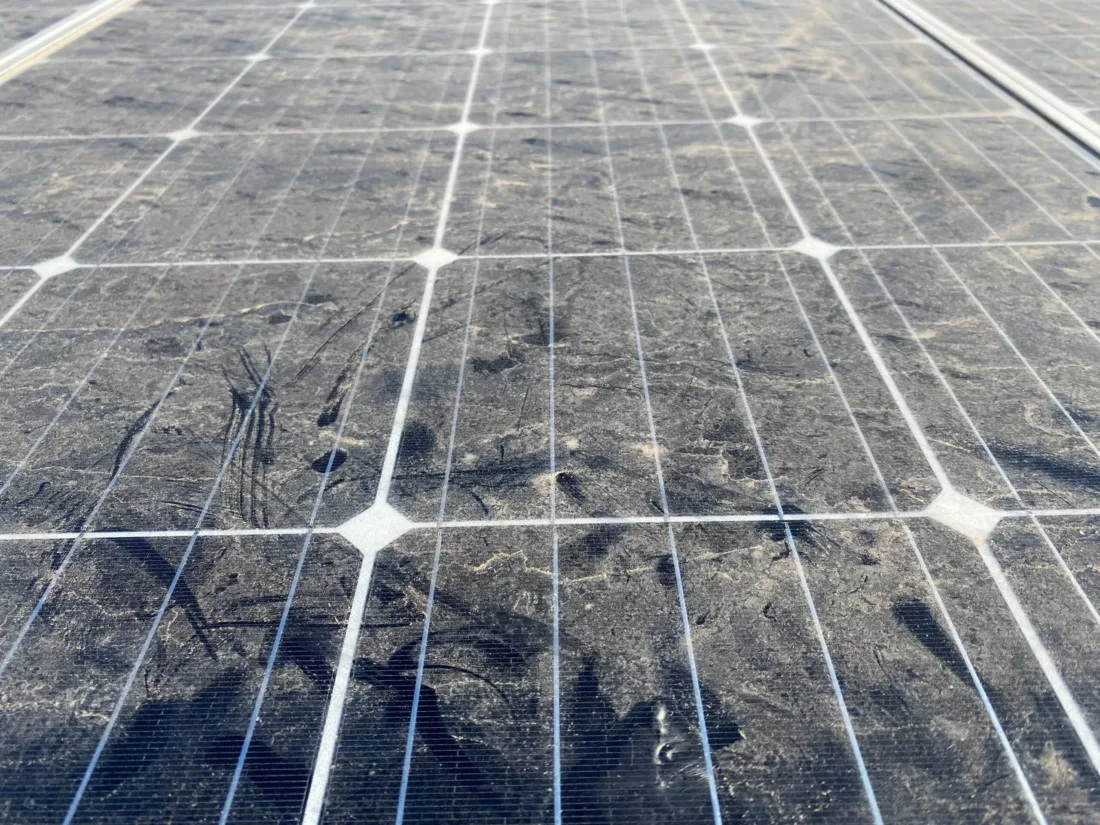
Colorado’s climate produces specific contamination patterns that build up on solar panels over time. The combination of these factors is more aggressive than most milder climates.
Dust and particulate matter.
Colorado’s semi-arid climate produces frequent dust events, particularly in spring and fall. Dust storms transport fine particulates that settle on roof surfaces. Over months, accumulated dust forms a thin film that reduces panel light absorption. Heavy dust events can produce noticeable drop-off within weeks.
Pollen accumulation.
Spring pollen, particularly in years with heavy tree pollen production, deposits on horizontal surfaces. On solar arrays, pollen mixes with morning dew or moisture and forms a sticky film that’s harder to remove than dust. The film is particularly problematic on panels with heavy texture or anti-reflective coatings that trap pollen mechanically.
Hard water spotting.
Many Colorado homes have irrigation systems that occasionally spray water onto roof surfaces, directly when sprinkler heads are misaimed, indirectly when wind drifts spray. The hard water in much of Colorado leaves mineral deposits on the panel surface as the water evaporates. Hard water spots compound over time and can be difficult to remove with simple rinsing.
Wildfire smoke residue.
Colorado wildfire seasons (typically late summer and fall) produce smoke that can travel hundreds of miles from active fires. Smoke residue settles on solar panels as a fine ash-like film that significantly reduces light transmission. Major wildfire events can produce dramatic short-term performance drops on residential arrays, sometimes 10-20% generation reduction during heavy smoke periods, with residue continuing to affect performance for weeks or months until cleaning.
Bird droppings.
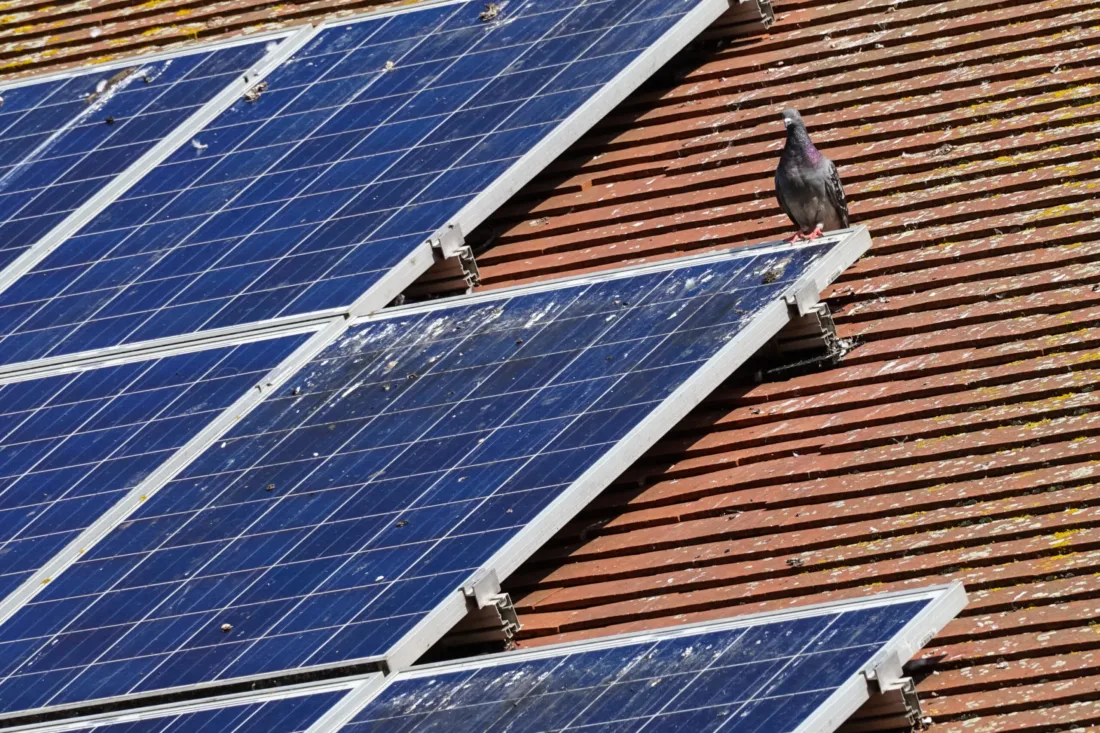
Bird activity affects different homes differently, some arrays accumulate substantial bird droppings, others see almost none. Droppings concentrate light blocking on individual panels and can cause hot spots that affect performance more than the surface area suggests.
Construction dust and nearby development.
New construction in the area, road work, and similar dust-generating activities can produce localized accumulation faster than typical regional dust patterns suggest.
When Cleaning Genuinely Pays Back: and When It Doesn’t
Honest framing on the cleaning value proposition. Some situations make cleaning genuinely worthwhile; some don’t.
Cleaning genuinely matters when:
- Visible contamination is substantial, film visible from the ground, evident bird droppings, smoke residue from a recent wildfire event
- Monitoring data shows meaningful performance drop, generation tracking below expected for the conditions
- After a major dust storm, pollen event, or wildfire smoke event
- On low-tilt arrays (less than ~15 degrees) where rain doesn’t naturally clean as effectively as on steeper arrays
- On arrays where contamination has accumulated over multiple years without cleaning
- In specific high-contamination locations (near highways, construction zones, agricultural areas)
Cleaning has marginal payback when:
- The array is on a steeper roof (greater than 25-30 degree pitch) where natural rain washing is effective
- The array is in a relatively clean environment without significant pollen, dust, or smoke exposure
- Recent rain has occurred and the panels look generally clean
- Cleaning would be done annually or more frequently regardless of actual contamination
- Total array size is small and absolute generation gains from cleaning would be modest
The honest math.
On a heavily contaminated array, cleaning can recover 5-10% of lost generation, meaningful in dollar terms over a season. On a moderately contaminated array, cleaning typically recovers 2-5%. On a minimally contaminated array (steep pitch, regular rain, low ambient contamination), cleaning often recovers less than 2%, sometimes barely measurable.
For most Colorado arrays, cleaning every 12-24 months produces reasonable payback. Cleaning every 3-6 months on aggressive maintenance schedules typically doesn’t pay back the cost. Cleaning after specific events (major wildfire smoke, heavy pollen, etc.) often pays back when the contamination is substantial.
How Solar Panels Should Actually Be Cleaned
Solar panel cleaning is straightforward in concept and easy to do badly. Some methods damage panels or void warranties. The right approach matters.
What works and is safe.
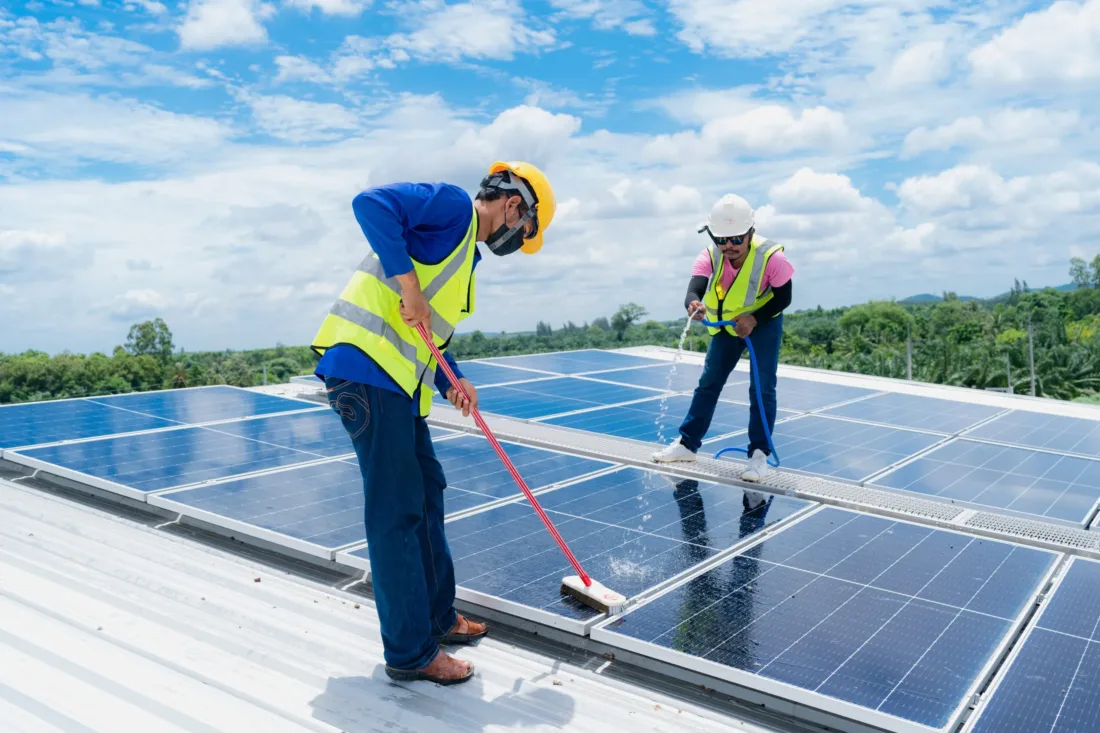
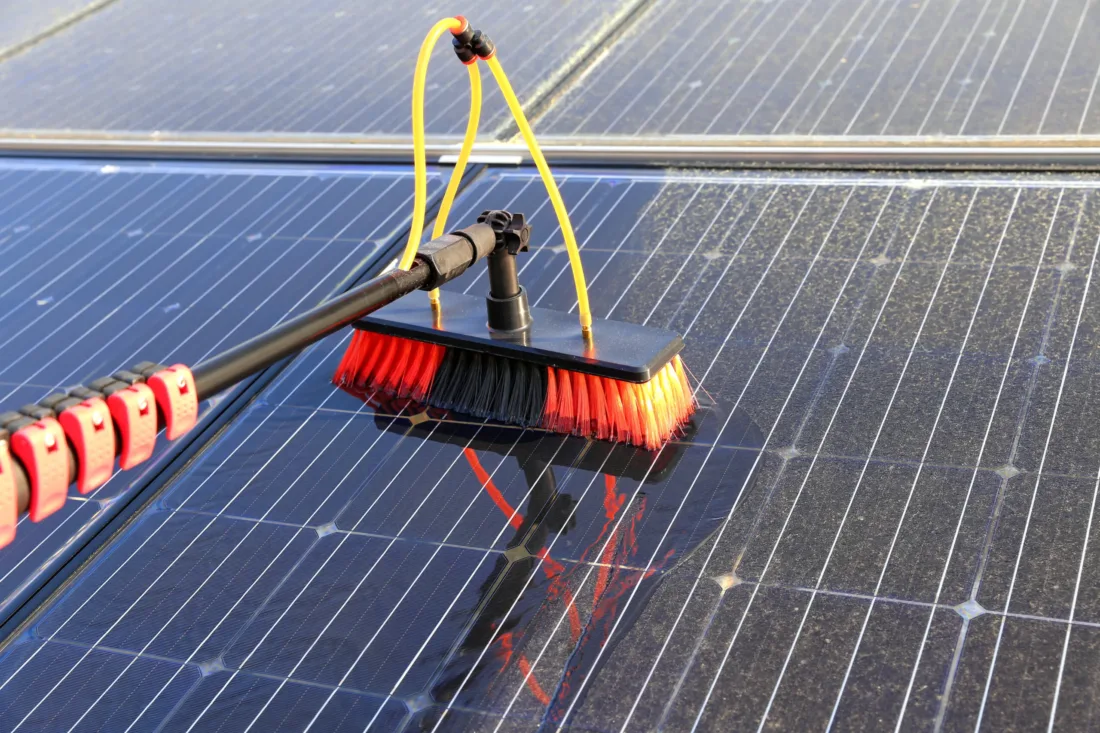
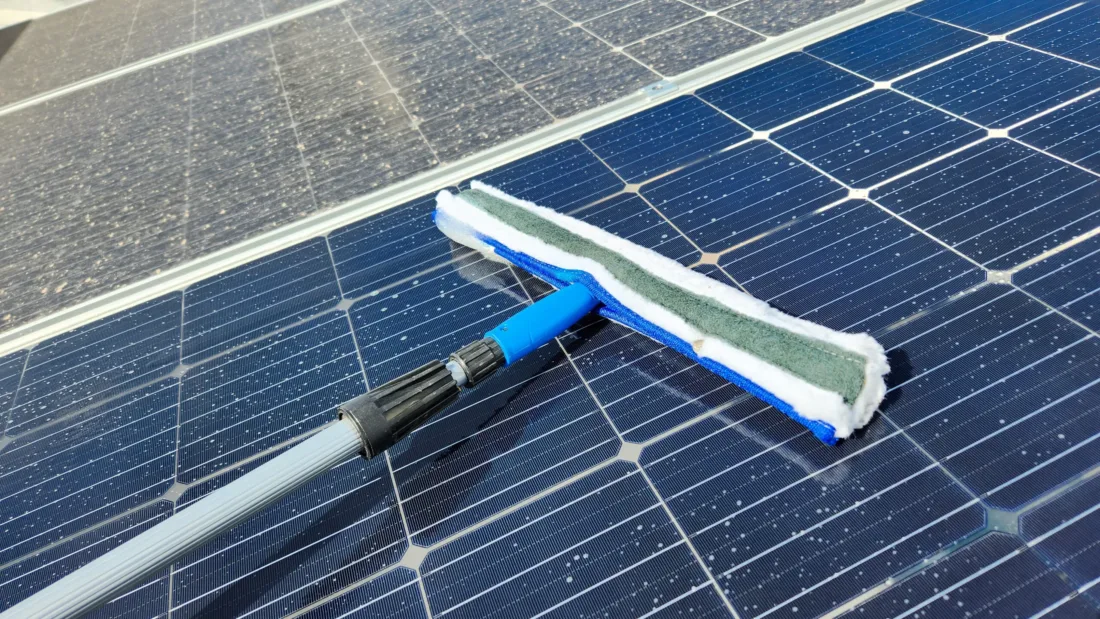
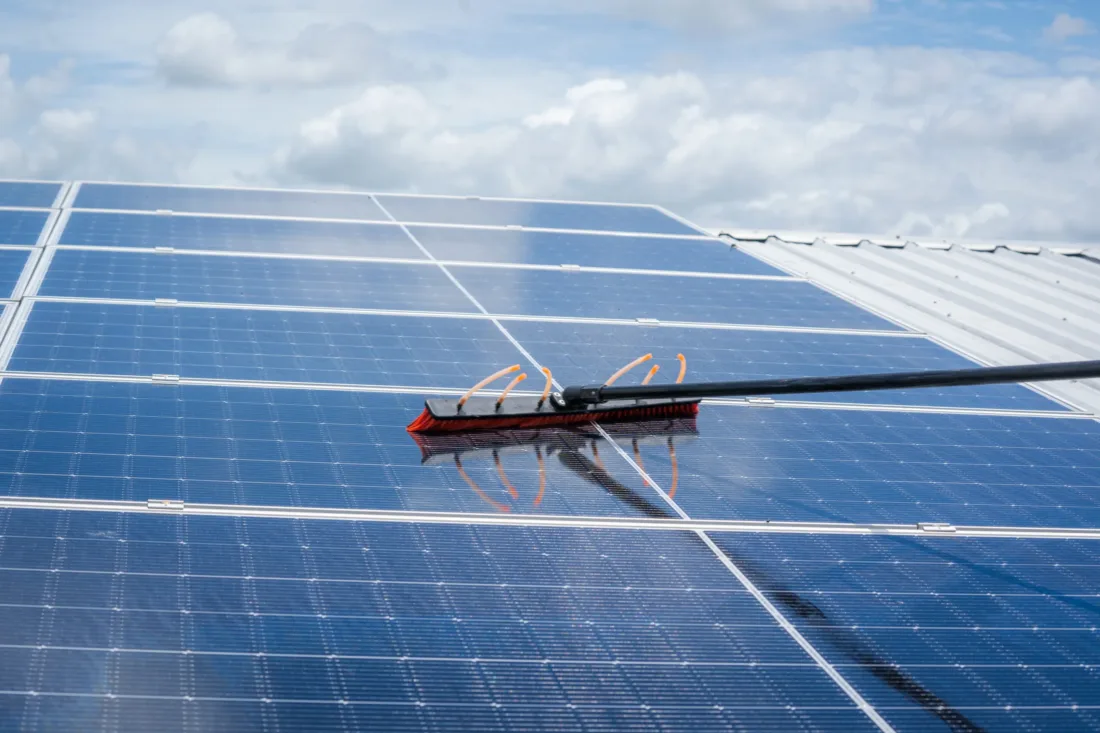
- Soft brush with deionized or low-mineral water. The safest approach. Soft-bristle brushes loosen contamination without scratching the glass surface, and deionized water rinses without leaving mineral deposits. This is the standard approach for quality residential cleaning.
- Squeegee finish. Following the brush-and-rinse, a soft squeegee removes water cleanly without spotting. Particularly useful in hard-water areas.
- Specialty solar-safe cleaning solutions where needed. For stubborn contamination (heavy bird droppings, dried pollen films, smoke residue), specialty cleaning solutions designed specifically for solar panel surfaces. Avoid household cleaners, many contain ingredients that damage panel coatings.
What damages panels.
- Pressure washing. High-pressure water can damage seals, dislodge components, and create micro-cracks in panel surfaces. Some manufacturer warranties specifically void with pressure washing. The pressure that gets stubborn dirt off siding is much more force than solar panels are designed to handle.
- Abrasive scrubbing. Stiff brushes, scouring pads, or abrasive cleaning tools scratch the glass surface and damage anti-reflective coatings. Scratches reduce performance permanently.
- Cleaning hot panels. Cleaning panels in direct sun when they’re at peak operating temperature can cause thermal stress when cool water hits hot glass, sometimes producing thermal cracking. Best practice: clean in early morning, late afternoon, or on cooler overcast days.
- Walking on panels. Solar panels are not designed to support foot traffic. Walking on them produces micro-cracking that may not be immediately visible but reduces performance and panel life. Cleaning should be done with extension equipment from the roof or with proper roof access that doesn’t require walking on panels.
- Aggressive household cleaners. Glass cleaners, all-purpose cleaners, and detergents can leave residues that affect panel performance and damage coatings.
Safety considerations.
Solar panel cleaning involves working at height on roofs that are often slippery during the cleaning itself. Falls from residential roofs are a leading cause of serious injury. Professional cleaning services with proper safety equipment and training handle this responsibly. Homeowner DIY cleaning is a real safety risk that should be considered carefully, for many homeowners, the cost of professional cleaning is worth avoiding the risk.
Our Solar Cleaning Process
- Initial assessment. We discuss your array, size, pitch, age, recent contamination events (wildfire smoke, dust storms), and whether you have access to monitoring data showing performance drops.
- On-site review. For arrays that warrant it, we inspect the array condition, confirming the contamination level visually, checking for any other issues (panel damage, racking concerns, electrical problems visible from the surface).
- Honest recommendation. If the array genuinely needs cleaning. We’ll quote it. If the contamination level is low and cleaning wouldn’t pay back. We’ll tell you that, and recommend monitoring instead.
- Scheduling. Cleaning scheduled for appropriate weather conditions, cooler, overcast days are ideal; we avoid cleaning panels when they’re at peak operating temperature in direct sun.
- Cleaning execution. Soft brush with deionized water, careful attention to corners and edges where contamination accumulates, squeegee finish in hard-water areas, specialty solutions for stubborn contamination as needed.
- Performance verification. After cleaning, we can review monitoring data with you to confirm performance restoration, though this typically takes a few sunny days to verify clearly.
- Recommendations going forward. We discuss the cleaning interval that makes sense for your specific situation rather than pushing recurring service contracts.
Should You Clean Your Solar Panels Yourself?
Some homeowners can reasonably handle solar panel cleaning themselves; many can’t. The factors to consider:
DIY makes sense when:
- Roof access is straightforward and safe (low pitch, easy approach, clean surface)
- You can clean from gutter level or with extension equipment without walking on panels or roof
- You have appropriate equipment, soft brushes, deionized water source, proper extension reach
- You’re comfortable with roof work and have safety equipment if you need to be on the roof
Professional cleaning is the better call when:
- Roof is steep, multi-story, or otherwise difficult to access safely
- You don’t have appropriate equipment and don’t want to invest in it for occasional use
- The contamination is substantial enough to warrant proper equipment and technique
- Safety concerns, physical limitations, lack of comfort with heights, or roof conditions that warrant professional handling
- You’d rather not deal with the time investment and want professional handling
What we recommend on DIY.
If you’re going to clean panels yourself, focus on safety first. Don’t walk on panels. Don’t use pressure washers. Don’t clean panels in direct hot sun. Use soft brushes and clean water. Work from secure positions, gutter level if possible, with proper roof safety if you need to be up there. Most homeowners we talk to who started doing DIY cleaning eventually decide professional service is worth the cost for occasional cleaning rather than buying equipment they use twice a year.
Cost and Frequency Recommendations
Typical cost ranges.
Residential solar panel cleaning typically runs from a few hundred to several hundred dollars per cleaning, depending on array size, accessibility, and condition. Larger arrays with difficult access cost more. We provide estimates after on-site review.
Frequency for typical Colorado residential arrays.
For most Colorado arrays, cleaning every 12-24 months produces reasonable payback. After specific events (major wildfire smoke, heavy pollen, dust storm) cleaning may make sense regardless of the typical interval. Annual cleaning is common; semi-annual is sometimes warranted in higher-contamination locations.
Why we don’t push aggressive recurring contracts.
Some specialty cleaning services push quarterly or even monthly recurring contracts. For most residential arrays, this frequency doesn’t produce enough additional generation recovery to justify the cost. The math on cleaning frequency depends on actual contamination patterns rather than theoretical maximums. We discuss the right interval honestly rather than upselling more frequent service than you actually need.
When cleaning is most likely to pay back well.
Specific situations where cleaning produces strong returns:
- After a major wildfire smoke event when residue is substantial
- On low-tilt arrays where rain doesn’t naturally clean effectively
- On arrays that haven’t been cleaned in 2+ years
- On arrays with monitoring data showing measurable performance drop
- On arrays in high-contamination locations (near highways, construction, agriculture)
Other Solar Maintenance Beyond Cleaning
While cleaning is the most-discussed solar maintenance topic, several other items affect long-term array performance and should be checked periodically.
Visual inspection of panels.
Looking for cracked, damaged, or discolored panels. Hail damage isn’t always immediately obvious, micro-cracks from impact can affect performance without visible surface damage. Periodic visual inspection identifies issues that warrant warranty claims or replacement.
Racking and attachment hardware.
Verifying that attachment hardware remains secure, that flashing around penetrations is intact, and that no roof issues have developed at attachment points. This is where roofing-side expertise specifically matters, most pure-play solar cleaning services don’t actually inspect this.
Wire and conduit condition.
Wires, conduit, and electrical components exposed to weather can develop wear over time. Visual inspection identifies issues before they cause performance problems.
Inverter status.
Inverters typically have a shorter service life than panels and are the most common solar component to fail. Inverter monitoring shows when issues develop. Some homeowners aren’t aware their inverter has been underperforming for months until cleaning service or maintenance check identifies the issue.
Performance monitoring review.
Reviewing monitoring data to identify trends, seasonal variation is normal; meaningful unexplained performance drops warrant investigation.
On cleaning service visits, we can perform a basic visual check of these items as part of the service. For substantive issues, we can either address them directly or refer to specialty solar service for warranty work.
Frequently Asked Questions: Solar Panel Cleaning
-
How often should I clean my solar panels in Colorado?
For most Colorado residential arrays, cleaning every 12-24 months produces reasonable payback. After major wildfire smoke events, dust storms, or heavy pollen seasons, more frequent cleaning may make sense. The right interval depends on your specific location, array tilt, and contamination patterns rather than a universal schedule.
-
How much does solar panel cleaning cost in Colorado?
Residential cleaning typically runs from a few hundred to several hundred dollars per cleaning, depending on array size, accessibility, and condition. Larger arrays with difficult access cost more. We provide estimates after on-site review of your specific array.
-
Will dirty panels really reduce my generation that much?
It depends on the contamination level. Heavy contamination (substantial dust film, smoke residue, bird droppings) can reduce generation 5-10% or more. Moderate contamination typically affects performance 2-5%. Minimal contamination on regularly rain-washed arrays often produces less than 2% impact. Monitoring data is the best way to assess your specific situation.
-
Can I just rinse my panels with a hose?
For light dust accumulation on a rain-cleaned schedule, a gentle rinse from gutter level can help. For more substantial contamination, simple rinsing typically isn’t enough, the soft-brush plus deionized-water approach is much more effective. And avoid pressure washers, which can damage panels.
-
Do I need to clean my panels after wildfire smoke?
Often yes, particularly after major smoke events. Smoke residue is a fine particulate that significantly reduces light transmission and doesn’t fully wash off in normal rain. Cleaning after substantial smoke events often produces dramatic generation recovery.
-
Will cleaning void my solar panel warranty?
Proper cleaning by qualified service providers using appropriate methods doesn’t void warranties. Cleaning that damages panels, pressure washing, abrasive scrubbing, walking on panels, aggressive cleaners, can void specific warranty terms. Quality cleaning services use methods that preserve warranty terms.
-
Is solar cleaning really worth the cost?
Sometimes yes, sometimes no. On heavily contaminated arrays, cleaning produces meaningful generation recovery and pays back well. On cleaner arrays, particularly steep-pitched arrays in lower-contamination locations, cleaning produces marginal benefit. Honest assessment of your specific situation is what determines whether cleaning is worth it for you.
Get a Solar Cleaning Estimate in Colorado
Whether you’ve noticed visible contamination on your array, your monitoring data shows performance drops, or you’re due for periodic cleaning after years without service, Baseline Roofing and Solar can clean your residential solar array safely and effectively. We use proper methods, focus on actual contamination, and tell you straight whether your specific array warrants cleaning at this time.
-
More Solar Panel Cleaning Locations +
- Solar Panel Cleaning in Colorado
- Solar Panel Cleaning in Arvada, CO
- Solar Panel Cleaning in Aurora, CO
- Solar Panel Cleaning in Berthoud, CO
- Solar Panel Cleaning in Boulder, CO
- Solar Panel Cleaning in Brighton, CO
- Solar Panel Cleaning in Broomfield, CO
- Solar Panel Cleaning in Castle Pines, CO
- Solar Panel Cleaning in Castle Rock, CO
- Solar Panel Cleaning in Centennial, CO
- Solar Panel Cleaning in Cherry Creek, CO
- Solar Panel Cleaning in Cherry Hills Village, CO
- Solar Panel Cleaning in Colorado Springs, CO
- Solar Panel Cleaning in Commerce City, CO
- Solar Panel Cleaning in Englewood, CO
- Solar Panel Cleaning in Erie, CO
- Solar Panel Cleaning in Firestone, CO
- Solar Panel Cleaning in Fort Collins, CO
- Solar Panel Cleaning in Frederick, CO
- Solar Panel Cleaning in Golden, CO
- Solar Panel Cleaning in Greeley, CO
- Solar Panel Cleaning in Greenwood Village, CO
- Solar Panel Cleaning in Gunbarrel, CO
- Solar Panel Cleaning in Highlands Ranch, CO
- Solar Panel Cleaning in Lafayette, CO
- Solar Panel Cleaning in Lakewood, CO
- Solar Panel Cleaning in Littleton, CO
- Solar Panel Cleaning in Lone Tree, CO
- Solar Panel Cleaning in Longmont, CO
- Solar Panel Cleaning in Louisville, CO
- Solar Panel Cleaning in Loveland, CO
- Solar Panel Cleaning in Mead, CO
- Solar Panel Cleaning in Niwot, CO
- Solar Panel Cleaning in Northglenn, CO
- Solar Panel Cleaning in Parker, CO
- Solar Panel Cleaning in Superior, CO
- Solar Panel Cleaning in Thornton, CO
- Solar Panel Cleaning in Westminster, CO
- Solar Panel Cleaning in Wheat Ridge, CO
- Solar Panel Cleaning in Windsor, CO