Metal Roofing in Cherry Hills Village, CO
Metal roofing is a fundamentally different residential roofing system from shingles, different material, different installation, different cost structure, different service life, different visual character. Metal roofing in Cherry Hills Village, CO and across Colorado delivers genuine advantages that shingles cannot match: 40 to 70+ year service life on quality systems, Class A fire resistance critical in foothills and mountain wildland-urban interface zones, Class 4 hail resistance built into most products, exceptional wind performance, and the kind of distinctive curb appeal that significantly improves home value on the right architectural style. The trade-off is upfront cost, typically two to three times the cost of equivalent asphalt shingle installation. For the right Cherry Hills Village, CO homes, that premium produces strong long-term economics.
Baseline Roofing and Solar installs residential metal roofing systems across Cherry Hills Village, CO and the surrounding area, Colorado, mountain communities, and most of Colorado. We work with the major metal roofing manufacturers, covering standing seam systems, stone-coated steel products from DECRA and Boral, and metal shingle products from established makers, and install to manufacturer specifications that the long warranties require. Metal roofing installation involves details that asphalt installation doesn’t (panel attachment systems, expansion accommodation, snow management, ventilation integration), and getting these right is what separates a 50-year metal roof from a 15-year metal roof.
This page covers the major metal roof types and where each fits, the material and finish options, the realistic cost picture, why metal genuinely wins on certain Cherry Hills Village, CO homes (and why it doesn’t on others), the climate considerations specific to Colorado, the cosmetic damage insurance issue every metal roof homeowner should know about, and the honest trade-offs that come with the system.
Why Metal Roofing Genuinely Wins on Certain Cherry Hills Village, CO Homes
Metal isn’t the right answer for every home, but on the right ones it produces benefits no other roofing material can match.
40 to 70+ year service life.
Quality metal roofing systems deliver exceptional service life, typically 40 years on basic painted steel, 50+ years on high-quality painted Galvalume systems, and 70+ years on premium products with Kynar 500 finishes. For long-term homeownership, this changes the cost-per-year math substantially compared to 25-30 year asphalt.
Class A fire resistance, critical in WUI zones.
Metal roofing carries Class A fire ratings inherent to the material itself. For Colorado homes in the wildland-urban interface, foothills, mountain communities, exurban properties near grasslands or forests, this is more than a checkbox. Wildfire risk across Colorado is real, many WUI jurisdictions now restrict combustible roofing materials, and metal is the simplest path to compliance with strict fire-rating requirements.
Class 4 hail resistance built in.
Most steel and aluminum residential metal roofing carries UL 2218 Class 4 ratings inherent to the metal. Combined with thicker gauge steels and stone-coated finishes that absorb impact, metal handles Colorado hail substantially better than standard shingles. Insurance discount eligibility is similar to other Class 4 products.
Wind performance.
Metal roofing systems with proper installation typically carry wind ratings well above standard residential code requirements, often 110 to 160 mph. For high-exposure Colorado locations including high-wind foothills, this is genuinely meaningful.
Energy efficiency.
Painted and stone-coated metal roofs reflect substantially more solar heat than asphalt. Cool-color metal finishes can carry ENERGY STAR ratings and produce measurable summer cooling savings. The reflective benefit is more pronounced on metal than on asphalt due to the material’s lower thermal mass.
Distinctive aesthetic and curb appeal.
Standing seam, stone-coated steel that mimics shake or tile, and metal shingles all bring distinctive visual character to a home. On architectural styles where metal fits, modern, mountain craftsman, certain custom homes, the curb appeal benefit is significant and frequently improves resale value.
Lightweight.
Metal roofing typically weighs 1 to 1.5 pounds per square foot, about half the weight of architectural asphalt shingles, much less than tile or slate. On older homes with structural concerns or homes where tile would otherwise be preferred but structural reinforcement is impractical, metal can deliver the visual benefit of premium roofing without the weight.
The Major Residential Metal Roof Types
“Metal roofing” is a broad category encompassing several distinct system types. Each has its own visual character, cost profile, and best applications.
Standing Seam Metal Roofing
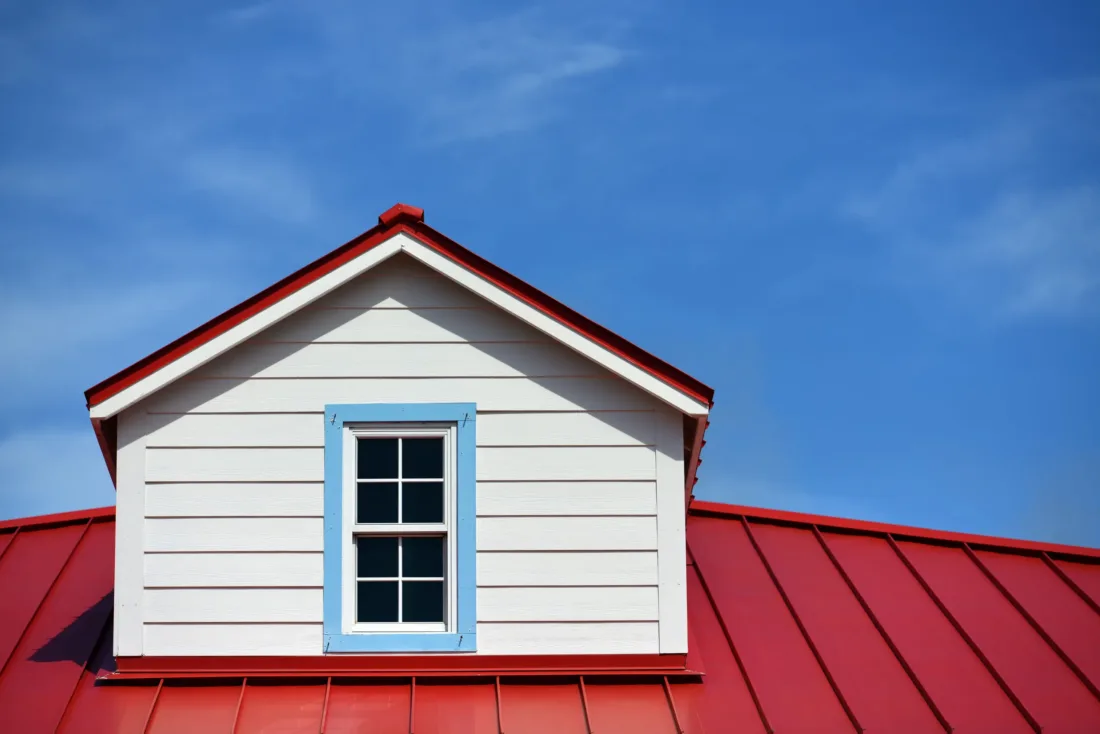
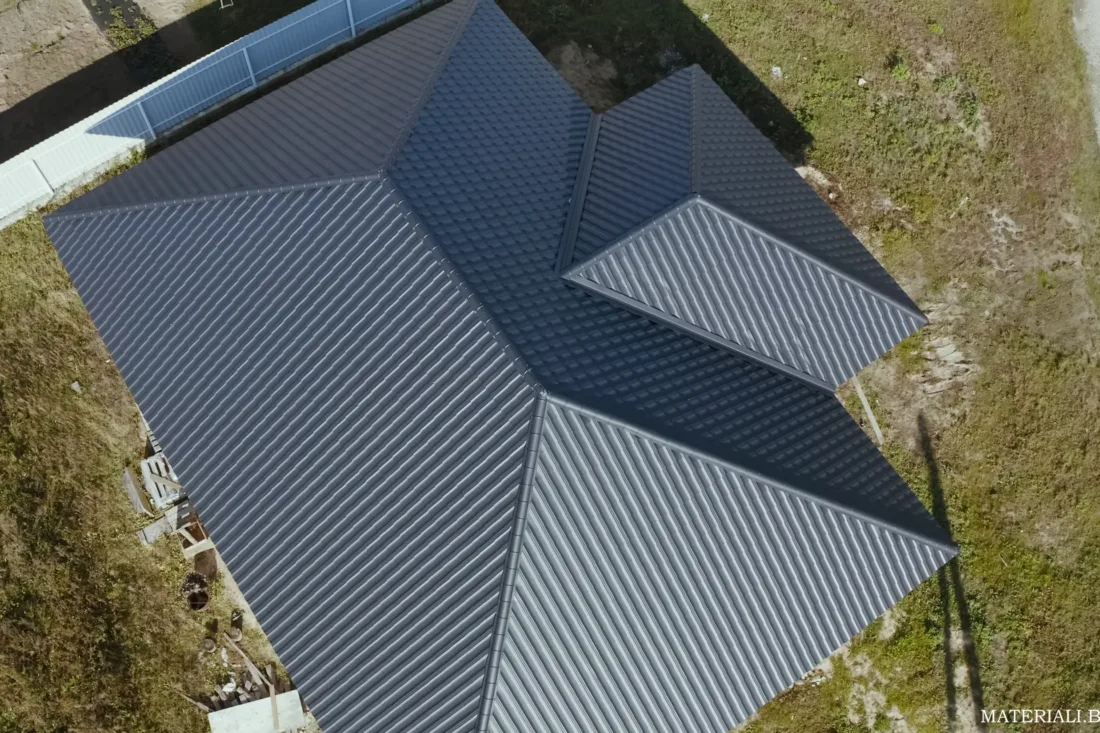
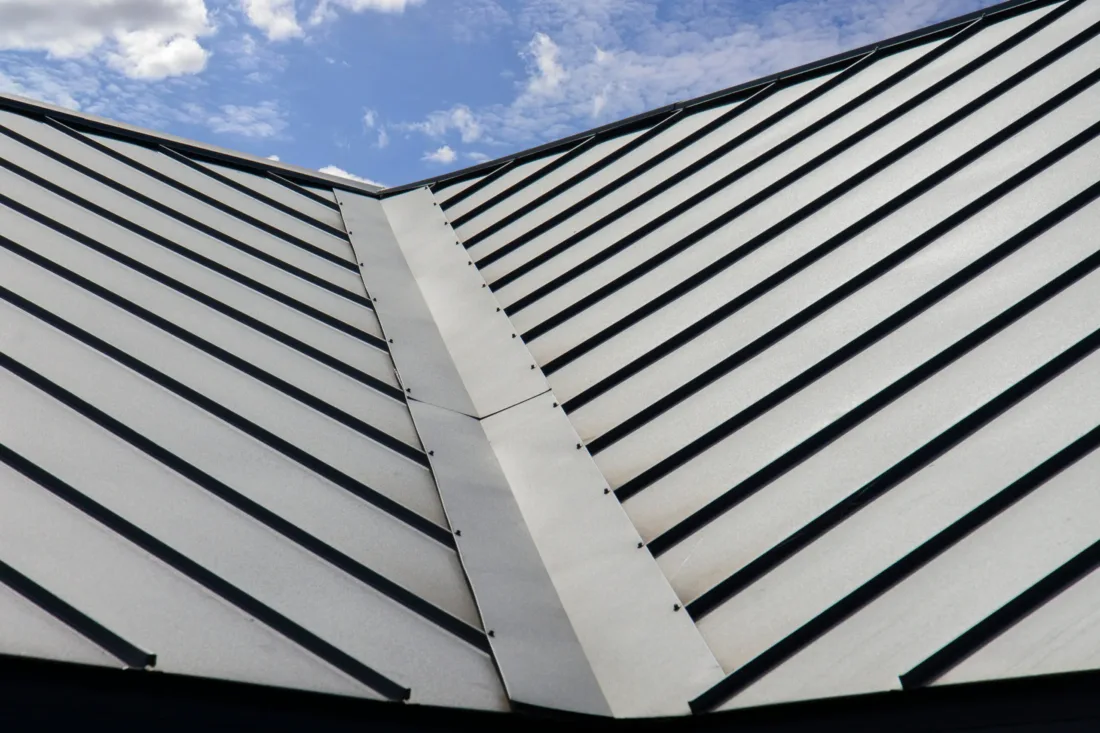
The premium architectural metal roofing category. Standing seam systems use long vertical panels (typically 12 to 16 inches wide) that interlock at raised vertical seams between panels. The seams are typically mechanically locked or snapped together to create continuous waterproof joints. Fasteners are concealed under the seam covers, meaning the visible roof surface has no exposed fastener heads. Standing seam delivers the cleanest, most architectural metal aesthetic.
Standing seam variants:
- Snap-lock systems, panels snap together by hand, typically used on residential applications
- Mechanical seam (single-lock or double-lock), seams crimped with mechanical seamers, used on more demanding applications
- Symmetrical (architectural), symmetrical panel profiles for clean modern aesthetic
- Trapezoidal (structural), sloped panel profiles, more common on outbuildings
Standing seam typical use cases.
Modern architectural homes, mountain craftsman builds, custom contemporary homes, agricultural and pole barn applications, and homes where the cleanest possible metal aesthetic is the priority.
Stone-Coated Steel Roofing
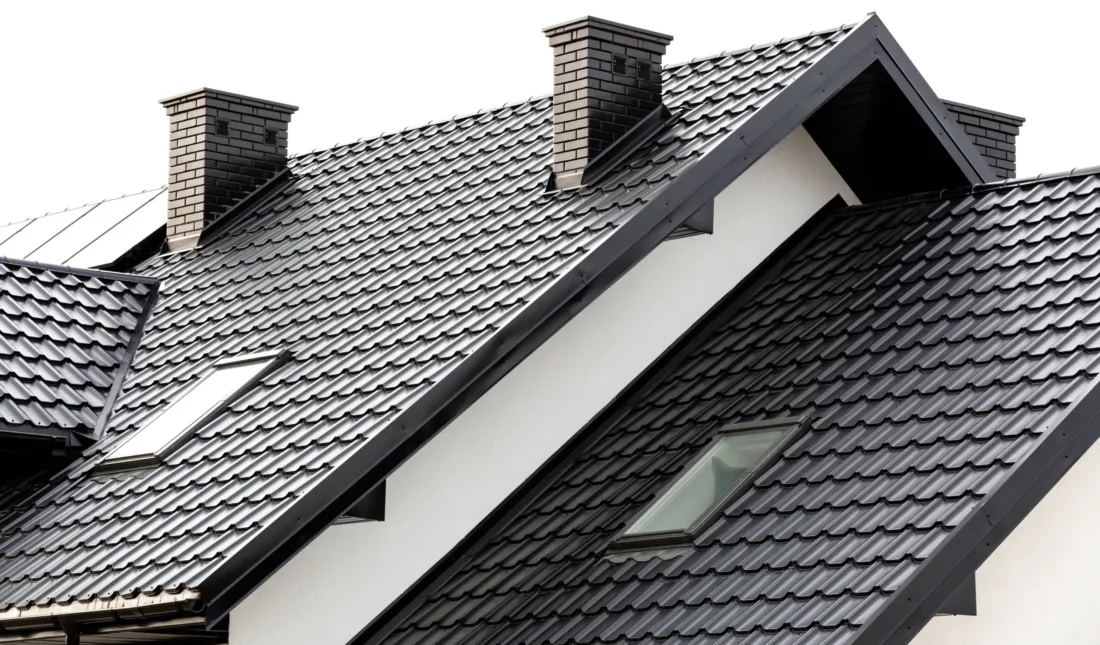
Steel panels formed into shake, shingle, tile, or shake profiles, then coated with stone granules embedded in an acrylic resin. Stone-coated steel delivers the visual character of cedar shake, slate, or Spanish tile with the practical benefits of steel, long service life, fire resistance, hail resistance, lightweight. Major manufacturers include DECRA, Boral, Tilcor, and Gerard. The stone surface absorbs impact energy that bare steel would reflect, producing genuinely good hail performance, and the granular finish provides improved UV stability and cool-roof reflectivity.
Stone-coated steel typical use cases.
Homes where the visual character of shake or tile is preferred but the practical concerns of those materials (fire, hail, weight, maintenance) make them difficult. Mountain custom homes, traditional and craftsman styles, and homes where premium aesthetic combined with hail/fire resistance both matter.
Metal Shingles
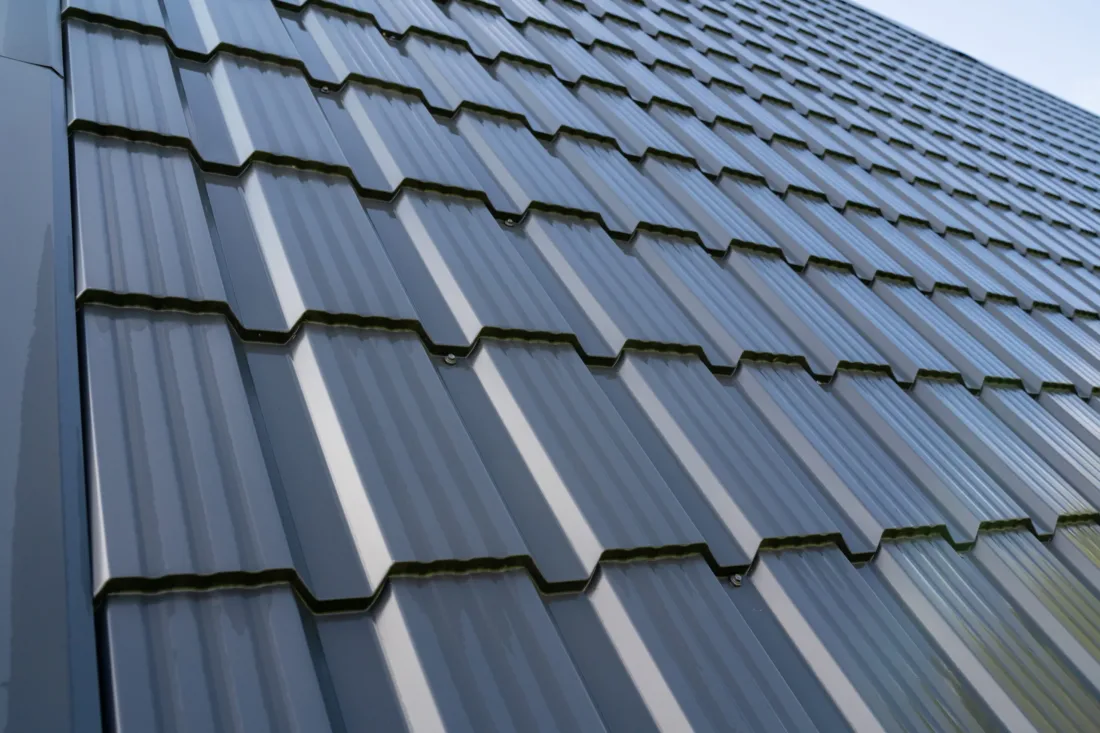
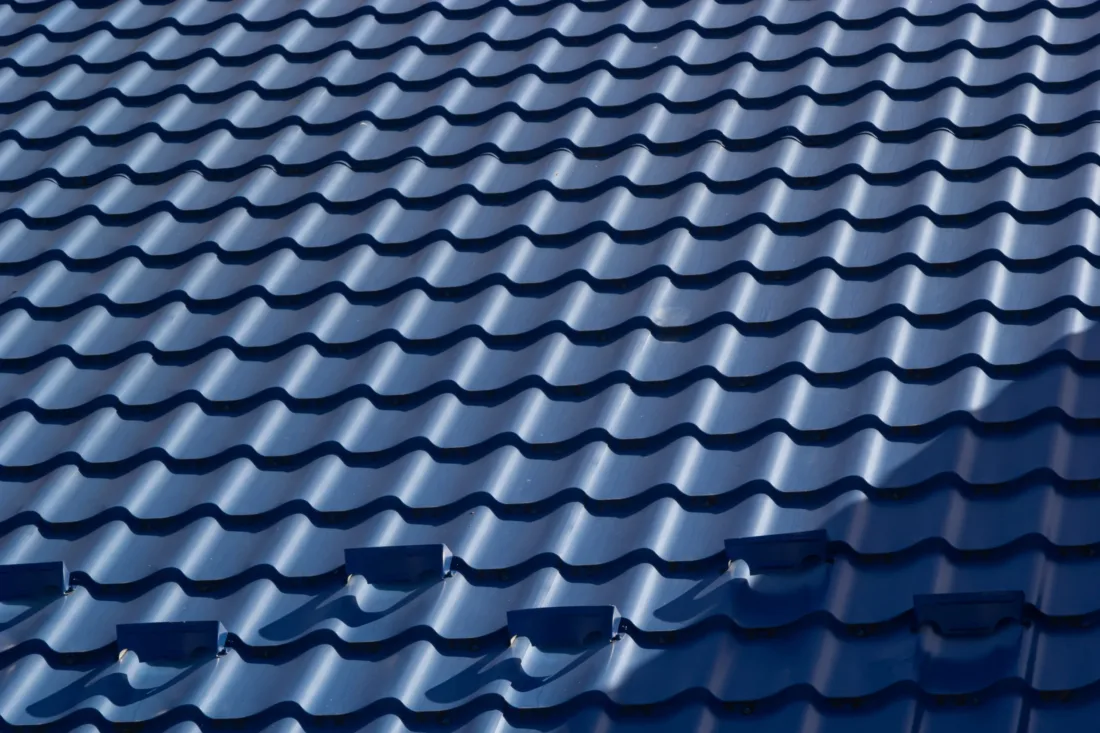
Steel or aluminum panels formed into shingle profiles, installed in courses similar to asphalt shingles but with metal substrate. Less common than standing seam or stone-coated, but available from specific manufacturers for homeowners who want a more shingle-like aesthetic with the durability of metal. Often interlocking systems with concealed fastening.
Corrugated and R-Panel Metal
Lower-cost metal roofing systems with exposed fasteners and ribbed or corrugated profiles. Common on outbuildings, garages, agricultural structures, and budget-sensitive applications. Less common on primary residential roofs in Cherry Hills Village, CO because of the more industrial visual character, though some custom and rural homes use these systems intentionally for the aesthetic.
Aluminum and Copper Metal Roofing
Aluminum and copper are alternative metals to steel, with specific applications. Aluminum is more corrosion-resistant than steel, sometimes used on homes near saltwater (less common in Cherry Hills Village, CO) or where weight matters. Copper develops a distinctive patina over decades and is occasionally used on architectural accent areas (bay windows, dormers, entryway roofs) where the aesthetic justifies the dramatic cost premium. Whole-roof copper installation is rare in residential Cherry Hills Village, CO applications.
Materials and Finishes
Galvanized steel.
Steel coated with zinc to prevent rust. Lower-cost option, but the zinc coating wears over decades and rust eventually starts. Less common on premium residential applications today.
Galvalume steel.
Steel coated with an aluminum-zinc alloy that provides longer-lasting corrosion protection than galvanized. The standard substrate for most quality residential metal roofing. Bare Galvalume has a distinctive silver-gray industrial appearance; most residential Galvalume is painted over for aesthetic and additional protection.
Painted finishes.
Most residential metal roofing is painted in factory-applied finish systems. The major paint systems differ substantially in performance:
- Polyester paint. Lower-cost, shorter warranty (typically 20-25 years on the paint), more vulnerable to fade and chalking at altitude. Common on budget metal applications.
- Silicone-modified polyester (SMP). Mid-tier paint system, better than polyester, typical on contractor-grade products.
- Kynar 500 / Hylar 5000 (PVDF) paint. Premium paint system with the longest paint warranties (often 40+ years on color/film integrity), best UV stability at altitude, best long-term color retention. Standard on premium architectural metal roofing.
Stone-coated finishes.
Acrylic resin embedded with stone granules, an entirely different finish category from painted metal. Provides UV protection, hail performance, and the textured aesthetic of shake or tile. Color options come from the stone granules and embedded resin pigments.
Honest Metal Roof Cost Positioning
Metal roofing is a premium-priced category. Honest expectation-setting matters here.
Cost relative to asphalt.
Metal roofing typically costs 2 to 3 times equivalent asphalt shingle installation, depending on metal type, finish system, and installation complexity. On a typical Cherry Hills Village, CO home, this can mean $30,000 to $80,000+ for a metal roof versus $15,000 to $30,000 for asphalt. The cost premium is real and needs to be justified by the home’s specifics.
Cost variation across metal types.
Within metal, costs vary substantially. Basic R-panel or screw-down systems are cheaper than standing seam. Stone-coated steel is mid-range. Premium standing seam with Kynar 500 finish is at the upper end. Architectural copper and zinc are dramatically more expensive.
The cost-per-year math.
On a 50-year metal roof versus a 25-year asphalt roof, the per-year cost math often favors metal, particularly for long-term homeownership. The math gets stronger when you factor in avoided storm-driven replacements (asphalt roofs in Cherry Hills Village, CO often face hail-driven replacement at least once per service life; quality metal roofs typically don’t), insurance premium discounts, and energy savings. For homeowners who plan to stay in the home 15+ years, the long-term economics often favor metal.
Resale considerations.
Quality metal roofing typically improves home resale value, particularly in mountain markets and on architectural styles where metal fits. The resale uplift varies significantly by neighborhood and home, some markets reward metal substantially, others don’t.
Metal Roofing and Colorado’s Climate
Hail performance: excellent.
Most metal roofing carries Class 4 hail ratings. Stone-coated steel particularly absorbs hail energy well through the granular surface. Standing seam handles hail well due to material thickness. Metal substantially outperforms standard shingles in hail events.
Wildfire and WUI fire resistance: critical advantage.
This is metal’s strongest argument in Colorado mountain and foothills markets. Class A fire ratings are inherent to the material, and many WUI jurisdictions specifically prefer or require metal roofing on new construction in fire-risk zones. For homes anywhere along the foothills, in mountain communities, or near grasslands, metal’s fire resistance is genuinely meaningful, not just a checkbox.
UV at altitude: well-handled with quality finishes.
Kynar 500 painted finishes are specifically engineered for high-UV exposure and hold color and integrity at altitude over decades. Lower-grade paint systems show fade and chalking more quickly at Cherry Hills Village, CO altitude. Stone-coated finishes hold up well under UV exposure.
Snow shedding and ice damming.
Metal roofs shed snow much faster than shingled roofs. This is sometimes a benefit (less snow load) and sometimes a problem (large snow slides off the roof unexpectedly, often onto walkways or below entrances). Metal roofs in snow-heavy Colorado locations typically need snow guards or snow retention systems to prevent dangerous releases. We discuss snow management as part of every mountain metal roof project.
Thermal expansion and contraction.
Metal expands and contracts more dramatically than other roofing materials with temperature changes. Properly installed metal roofing systems include expansion accommodation in fastener systems, panel attachment, and detail work. Improperly installed metal can develop oil-canning (visible waviness), fastener back-out, or panel deformation over time. Skilled installation matters more on metal than on asphalt.
Lightning and noise.
Two common metal roofing concerns that are largely myths in modern systems: metal roofs are not lightning magnets (lightning strikes the highest point regardless of material), and properly installed metal over solid sheathing with proper underlayment is no noisier than asphalt during rain or hail. Direct-attach metal over open framing is a different story and is rarely used on residential applications today.
The Cosmetic Damage Exclusion: Critical for Metal Roof Owners in Cherry Hills Village, CO
This is a real concern Cherry Hills Village, CO homeowners should understand before installing a metal roof. Hail can dent a metal roof without compromising its waterproofing function, the roof still works, but it’s visibly damaged. Some homeowner insurance policies cover only “functional” damage and explicitly exclude “cosmetic” damage on metal. After a hail event, the homeowner ends up with a dented but functional roof that the insurance carrier won’t cover, even though the same hail would have caused a covered claim on a shingled roof.
Specific points to discuss with your broker before installing a metal roof:
- Does your current policy have a metal roof cosmetic damage exclusion?
- Is coverage for cosmetic damage available as an endorsement, and at what cost?
- How is “functional” vs. “cosmetic” damage defined in your specific policy?
- Can you switch to a carrier that doesn’t have this exclusion?
- How does the policy handle stone-coated steel where the granular surface is damaged but the underlying steel is intact?
This isn’t a reason to avoid metal roofing. It’s a reason to confirm your policy coverage before you buy. We can flag this consideration during the proposal process, but the policy review is between you and your broker.
Honest Trade-Offs of Metal Roofing
Higher upfront cost.
As discussed above. Metal is 2-3x asphalt cost, sometimes more. The upgrade has to be worth the premium for the home’s specifics and the homeowner’s tenure.
Specialized installation.
Metal installation requires specific expertise that’s less common than asphalt installation. Manufacturer training, panel system experience, expansion accommodation knowledge, these matter. Bad metal installation can produce oil-canning, fastener problems, and premature failures that don’t show up on asphalt.
Repair complexity.
Localized damage on a metal roof can be more complex to repair than on shingles. Matching panel profiles and color on aged metal can be difficult. Stone-coated panels with damaged surface coating may need replacement of full panels rather than spot repair.
Snow shedding management.
As mentioned above, snow slides off metal roofs faster, requiring snow guards on most mountain installations. Without proper snow management, snow releases can damage gutters, landscaping, and people walking below.
Specialized walkability.
Walking on metal roofs requires more care than walking on asphalt, slippery when wet, panel damage from improper foot placement, and concerns about denting the panels under foot traffic. Service work on metal roofs (HVAC, satellite, etc.) requires the right approach.
Frequently Asked Questions: Metal Roofing in Cherry Hills Village, CO
-
How long does a metal roof last?
Quality metal roofing typically delivers 40 to 70+ years of service life depending on system, finish, and installation quality. Painted Galvalume systems with Kynar 500 finishes are at the upper end. Basic painted steel is on the lower end of the range. Both substantially exceed the 25-30 year service life of architectural asphalt.
-
How much does metal roofing cost in Cherry Hills Village, CO?
Metal roof costs vary substantially by system, finish, and roof complexity. On typical Cherry Hills Village, CO homes, total project costs commonly range from $30,000 to $80,000+ depending on these factors. We provide written line-itemed estimates after on-site inspection. The cost is genuinely a premium over asphalt, typically 2-3x, and needs to be justified by the home’s situation.
-
Will my insurance cover hail damage to a metal roof?
It depends on your specific policy. Some Colorado homeowner policies have cosmetic damage exclusions on metal roofs that limit coverage to functional damage only. Before installing metal, talk to your broker specifically about how your policy handles metal roof hail damage. Some policies cover it fully; some have exclusions; some offer coverage as an optional endorsement.
-
Is metal roofing noisy during rain or hail?
Modern metal roofing installed over solid sheathing with proper underlayment is no noisier during rain or hail than asphalt shingles. The myth of noisy metal roofs comes from older direct-attach metal applications without sheathing, uncommon in residential applications today.
-
Can I install solar on a metal roof?
Yes, and solar pairs well with metal because of metal’s long service life, you don’t have to remove the array for a roof replacement during the array’s expected life. Standing seam systems particularly are favored for solar because the seams provide secure attachment points without roof penetrations. Coordination between roofing and solar contractors matters; we work with solar installers on integrated projects.
-
Do I need snow guards on a metal roof in Cherry Hills Village, CO?
On most mountain and foothills metal roof installations, yes. Snow slides off metal roofs unpredictably, and a sudden release can damage gutters, landscaping, vehicles, or people walking below. Snow guards or snow retention systems are typically standard on mountain installations and recommended for many Cherry Hills Village, CO-metro applications. We include snow management considerations in every metal roof proposal.
-
How is metal roofing different in fire-prone areas?
Metal carries Class A fire resistance inherently, the highest rating. For homes in Colorado wildland-urban interface zones (foothills, mountain communities, properties near grasslands or forests), metal is often the strongest fire-resistance option. Many WUI jurisdictions have requirements that favor or specifically require Class A roofing materials, and metal is typically the cleanest path to compliance.
Get a Metal Roof Estimate in Cherry Hills Village, CO
Whether you’re building a new mountain custom home, replacing an aging roof on a property where metal’s fire resistance matters, or considering an upgrade for long-term ownership and curb appeal, Baseline Roofing and Solar can specify and install the right metal roofing system for your home. We work with the major standing seam, stone-coated steel, and metal shingle manufacturers and install with the manufacturer-spec workmanship that the long warranties require.
-
More Metal Roofing Locations +
- Metal Roofing in Colorado
- Metal Roofing in Arvada, CO
- Metal Roofing in Aurora, CO
- Metal Roofing in Berthoud, CO
- Metal Roofing in Boulder, CO
- Metal Roofing in Brighton, CO
- Metal Roofing in Broomfield, CO
- Metal Roofing in Castle Pines, CO
- Metal Roofing in Castle Rock, CO
- Metal Roofing in Centennial, CO
- Metal Roofing in Cherry Creek, CO
- Metal Roofing in Cherry Hills Village, CO
- Metal Roofing in Colorado Springs, CO
- Metal Roofing in Commerce City, CO
- Metal Roofing in Englewood, CO
- Metal Roofing in Erie, CO
- Metal Roofing in Firestone, CO
- Metal Roofing in Fort Collins, CO
- Metal Roofing in Frederick, CO
- Metal Roofing in Golden, CO
- Metal Roofing in Greeley, CO
- Metal Roofing in Greenwood Village, CO
- Metal Roofing in Gunbarrel, CO
- Metal Roofing in Highlands Ranch, CO
- Metal Roofing in Lafayette, CO
- Metal Roofing in Lakewood, CO
- Metal Roofing in Littleton, CO
- Metal Roofing in Lone Tree, CO
- Metal Roofing in Longmont, CO
- Metal Roofing in Louisville, CO
- Metal Roofing in Loveland, CO
- Metal Roofing in Mead, CO
- Metal Roofing in Niwot, CO
- Metal Roofing in Northglenn, CO
- Metal Roofing in Parker, CO
- Metal Roofing in Superior, CO
- Metal Roofing in Thornton, CO
- Metal Roofing in Westminster, CO
- Metal Roofing in Wheat Ridge, CO
- Metal Roofing in Windsor, CO