Emergency Commercial Roof Repair in Firestone, CO
When a commercial roof fails, water pouring through ceiling tiles into a server room, a hailstorm punching holes through the membrane on a Saturday night, wind ripping the edge metal off a parapet at 2 a.m., every hour the roof stays open costs the building owner money. Wet inventory, damaged ceiling tiles, ruined drywall, soaked carpet, downed electronics, mold within 48 hours, and disrupted operations all add up fast. Emergency commercial roof repair is about stopping that bleeding as quickly as possible, stabilizing the roof to keep more water out of the building, protecting what’s underneath, and creating breathing room to do a proper permanent repair the right way.
Baseline Roofing and Solar provides emergency commercial roof repair across Firestone, CO and surrounding Colorado communities. We respond as fast as our schedule and weather allow, we tarp and dry-in active leaks to mitigate further damage, we document everything for insurance. And we follow up with permanent repair on the same system once conditions allow. We’re a Colorado-based contractor, not a national franchise routing your call through a 1-800 number, so when you call us, you reach the team that’s actually going to be on your roof.
This page covers when to call for emergency commercial roof repair, what to do while you’re waiting for our crew, how our emergency response workflow actually works, the most common emergencies we respond to in Firestone, CO, and how insurance and documentation fit into all of it.
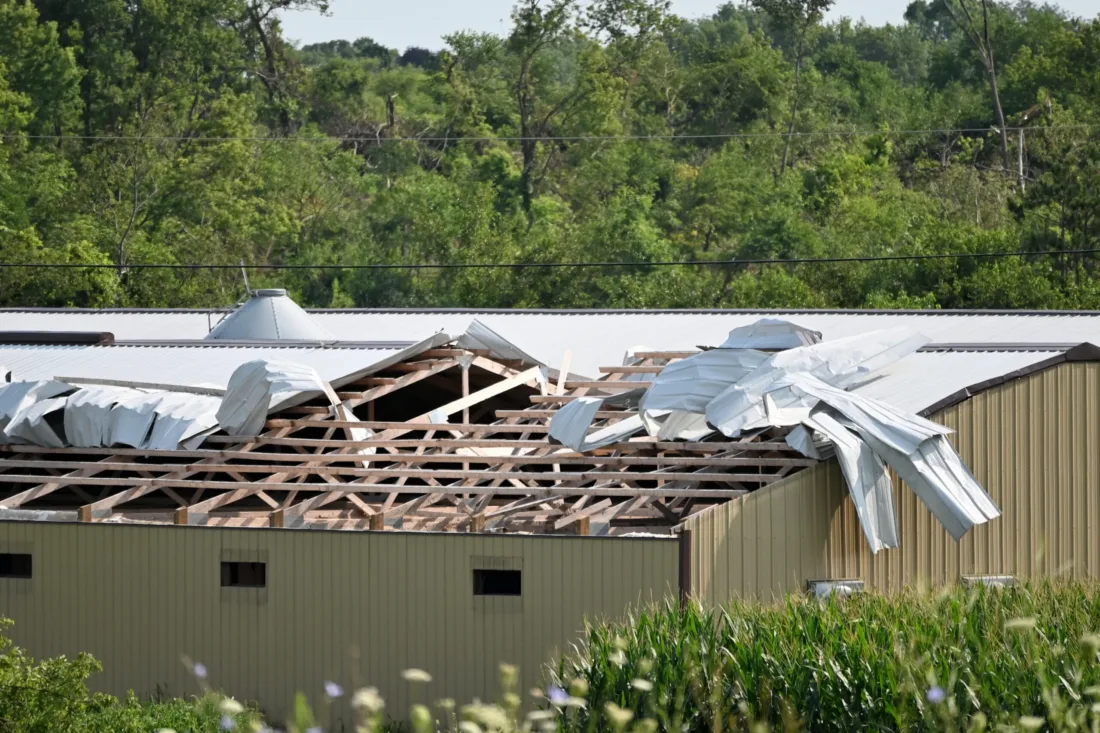
When to Call for Emergency Commercial Roof Repair
Some roof issues can wait until normal business hours and a scheduled inspection. Others can’t. Here’s the difference.
Call us immediately if:
- Water is actively coming into the building right now
- A storm has visibly damaged the roof, torn membrane, missing edge metal, collapsed equipment curbs
- Hail just hit and you can see damage from the ground or a window
- Wind has lifted or torn off a section of the roof
- Trees, branches, or debris have fallen onto the roof
- There’s a structural issue, sagging, ponding water that wasn’t there before, visible damage to deck or insulation
- Tenants or staff are reporting active leaks during a storm
- Critical equipment, inventory, or operations are at risk from continued water entry
Schedule a regular inspection or repair if:
- You see a stain on the ceiling but no active dripping
- There’s a slow leak that only shows during heavy rain
- Your annual or semi-annual maintenance check identified an issue
- You’re seeing minor wear, aging, or coating breakdown
- You’re planning ahead for hail season or winter
If you’re not sure which category you’re in, call us. We’d rather hear from you and tell you it can wait until tomorrow than have you sit on an active leak overnight.
What to Do While You’re Waiting for Our Crew
If you have an active leak in your commercial building right now, the few minutes between your call and our arrival matter. Here’s what to do, and what not to do.
Do these things first
- Move people, equipment, and inventory away from the active leak. Anything water-sensitive, electronics, paper records, fabric goods, finished products, gets relocated first.
- Place buckets, containers, or tarps to catch dripping water. Put plastic sheeting over equipment that can’t be moved.
- Cut electrical power to affected areas if water is near outlets, light fixtures, or electrical panels. Water and electricity are an emergency in their own right.
- Push ceiling tiles aside (in drop ceiling buildings) where you see water pooling above. Releasing trapped water in a controlled way is better than waiting for the tile to collapse.
- Document everything with photos and video, the roof from outside if accessible, the interior damage, the affected equipment and inventory. This matters for insurance.
- Call your insurance carrier to open a claim if the damage is from a covered event (hail, wind, storm, falling object).
- Notify any tenants or building occupants of the situation and any safety considerations.
Do not do these things
- Do not climb onto the roof in the middle of a storm. Wet membranes are slippery, lightning is a real risk, and most commercial roof emergencies happen in conditions that are not safe to walk on a roof
- Do not try to patch the roof yourself with hardware-store sealant or roofing tar, wrong materials cause new failures and can void manufacturer warranties
- Do not throw a tarp over the roof in dangerous conditions; we’ll do that safely once we arrive
- Do not delay calling your insurance carrier, most policies require prompt notification
How Emergency Commercial Roof Response Works at Baseline
Most commercial roof emergencies follow a two-phase workflow: immediate stabilization to stop the active damage, then permanent repair once conditions allow proper work. Trying to do permanent repair during an active storm or in the wrong temperature range produces a repair that fails again, which is why we separate the two.
Phase 1: Stabilization (Same-Day or As Fast as Conditions Allow)
Our first priority on an emergency call is to stop additional water from entering the building. Depending on the situation, that may mean:
- Installing a tarp or temporary membrane over the failure point
- Sealing damaged seams or punctures with manufacturer-approved emergency materials
- Securing lifted or torn edge metal to prevent further wind damage
- Clearing clogged drains so water can leave the roof properly
- Stabilizing damaged equipment curbs or penetrations
- Documenting the damage with photos and a written report for insurance purposes
Stabilization is intentionally temporary, the goal is to buy time for proper diagnosis and a permanent repair. We make this distinction clear up front so there’s no confusion about what’s been done and what comes next.
Phase 2: Permanent Repair
Once weather, temperature, and access conditions allow proper work, we return to perform a permanent repair using manufacturer-approved materials and methods. This typically happens within days of the initial stabilization, depending on weather and the scope of work needed. The permanent repair carries our standard workmanship warranty and preserves manufacturer warranty coverage wherever possible.
On larger emergencies, significant hail damage, wind damage to large roof sections, structural failures, the permanent repair may turn into a full replacement scope. And we coordinate with your insurance carrier through the process.
Common Causes of Commercial Roof Emergencies in Firestone, CO
Firestone, CO and the surrounding Colorado region have a specific emergency roof profile that doesn’t match other regions. The combination of altitude, hail exposure, dramatic temperature swings, and high winds drives most of the calls we get.
Hail Damage
Colorado hail can range from pea-sized to softball-sized, and a single major storm can compromise the membrane across an entire roof. Sometimes the damage is immediately obvious, punctures and tears visible from a window. Other times the membrane is fractured but holding water out for now, and the leaks start days or weeks later. Either way, post-hail inspection is essential and emergency response is often required.
Wind and Storm Damage
Severe thunderstorms and high-wind events regularly bring 60+ mph wind gusts to Firestone, CO and the surrounding area. Wind takes commercial roofs apart at the edges first, gravel stops, edge metal, parapet caps, and unfastened or under-fastened membrane all peel back when wind uplift exceeds what the original installation can resist.
Falling Trees and Debris
Major storms drop branches and trees onto commercial roofs. Even relatively small debris can puncture single-ply membranes, damage flashings, or block drains.
Equipment and Mechanical Failures
HVAC equipment, condensate lines, and rooftop plumbing can fail and leak water onto the roof from above. Curbs around aging equipment lose their flashings and start leaking around the unit instead of from the unit.
Backed-Up Drains and Snow Melt
Clogged drains during heavy rainfall or sudden snow melt can cause water to back up onto the roof and flood through any weak point in the membrane. Drain emergencies are often surprisingly easy to solve once we’re on site, but they require fast response to prevent significant interior damage.
Membrane Failure on Aging Systems
On commercial roofs that are past their service life, sudden widespread leaking during a storm sometimes signals system-wide failure rather than a localized issue. We’ll tell you straight if what you’re seeing is an emergency that requires permanent replacement rather than emergency repair.

Insurance and Documentation in an Emergency
Most emergency commercial roof repairs caused by hail, wind, falling objects, or other covered storm events qualify for insurance coverage. Getting that coverage requires fast, accurate documentation, which is why we treat documentation as a core part of our emergency response, not an afterthought.
What we document on every emergency call:
- Date, time, and weather conditions of the incident
- Photos and video of the damage from the roof and interior
- Measurements of damaged areas
- A written description of the failure mode (hail strike, wind lift, puncture, etc.)
- Materials used in the stabilization
- A written scope of work for the permanent repair
If you haven’t yet contacted your insurance carrier when we arrive. We’ll recommend you do so as soon as you can, most commercial property insurance policies require prompt notification of damage. We can coordinate with your insurance adjuster directly and provide our documentation to support the claim. Our goal is to make the claims process as smooth as possible for you so the financial side of the emergency doesn’t drag on for months.
Why Firestone, CO Property Owners and Managers Choose Baseline for Emergencies
We’re local, not a 1-800 routing service.
Baseline Roofing and Solar is based in Colorado. When you call our number, you reach our team, not a national call center that routes your job to whichever subcontractor happens to be available. That matters in an emergency because response time, accountability, and follow-through all depend on it.
Owner-led and accountable.
Baseline’s owner has more than 15 years in the roofing industry and stays personally involved in emergency response. Emergency calls don’t get pushed to the bottom of a stack.
Certified across every major commercial system.
Because we hold certifications with all the major commercial roofing manufacturers, Carlisle, Versico, GAF, Mule-Hide, Firestone, Johns Manville, and others, we can perform emergency repairs on whatever system your roof actually is, using manufacturer-approved materials that preserve your warranty.
Insurance-ready documentation.
Documentation isn’t optional or an extra. We document every emergency call thoroughly so that when the insurance side of the claim comes up, you have what you need.
Frequently Asked Questions: Emergency Commercial Roof Repair in Firestone, CO
-
How fast can you respond to a commercial roof emergency in Firestone, CO?
We respond as quickly as our schedule, road conditions, and weather safely allow. Active leaks during business hours typically get same-day response. After-hours calls are handled by our team based on the severity of the situation. Call us at (720) 780-0488 and we’ll tell you straight what we can commit to.
-
Do you respond to commercial roof emergencies after hours and on weekends?
Yes. Commercial roof emergencies don’t wait for business hours, and neither do we. Call (720) 780-0488 anytime, after-hours calls reach our emergency response line.
-
Will you install a tarp on my commercial roof if you can’t do a permanent repair right away?
Yes. Tarping or otherwise stabilizing the roof is often the right first step in an emergency, especially during active weather or in temperatures that won’t allow proper permanent repair. We make it clear that the tarp is temporary and we follow up with a permanent repair as soon as conditions allow.
-
How much does emergency commercial roof repair cost?
Emergency repair pricing depends on the scope of damage, time of day, and complexity of access. We provide pricing as part of the on-site assessment and document everything for potential insurance reimbursement. Don’t let cost concerns delay the call, the cost of an emergency repair is almost always far less than the cost of letting water keep entering the building.
-
Will my insurance cover emergency commercial roof repair?
Most commercial property insurance policies cover emergency repairs caused by covered events (hail, wind, falling objects, storm damage). Policies typically exclude wear and tear or aging-related failures. We document the cause of the failure thoroughly in our reports so your carrier has what they need to evaluate the claim.
-
Can you repair an emergency on a commercial roof you didn’t originally install?
Yes, most of our emergency repair work is on roofs originally installed by other contractors. We identify the system, source manufacturer-compatible emergency materials, and stabilize the leak quickly. Where the original installation has a manufacturer warranty, our repair preserves it wherever possible.
-
What’s the difference between emergency repair and standard commercial flat roof repair?
Emergency repair is about stopping active damage right now, typically through stabilization first, with permanent repair to follow. Standard commercial flat roof repair is scheduled work on a non-emergency basis, performed in a single visit when conditions allow proper diagnosis and permanent repair. Emergency calls get prioritized over routine scheduled work.
Call for Emergency Commercial Roof Repair in Firestone, CO
If your commercial roof has an active leak, storm damage, wind damage, hail damage, or any other emergency, don’t wait. Every hour the roof stays open costs the building owner money in continued damage. Baseline Roofing and Solar provides emergency commercial roof repair across Firestone, CO and communities throughout Colorado, with the certifications, experience, and infrastructure to stabilize the situation quickly and follow up with proper permanent repair.
-
More Emergency Commercial Roof Repair Locations +
- Emergency Commercial Roof Repair in Colorado
- Emergency Commercial Roof Repair in Arvada, CO
- Emergency Commercial Roof Repair in Aurora, CO
- Emergency Commercial Roof Repair in Berthoud, CO
- Emergency Commercial Roof Repair in Boulder, CO
- Emergency Commercial Roof Repair in Brighton, CO
- Emergency Commercial Roof Repair in Broomfield, CO
- Emergency Commercial Roof Repair in Castle Pines, CO
- Emergency Commercial Roof Repair in Castle Rock, CO
- Emergency Commercial Roof Repair in Centennial, CO
- Emergency Commercial Roof Repair in Cherry Creek, CO
- Emergency Commercial Roof Repair in Cherry Hills Village, CO
- Emergency Commercial Roof Repair in Colorado Springs, CO
- Emergency Commercial Roof Repair in Commerce City, CO
- Emergency Commercial Roof Repair in Englewood, CO
- Emergency Commercial Roof Repair in Erie, CO
- Emergency Commercial Roof Repair in Firestone, CO
- Emergency Commercial Roof Repair in Fort Collins, CO
- Emergency Commercial Roof Repair in Frederick, CO
- Emergency Commercial Roof Repair in Golden, CO
- Emergency Commercial Roof Repair in Greeley, CO
- Emergency Commercial Roof Repair in Greenwood Village, CO
- Emergency Commercial Roof Repair in Gunbarrel, CO
- Emergency Commercial Roof Repair in Highlands Ranch, CO
- Emergency Commercial Roof Repair in Lafayette, CO
- Emergency Commercial Roof Repair in Lakewood, CO
- Emergency Commercial Roof Repair in Littleton, CO
- Emergency Commercial Roof Repair in Lone Tree, CO
- Emergency Commercial Roof Repair in Longmont, CO
- Emergency Commercial Roof Repair in Louisville, CO
- Emergency Commercial Roof Repair in Loveland, CO
- Emergency Commercial Roof Repair in Mead, CO
- Emergency Commercial Roof Repair in Niwot, CO
- Emergency Commercial Roof Repair in Northglenn, CO
- Emergency Commercial Roof Repair in Parker, CO
- Emergency Commercial Roof Repair in Superior, CO
- Emergency Commercial Roof Repair in Thornton, CO
- Emergency Commercial Roof Repair in Westminster, CO
- Emergency Commercial Roof Repair in Wheat Ridge, CO
- Emergency Commercial Roof Repair in Windsor, CO