Commercial EPDM Roofing in Westminster, CO
Ethylene Propylene Diene Monomer rubber, known throughout the industry as EPDM roofing, is the original commercial single-ply membrane and still one of the most reliable systems available. EPDM has been installed on commercial flat roofs since the 1960s, which gives it a proven 50+ year track record that no other single-ply system can match. For Westminster, CO commercial buildings facing Colorado’s dramatic 50-degree daily temperature swings, EPDM’s exceptional thermal cycling tolerance is one of its strongest practical advantages, and the wider roll widths available with EPDM mean significantly fewer seams across the field of the roof, eliminating one of the most common failure paths on aging single-ply systems.
Baseline Roofing and Solar installs commercial EPDM roofing systems across Westminster, CO and surrounding Colorado communities. We’re certified to install EPDM from every major commercial manufacturer (Carlisle, Versico, Firestone, Johns Manville, and others). And we install EPDM systems using all three primary methods, ballasted, mechanically-fastened, and fully-adhered. Because we’re certified across competing single-ply systems too (TPO, PVC). We’ll tell you straight whether EPDM is the right call for your specific roof or whether a different system would actually serve you better.
On this page. We’ll explain what EPDM actually is, why it remains a strong choice in 2026 even with TPO dominating new-install market share, the three EPDM installation methods, the black-versus-white EPDM decision, the honest trade-offs, and how EPDM performs in Colorado’s specific climate.
What EPDM Roofing Actually Is
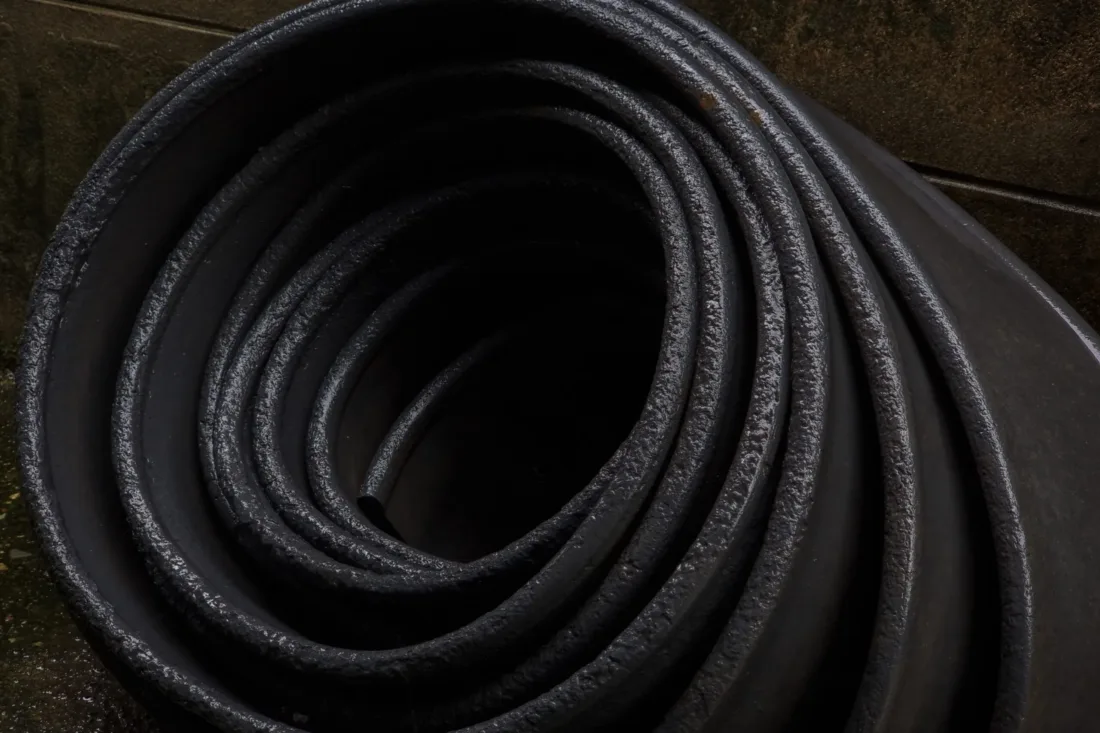
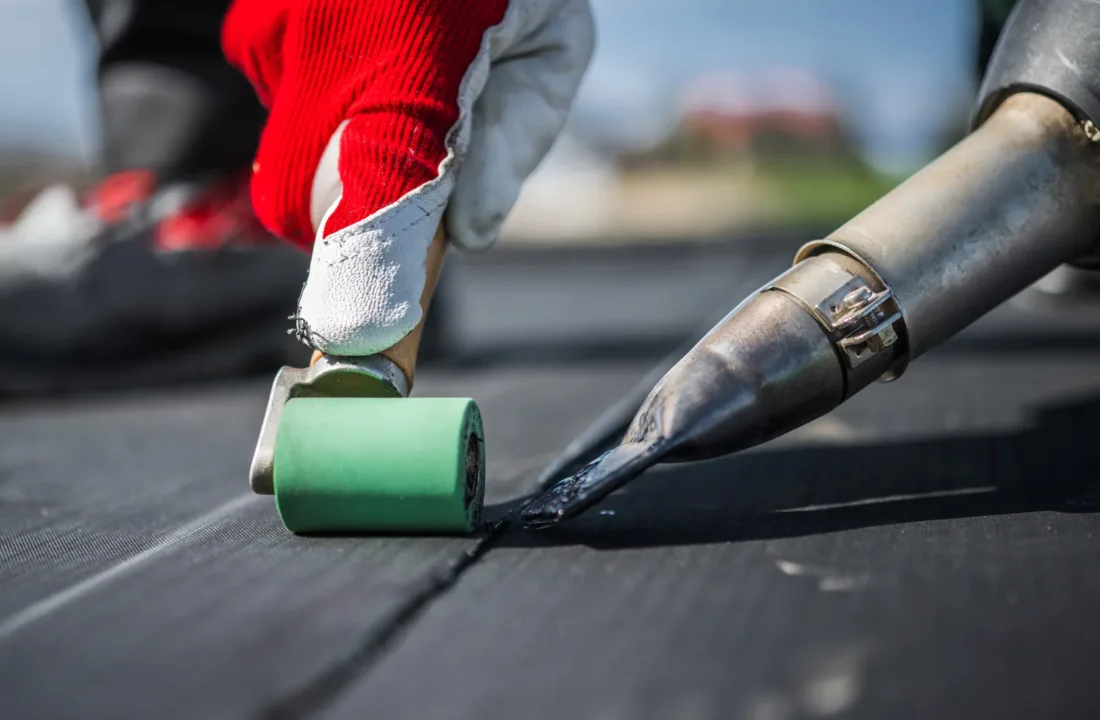
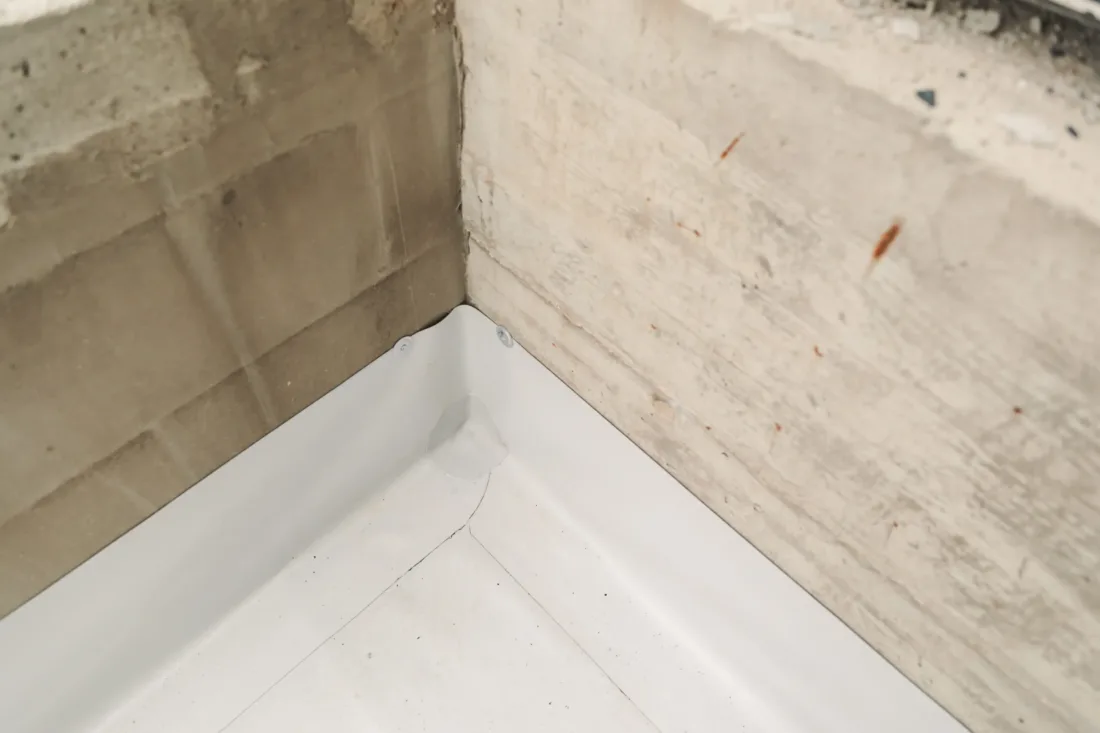
EPDM is a synthetic rubber membrane manufactured from Ethylene Propylene Diene Monomer, a synthetic elastomer formulated specifically for outdoor weathering performance. Unlike TPO and PVC (which are thermoplastics that can be melted and re-formed), EPDM is a thermoset rubber: once cured during manufacturing, it can’t be melted or heat-welded. Seams on EPDM systems are joined with manufacturer-approved splice tape or liquid splice adhesives, which produce strong long-term seams when properly installed but require different installation discipline than heat-welded thermoplastics.
EPDM is available in roll widths up to roughly 50 feet wide and lengths up to 200 feet, substantially wider than typical TPO rolls. On large commercial roofs, this matters: fewer rolls means fewer seams, and fewer seams means fewer potential failure points across the field of the roof. EPDM is also available in thicknesses ranging from 45-mil to 90-mil, with 60-mil being the most common commercial standard and 90-mil offering premium impact resistance and warranty terms.
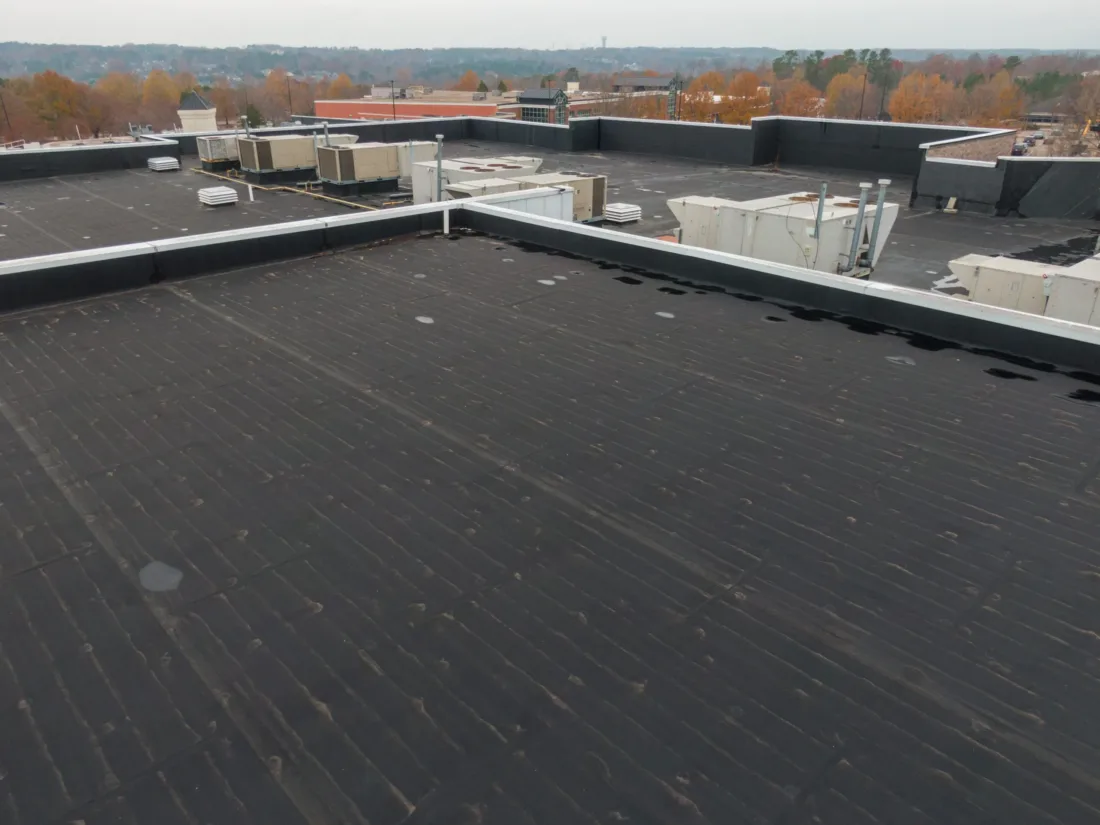
Most commercial EPDM is black, which has been the standard since the system was developed. White EPDM and reflective-coated EPDM exist for cool-roof applications, but they typically cost more than equivalent white TPO and represent a smaller segment of the market. The black-vs-white decision is one of the most important EPDM choices for Westminster, CO buildings. And we cover it in detail below.
Why EPDM Still Matters for Westminster, CO Commercial Buildings
TPO has displaced EPDM as the dominant new-install single-ply system over the past decade or two, but that doesn’t mean EPDM has stopped being a strong choice. There are specific scenarios where EPDM is genuinely the right answer for Westminster, CO commercial roofs.
The longest proven track record.
EPDM has been installed on commercial roofs since the 1960s, which means there are EPDM roofs in Westminster, CO that are still performing at 40+ years of service life. No other single-ply system can show that kind of real-world data. For property owners and managers who value proven longevity over newer technology, EPDM’s track record is unmatched.
Exceptional thermal cycling tolerance.
This is genuinely important in Westminster, CO. Colorado routinely sees 40-50 degree temperature swings within a single 24-hour period, especially in spring and fall. Roof membranes expand and contract with each cycle. EPDM rubber chemistry handles this thermal cycling extraordinarily well, the membrane stretches and contracts without losing properties, year after year. TPO and PVC also handle thermal cycling, but EPDM has the strongest track record under extreme cycling specifically.
Fewer seams across the roof.
EPDM’s wider roll widths mean fewer seams on a given roof. On a 50,000 square foot warehouse, that translates to dramatically less linear footage of seam compared to typical TPO installation widths. Since seams are where most aging single-ply roofs eventually leak, fewer of them is structurally meaningful.
Highly elastic, handles building movement.
EPDM stretches without tearing. On commercial buildings with structural movement, settlement, or expansion-joint stress, the elastic membrane handles this movement better than less-elastic alternatives. Heavy snow loading on Westminster, CO buildings is one common case where EPDM’s elasticity matters.
Strong cold-weather performance.
EPDM stays flexible at very low temperatures and doesn’t become brittle in Westminster, CO winters. Some lower-grade thermoplastics can be more vulnerable to cold-weather brittle failure than properly formulated EPDM.
Generally lower material cost than TPO or PVC.
Per square foot of material, EPDM is typically the most cost-competitive single-ply option. Total installed cost varies by installation method, but the material savings can be meaningful on large projects.
EPDM Installation Methods: Ballasted, Mechanically-Fastened, Fully-Adhered
EPDM can be installed three different ways, and the choice has significant implications for cost, performance, and long-term maintenance.
Ballasted EPDM
The original EPDM installation method and still in use on certain buildings. The membrane is loose-laid over the insulation (not mechanically attached or adhered to the substrate), and rounded river-rock ballast or large concrete pavers are placed on top of the membrane to hold it down. Wind uplift resistance comes entirely from the weight of the ballast. Ballasted systems are inexpensive to install, easy to repair, and lend themselves to roofs where the structure can support the additional dead load. The trade-off: ballast adds significant weight (often 10-12 pounds per square foot), the membrane underneath is harder to inspect, and ballast can shift in extreme wind events. Less common on new construction in Westminster, CO but still installed where appropriate.
Mechanically-Fastened EPDM
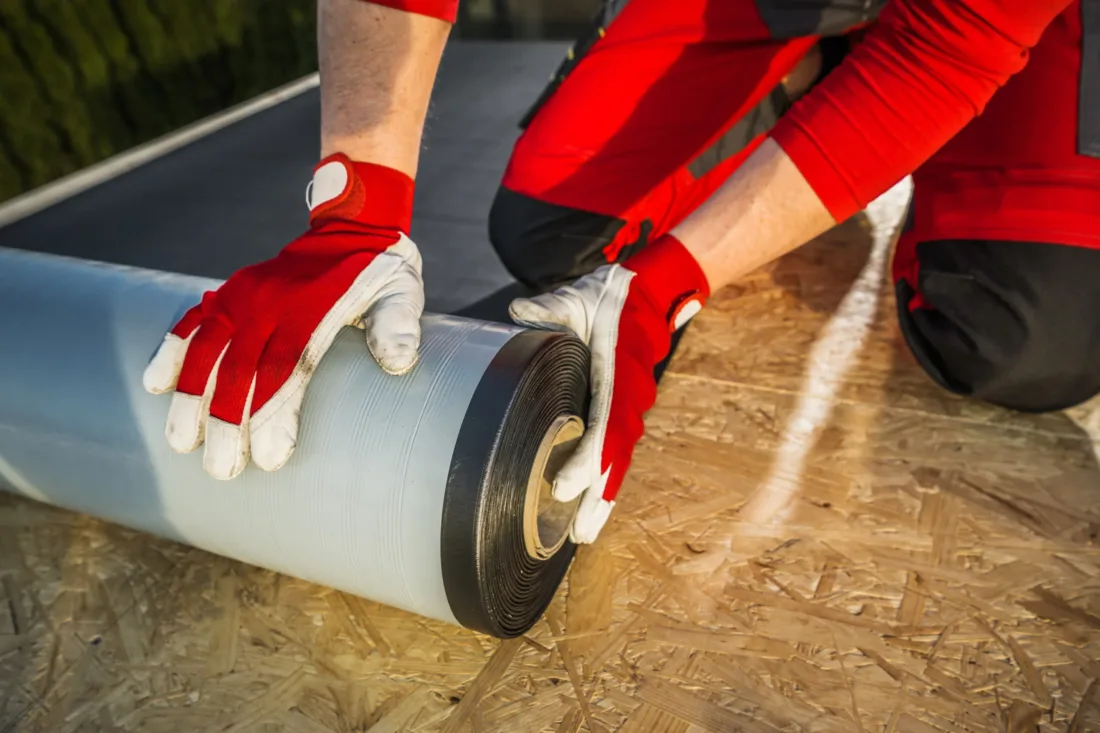
Insulation board is fastened to the deck with screws and plates. The EPDM membrane is unrolled over the insulation and attached at the seams using batten bars or fastening plates. The next sheet of EPDM is overlapped, the seam is taped or adhesive-bonded, and the seam covers the fastener pattern. Mechanically-fastened EPDM is the most common new-install method, fast to install, cost-effective, and well-suited to most commercial buildings. Wind uplift performance depends on engineered fastener pattern.
Fully-Adhered EPDM
Insulation board is mechanically-fastened to the deck, then both the top of the insulation and the underside of the EPDM membrane are coated with manufacturer-approved bonding adhesive. The membrane is rolled into the adhesive, producing a continuously-bonded system with no fasteners through the membrane. Fully-adhered systems offer the strongest wind-uplift performance available on EPDM and the cleanest installation, but cost more and require good weather for adhesive cure. The right choice for high-wind exposure, tall buildings, or projects where the absolute cleanest installation matters.
Black vs. White EPDM: An Important Westminster, CO Decision
This is one of the most important decisions on any EPDM project for a Westminster, CO commercial building, and it’s worth thinking through carefully.
Black EPDM.
The traditional and lower-cost option. Black EPDM absorbs solar radiation rather than reflecting it, which means surface temperatures on a black EPDM roof can exceed 160°F on a hot summer day. That heat transfers into the building below and increases summer cooling loads. On the other hand, black EPDM helps melt winter snow on the roof faster, reducing snow load duration. The black-vs-white trade-off is real and depends on whether your building’s energy profile is dominated by summer cooling or winter heating.
White EPDM.
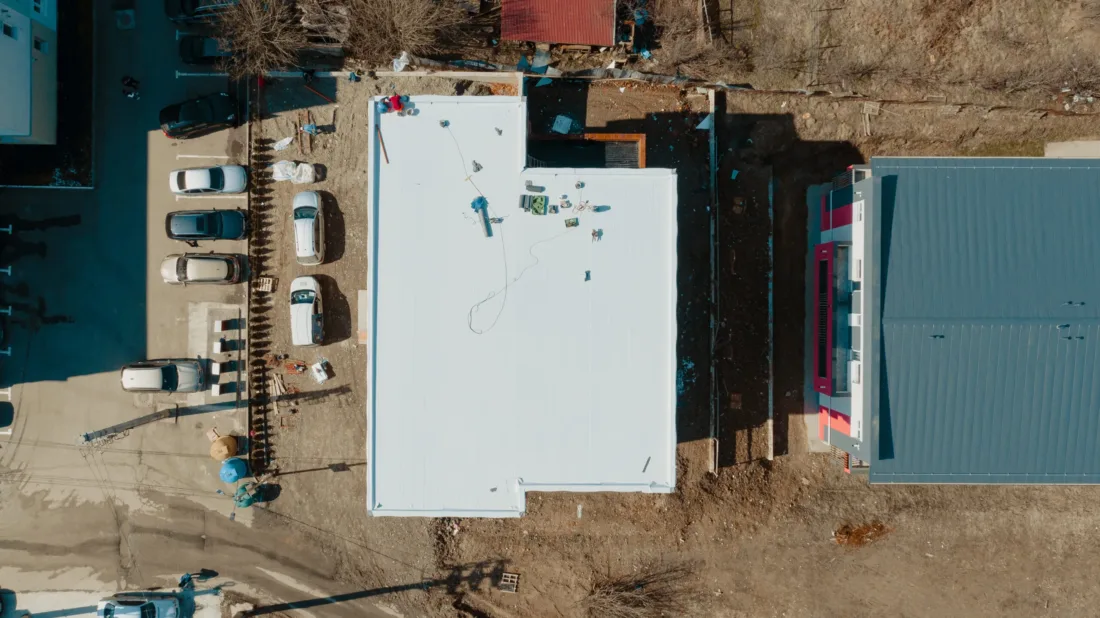
White-surfaced EPDM (factory-applied white surface or field-applied reflective coating) addresses the heat-absorption issue and qualifies for ENERGY STAR ratings on most major systems. The trade-off is cost, white EPDM is more expensive than black, and is often more expensive than equivalent white TPO. For energy-focused commercial projects in Westminster, CO, white TPO frequently delivers better cool-roof economics than white EPDM.
Reflective-coated EPDM.
Black EPDM can be field-coated with a reflective acrylic or silicone coating to add cool-roof performance. This is a sometimes-attractive option for retrofit projects on existing black EPDM that needs surface restoration anyway.
Our typical recommendation:
For new commercial flat roof installations in Westminster, CO where energy efficiency is a priority, white TPO usually delivers better cool-roof economics than white EPDM. EPDM’s biggest practical advantages, thermal cycling tolerance, sheet width, proven track record, are best leveraged on projects where black EPDM is acceptable, or on existing black EPDM roofs where coating provides the reflectivity. We’ll walk through the comparison on your specific project.
The Honest EPDM Trade-Offs
Adhesive seams vs. heat-welded seams.
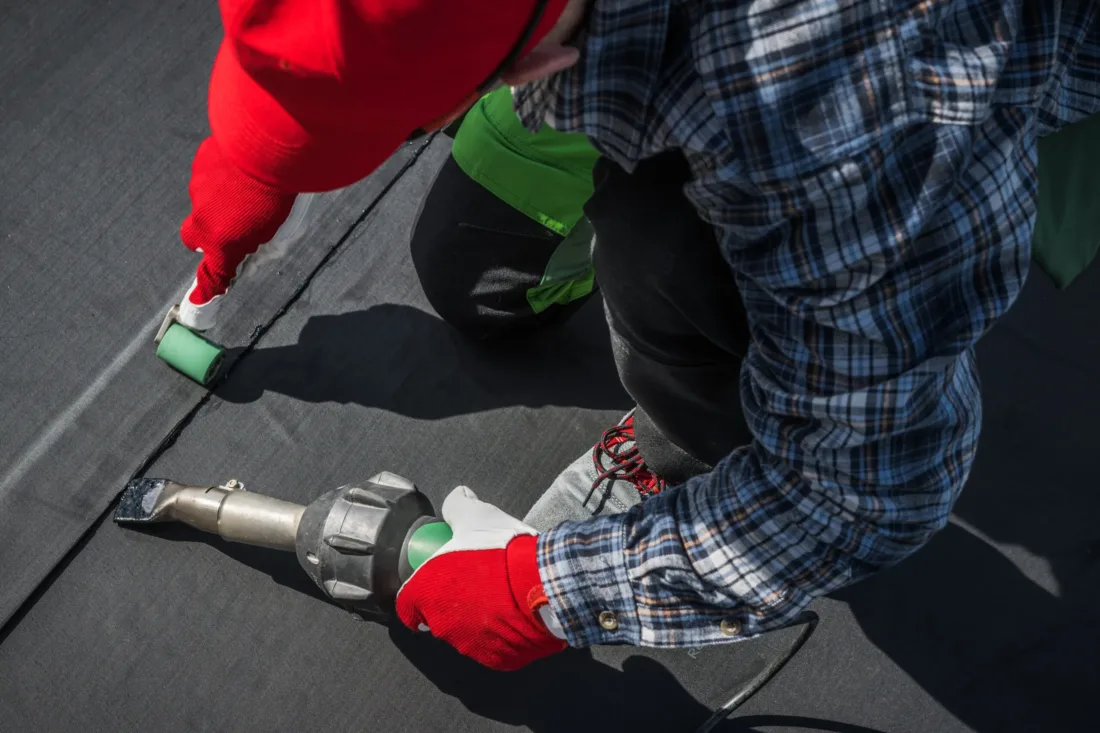
This is the central trade-off vs. TPO and PVC. Properly installed EPDM tape or adhesive seams are reliable for decades, but heat-welded thermoplastic seams have a fundamentally different strength profile. EPDM seams are more vulnerable to long-term aging, dirt contamination during installation, and improper application. The 30-year-old EPDM roofs that are still performing have universally well-installed seams; the 30-year-old EPDM roofs that are leaking are usually leaking at the seams.
Black EPDM is not a cool roof.
If energy efficiency matters, black EPDM is the wrong call without a reflective coating or surface treatment. This is the most common misalignment we see, property owners considering black EPDM for cost reasons on buildings where summer cooling loads make black surface temperatures genuinely expensive over the system’s life.
Membrane shrinkage over time.
EPDM can shrink slightly over decades of service, which can stress flashings and seam edges at the perimeter. This is a known characteristic of the chemistry, addressed in modern EPDM systems through proper detail design and substrate attachment, but worth understanding.
Reduced market presence.
TPO has displaced EPDM as the most-installed new system, which means EPDM-experienced installation crews are slightly less common than they used to be. Skilled EPDM crews still exist (we have them), but the talent pool isn’t growing the way TPO’s is.
Where EPDM Roofing Works Best in Westminster, CO
- Re-roofing existing aged EPDM where matching the existing system makes sense
- Buildings with significant structural movement or thermal stress where membrane elasticity matters
- Large-square-footage projects where EPDM’s wider rolls reduce seam count significantly
- Projects where black EPDM is acceptable or preferred (e.g., low solar exposure, cold-climate-dominant energy profile)
- Ballasted system applications where structural capacity supports the dead load
- Property owners and managers who value proven 50+ year track record over newer technology
- Cost-sensitive projects where EPDM’s material savings drive the system selection
EPDM is generally not the best call for energy-focused new commercial projects (white TPO usually wins on cool-roof economics), buildings with chemical or grease exhaust (PVC handles those better), or projects where heat-welded seam reliability is the highest priority.
EPDM Roofing and Westminster, CO’s Climate
Thermal cycling: EPDM’s strongest argument in Westminster, CO.
Westminster, CO’s 40-50 degree daily temperature swings put commercial roofs through more thermal cycling than almost any other climate in the country. EPDM rubber chemistry handles thermal cycling exceptionally well, year after year. This is the single most compelling EPDM argument in this market.
Hail performance: comparable to TPO.
EPDM is reasonably elastic and can absorb hail impacts that would puncture more brittle materials. Hail damage on EPDM tends to show as bruising, surface tearing, or seam-edge damage rather than clean punctures. Repair is straightforward with manufacturer-approved patches and tape. Thicker EPDM (90-mil) provides better impact resistance for hail-prone Colorado buildings.
UV at altitude: handled, but matters.
Modern EPDM formulations handle Westminster, CO’s high-altitude UV exposure well over their service life. Black EPDM particularly is designed for direct sun exposure as a baseline use case.
Cold-weather performance: excellent.
EPDM stays flexible at very low temperatures and doesn’t become brittle in Westminster, CO winters. This is a genuine advantage over some alternatives.
Cool-roof economics: only with white EPDM or reflective coating.
Black EPDM heats up significantly in Westminster, CO summers. For cool-roof performance, plan on white EPDM, reflective coating, or a different system entirely.
Frequently Asked Questions: Commercial EPDM Roofing in Westminster, CO
-
How long does an EPDM roof last in Westminster, CO?
Manufacturer warranties on commercial EPDM typically run 20 to 30 years depending on thickness and warranty type. Real-world service life on properly installed EPDM commonly meets or exceeds the warranty, with well-maintained EPDM roofs from the 1980s and earlier still performing in many cases. The 50+ year track record gives EPDM data no other single-ply can match.
-
EPDM vs. TPO: which is better for my Westminster, CO commercial building?
It depends on the building. TPO offers heat-welded seams, white reflectivity, and competitive new-install pricing, making it the most common choice for new commercial work in Westminster, CO. EPDM offers proven longevity, exceptional thermal cycling tolerance, fewer seams from wider roll widths, and lower material cost, making it preferred on certain applications and budget-sensitive projects. Our inspection and the building’s specific use will tell us which fits better.
-
How much does EPDM roofing cost in Westminster, CO?
EPDM cost depends on installation method (ballasted is typically cheapest, fully-adhered most expensive), membrane thickness, color (black is cheaper than white), and the complexity of the roof. Per square foot, EPDM material is generally lower-cost than TPO or PVC, though installation method choices can change the total project cost. We provide written estimates after inspecting the actual roof.
-
Is black or white EPDM better for my Westminster, CO commercial roof?
If summer cooling loads are a major concern (most Westminster, CO commercial buildings), white EPDM or a reflective coating is the right call, and at that point, white TPO often delivers better economics than white EPDM. Black EPDM is typically the right call when cost is the priority and the building’s energy profile is dominated by winter heating rather than summer cooling, or when reflective performance isn’t a concern for the specific building type.
-
Can hail damage EPDM, and how is it repaired?
Yes, severe hail can damage EPDM, typically as bruising, tearing, or seam damage rather than the punctures more common on thermoplastics. Repair uses manufacturer-approved EPDM patches and splice tape, applied with proper substrate prep. Localized hail damage on a sound EPDM membrane is straightforward to repair. Widespread damage on aged EPDM may warrant replacement, our post-storm inspection will tell you which applies.
-
What thickness of EPDM should I install?
60-mil is the commercial standard and our most-recommended thickness for typical Westminster, CO commercial buildings. 45-mil is the budget option for protected applications with minimal hail exposure. 90-mil is the premium option for high-hail-risk areas, high-foot-traffic roofs, and applications where the longest warranty and strongest impact resistance matter. We recommend 60-mil minimum for most Westminster, CO buildings, with 90-mil consideration on hail-exposed applications.
-
Can EPDM be applied as a recover system over my existing commercial roof?
In some cases, yes. EPDM can be installed as a recover over certain existing substrates when the existing roof is sound and code allows it. Often, tear-off and re-roofing is preferable on aged commercial roofs because it lets us inspect the deck, insulation, and substrate. Our inspection will tell you which approach fits your building.
Get a Commercial EPDM Roofing Estimate in Westminster, CO
Whether you need a new EPDM roof installed, an existing EPDM roof replaced or repaired, or a comparison between EPDM and other single-ply systems for your specific application, Baseline Roofing and Solar is ready to help. We’re certified across every major EPDM manufacturer, install ballasted, mechanically-fastened, and fully-adhered systems, and specify the system that fits your building rather than the one that hits a price point.
-
More EPDM Roofing Locations +
- EPDM Roofing in Colorado
- EPDM Roofing in Arvada, CO
- EPDM Roofing in Aurora, CO
- EPDM Roofing in Berthoud, CO
- EPDM Roofing in Boulder, CO
- EPDM Roofing in Brighton, CO
- EPDM Roofing in Broomfield, CO
- EPDM Roofing in Castle Pines, CO
- EPDM Roofing in Castle Rock, CO
- EPDM Roofing in Centennial, CO
- EPDM Roofing in Cherry Creek, CO
- EPDM Roofing in Cherry Hills Village, CO
- EPDM Roofing in Colorado Springs, CO
- EPDM Roofing in Commerce City, CO
- EPDM Roofing in Englewood, CO
- EPDM Roofing in Erie, CO
- EPDM Roofing in Firestone, CO
- EPDM Roofing in Fort Collins, CO
- EPDM Roofing in Frederick, CO
- EPDM Roofing in Golden, CO
- EPDM Roofing in Greeley, CO
- EPDM Roofing in Greenwood Village, CO
- EPDM Roofing in Gunbarrel, CO
- EPDM Roofing in Highlands Ranch, CO
- EPDM Roofing in Lafayette, CO
- EPDM Roofing in Lakewood, CO
- EPDM Roofing in Littleton, CO
- EPDM Roofing in Lone Tree, CO
- EPDM Roofing in Longmont, CO
- EPDM Roofing in Louisville, CO
- EPDM Roofing in Loveland, CO
- EPDM Roofing in Mead, CO
- EPDM Roofing in Niwot, CO
- EPDM Roofing in Northglenn, CO
- EPDM Roofing in Parker, CO
- EPDM Roofing in Superior, CO
- EPDM Roofing in Thornton, CO
- EPDM Roofing in Westminster, CO
- EPDM Roofing in Wheat Ridge, CO
- EPDM Roofing in Windsor, CO