Commercial TPO Roofing in Parker, CO
Thermoplastic Polyolefin, almost universally called TPO roofing, is currently the most-installed commercial single-ply membrane system in the United States, and the most-installed new commercial roof system in Parker, CO and across Colorado. The reasons come down to a strong combination of properties: white reflectivity that helps with Parker, CO’s high-elevation UV and summer cooling loads, heat-welded seams that resist water intrusion better than the taped seams on EPDM, competitive material pricing, and good performance through Parker, CO’s freeze-thaw and temperature-swing cycles. For most new commercial flat roof installations and replacements in this market, TPO is the system we specify most often.
Baseline Roofing and Solar installs commercial TPO roofing systems across Parker, CO and surrounding Colorado communities. We’re certified to install TPO from every major commercial manufacturer (Carlisle, Versico, GAF, Mule-Hide, Firestone, Johns Manville, and others), which matters because TPO formulations vary significantly between manufacturers, and the best-performing TPO systems are only available through manufacturer-certified contractors who can install them to spec and register the long-term warranties.
On this page. We’ll explain what TPO actually is, why it became the dominant single-ply system, the three main installation methods and when each is appropriate, the membrane thickness options and which fits which building, the honest trade-offs, and how TPO performs in Colorado’s specific climate and hail exposure.
What TPO Roofing Actually Is
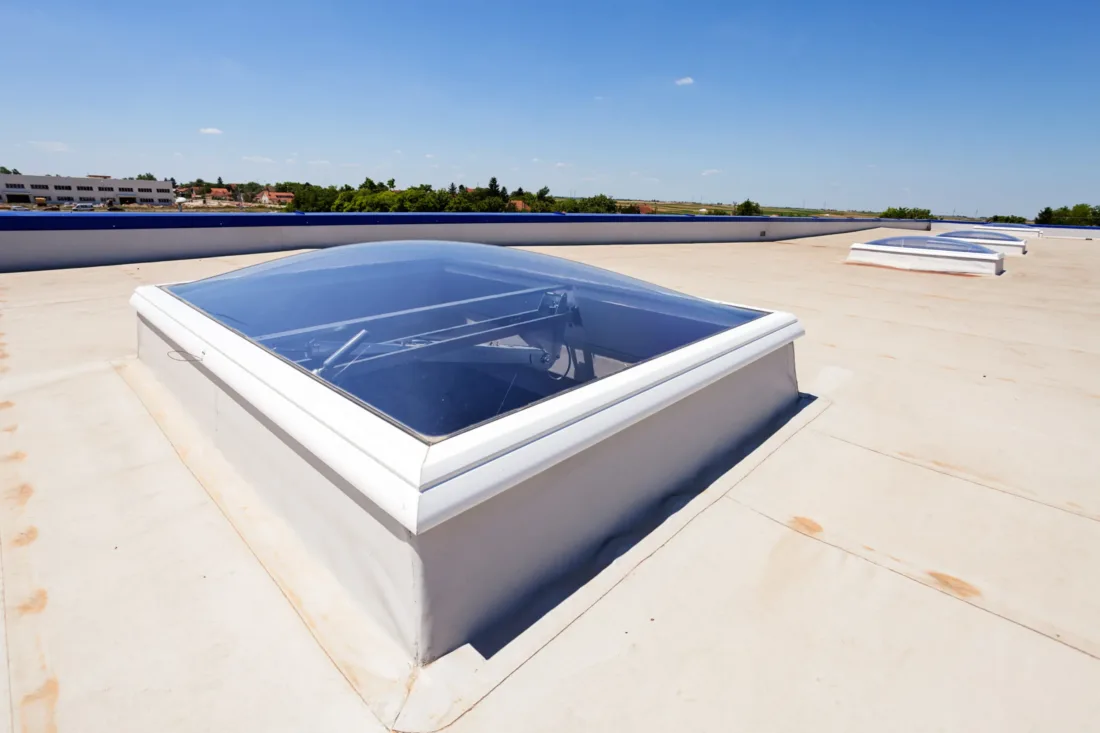
TPO is a single-ply thermoplastic membrane manufactured in large rolls (typically 10-foot or wider) and installed on commercial flat roofs as the primary waterproofing layer. The membrane itself is a sandwich construction: a top weathering layer, a middle polyester reinforcing scrim that gives the membrane its tensile strength and tear resistance, and a bottom layer that bonds to the substrate or attachment system. The polymer chemistry is a blend of polypropylene and ethylene-propylene rubber, which combines the heat-weldability of thermoplastics with some of the elasticity of rubber.
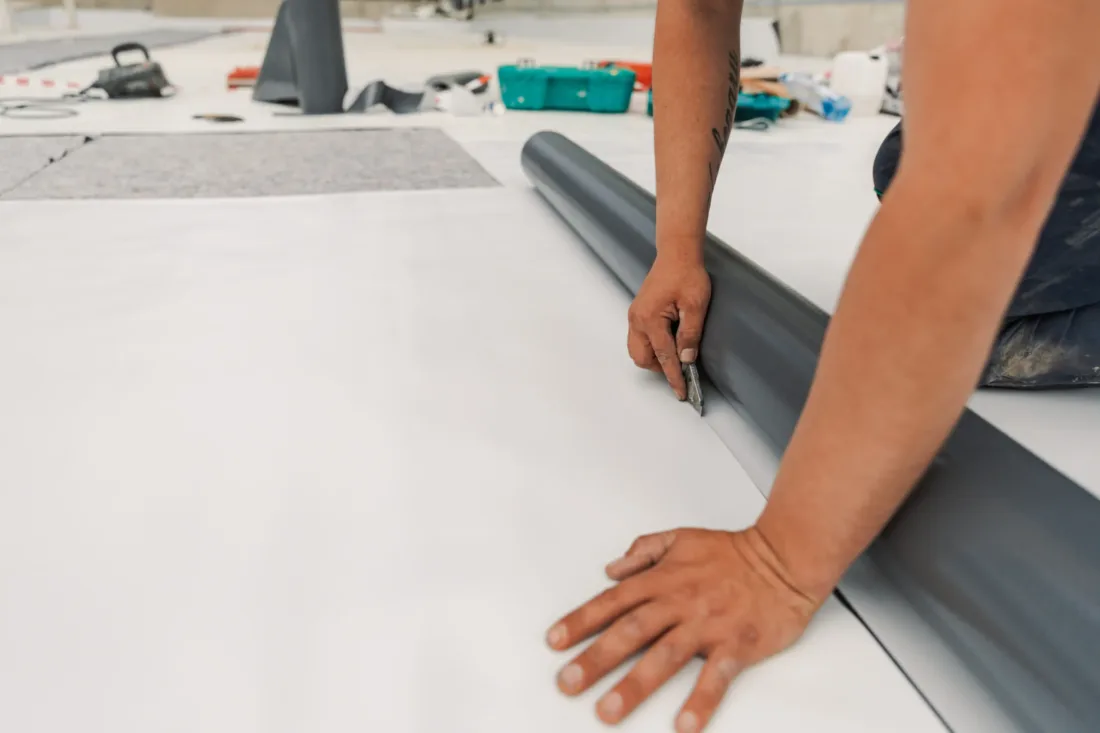
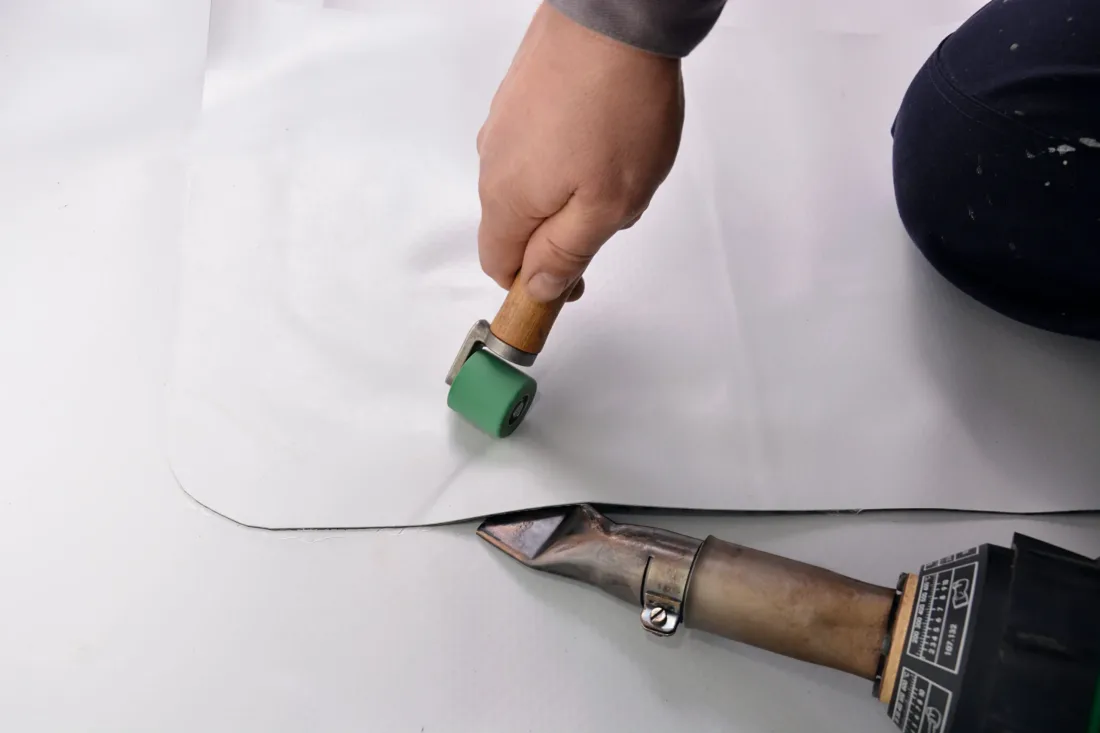
The key property of TPO that distinguishes it from EPDM is heat-weldability. TPO seams are joined using hot-air welders that fuse the membrane plies together at the molecular level, creating a continuous, monolithic seam that’s stronger than the membrane itself when properly executed. EPDM, by comparison, joins seams with adhesives or splice tape; both produce sound seams when properly installed, but heat-welded thermoplastics like TPO and PVC have a fundamentally different seam strength profile.
TPO is most commonly white, which is a major part of its appeal, white TPO carries some of the highest solar reflectance values of any commercial roofing membrane, qualifying for ENERGY STAR ratings and meeting cool-roof code requirements where applicable. Tan and gray TPO are also available for projects where white isn’t preferred or where local codes have different reflectivity requirements.
Why TPO Became the Dominant Commercial Single-Ply System
TPO’s market share didn’t grow by accident. The combination of properties below is genuinely hard to beat for the typical commercial flat roof in Parker, CO:
- Heat-welded seams. The single most reliable seam technology in single-ply membrane roofing. Properly welded seams are watertight for the life of the roof and resist seam separation that can plague tape-bonded EPDM as it ages.
- High solar reflectivity. White TPO with reflectance values typically above 0.80 reduces summer cooling loads materially. On Parker, CO’s hot, sunny summers, that translates into measurable HVAC energy savings.
- Competitive pricing. Material costs for TPO are typically lower than equivalent PVC and similar to or slightly below EPDM. Total installed cost is often the lowest among single-ply options for new commercial work.
- Strong manufacturer warranty options. Major manufacturers offer warranties from 15 years on basic systems up to 30 years on premium systems with full installation specifications.
- Reinforcement scrim provides impact resistance. The polyester scrim layer gives TPO better puncture resistance than unreinforced membranes, meaningful in Parker, CO’s hail-prone climate.
- Wide range of installation methods. TPO can be installed mechanically-fastened, fully-adhered, or induction-welded, letting the contractor and designer pick the method that fits the building’s wind exposure, deck type, and project conditions.
TPO Installation Methods: Three Approaches, Three Different Use Cases
TPO can be installed three different ways, and each has specific applications where it makes sense. Understanding which method fits your building helps you understand why one TPO bid might come in differently from another.
Mechanically-Fastened TPO
The most common method. Insulation board is fastened to the deck with screws and plates, then TPO membrane is unrolled over the insulation and fastened along the membrane seams with additional plates and screws. The next sheet of TPO is welded over the fastener plates, sealing them in. Mechanically-fastened systems are fast to install, cost-effective, and well-suited to most commercial buildings. Wind-uplift performance depends heavily on fastener pattern, which is engineered to the building’s exposure category.
Fully-Adhered TPO
Insulation board is mechanically-fastened to the deck, then both the top of the insulation and the underside of the TPO membrane are coated with manufacturer-approved adhesive, and the membrane is rolled into the adhesive. The result is a continuously-bonded system with no fastener penetrations through the membrane and the strongest wind-uplift resistance available. More expensive than mechanically-fastened systems and requires good weather for adhesive cure, but the right choice for high-wind exposure, tall buildings, or projects where the cleanest possible installation matters.
Induction-Welded TPO (RhinoBond, Induction-Welded Plates)
A hybrid system that combines the speed of mechanical fastening with the holding strength of fully-adhered. Insulation board is fastened to the deck with specialized plates. TPO membrane is unrolled over the insulation, and a handheld induction tool melts the membrane to the plates from above, creating bonded attachment points across the field of the roof, not just at the seams. Strong wind-uplift performance, fast installation, and no fastener penetrations through the membrane. Often the right answer on hail-prone Colorado buildings where minimizing seam fastener count makes sense.
TPO Membrane Thickness: 45-Mil, 60-Mil, and 80-Mil Options
TPO is available in three primary thicknesses, measured in mils (thousandths of an inch). The thickness choice directly affects expected service life, hail resistance, warranty length, and price.
45-mil TPO.
The minimum thickness for most commercial applications. 45-mil is the budget option, typically carries 15-year warranties, has the lowest material cost, and works well on protected roofs with minimal foot traffic and minimal hail exposure. We recommend 45-mil less often in Parker, CO because Colorado hail exposure favors thicker membrane in most situations.
60-mil TPO.
The commercial standard and our most-recommended thickness for typical Parker, CO commercial flat roofs. 60-mil offers significantly better impact resistance than 45-mil, supports longer manufacturer warranties (typically 20 years), and adds modest cost over 45-mil. For most general commercial buildings on Colorado, 60-mil is the right balance of cost and performance.
80-mil TPO.
The premium option, often specified for high-hail-risk areas, high-foot-traffic roofs, and buildings where the longest warranty terms are valued. 80-mil supports 25- to 30-year warranties from many manufacturers and offers the strongest hail resistance of standard TPO products. The cost premium over 60-mil is meaningful but often justified on hail-prone buildings or roofs with frequent maintenance access.
Reinforced and impact-rated TPO.
Some manufacturers offer fleece-backed, polyester-reinforced, or otherwise enhanced TPO products with UL 2218 Class 3 or Class 4 impact ratings. These products typically come with insurance premium discounts on hail-prone buildings, which can offset some of the upgrade cost over the system’s service life.
Internal link: this section should link to the Commercial Storm & Hail Damage Flat Roof Replacement page, impact-resistant TPO is a key consideration in storm-driven replacements.
Honest TPO Trade-Offs to Understand
No commercial roofing system is universally best. Here are the real TPO trade-offs.
Manufacturer formulations vary significantly.
This is the most important honest point about TPO: not all TPO is created equal. The category had real formulation issues in the late 1990s and early 2000s when some manufacturers’ products experienced premature surface cracking and weathering failures. Modern TPO formulations from established manufacturers are reliable and well-tested, but the lowest-priced TPO from less-established manufacturers can still underperform. Manufacturer selection matters more on TPO than on most commercial roofing systems.
White TPO can show dirt and staining over time.
White roofs, including TPO, accumulate airborne dirt and staining over years of exposure. Reflectivity decreases somewhat as dirt accumulates. This is mostly cosmetic, the membrane still performs, but white TPO roofs typically don’t look as bright at year 15 as they did at year 1.
Heat-welded seams require skilled installation.
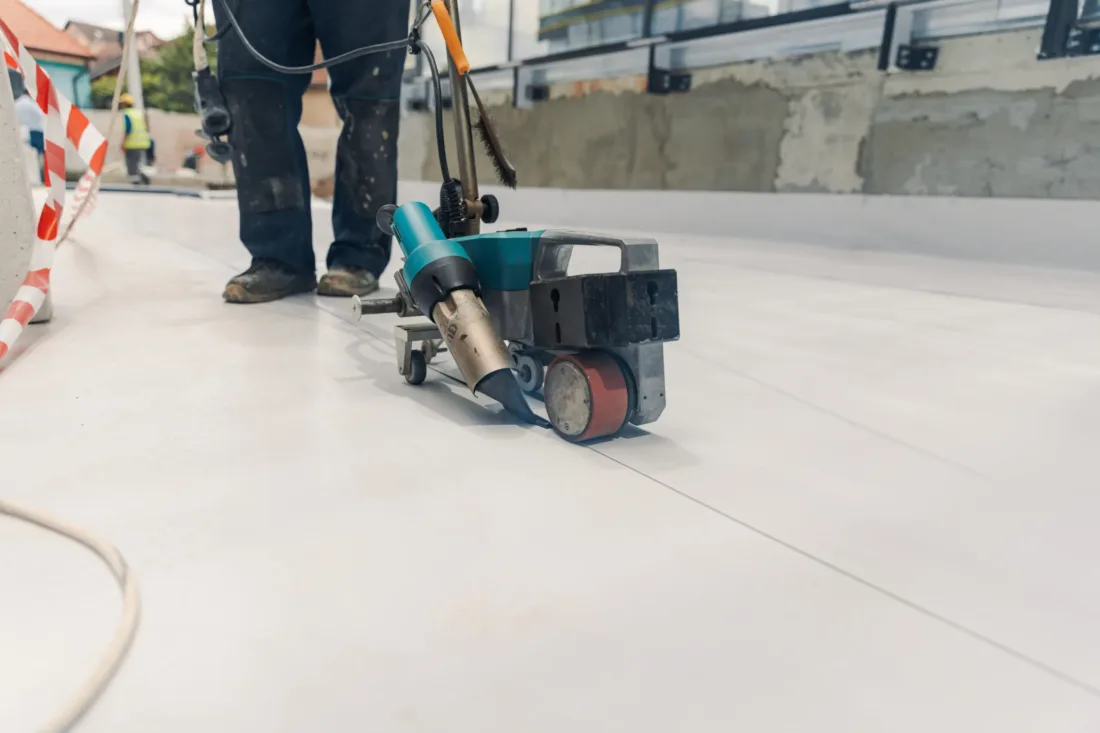
TPO seam welds are extraordinarily reliable when properly executed. The catch is the words “properly executed.” Welding temperature, welder speed, ambient temperature, and operator skill all affect seam quality. Probe-tested seams from a certified crew are essentially bulletproof. Seams welded by a less-experienced crew can have cold welds, over-welded weakened areas, or skipped sections that fail years later. Manufacturer-certified contractors and probe-tested seams matter.
Reinforcement layer is critical.
The polyester scrim that reinforces TPO is essential to its puncture and tear resistance. When the top layer is damaged enough to expose the scrim, repair becomes more complicated and the membrane is meaningfully weaker at that point until it’s properly patched.
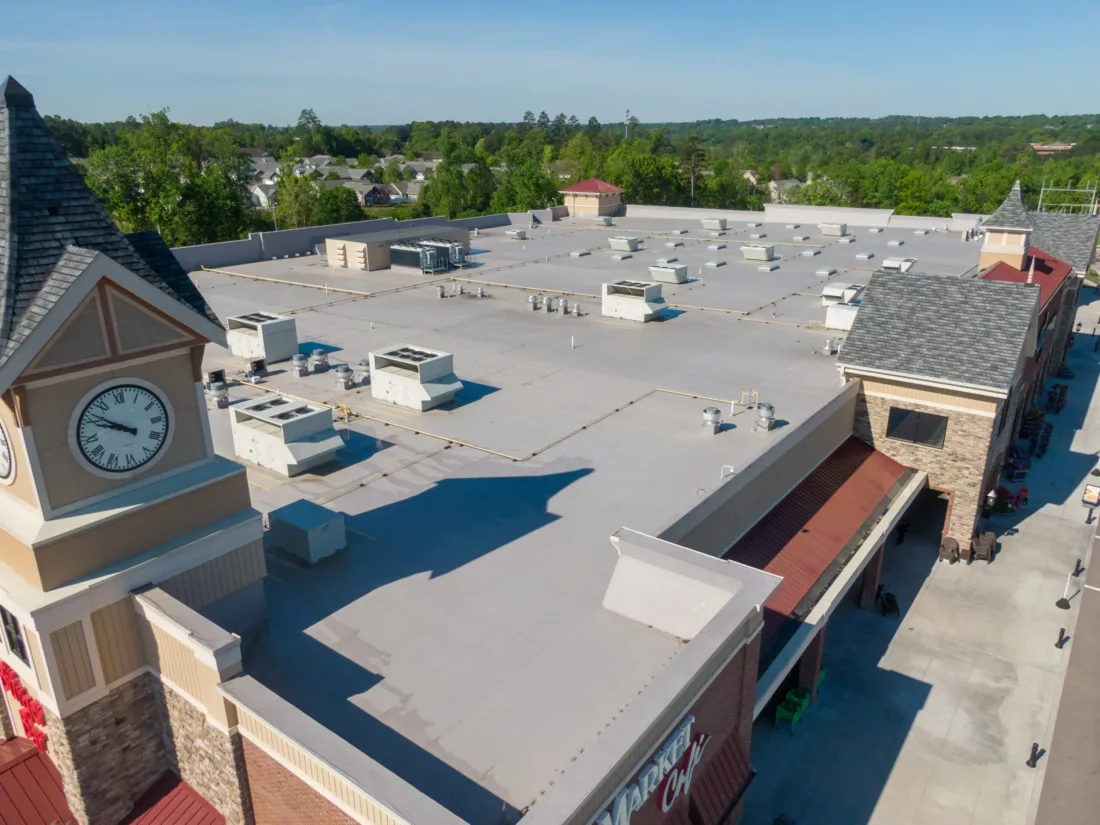
Where TPO Roofing Works Best in Parker, CO
TPO is the right call for most commercial flat roof projects in Parker, CO. Specific situations where it’s particularly strong:
- New construction commercial buildings, warehouses, offices, retail, schools
- Commercial roof replacement projects on aged single-ply or built-up systems
- Cool-roof and energy-focused projects benefiting from white TPO reflectivity
- Buildings where heat-welded seam reliability is preferred over EPDM tape seams
- Hail-prone Colorado buildings, particularly in 60-mil or 80-mil thicknesses
- Projects with budget constraints that still require strong manufacturer warranties
- Large-square-footage projects where TPO’s wide rolls reduce seam count
TPO is not the right answer for restaurants, food service, manufacturing facilities, or any building with chemical or grease exhaust hitting the roof, PVC handles those conditions better. For roofs where extreme thermal cycling or specific chemical exposure is a concern, EPDM may be preferred.
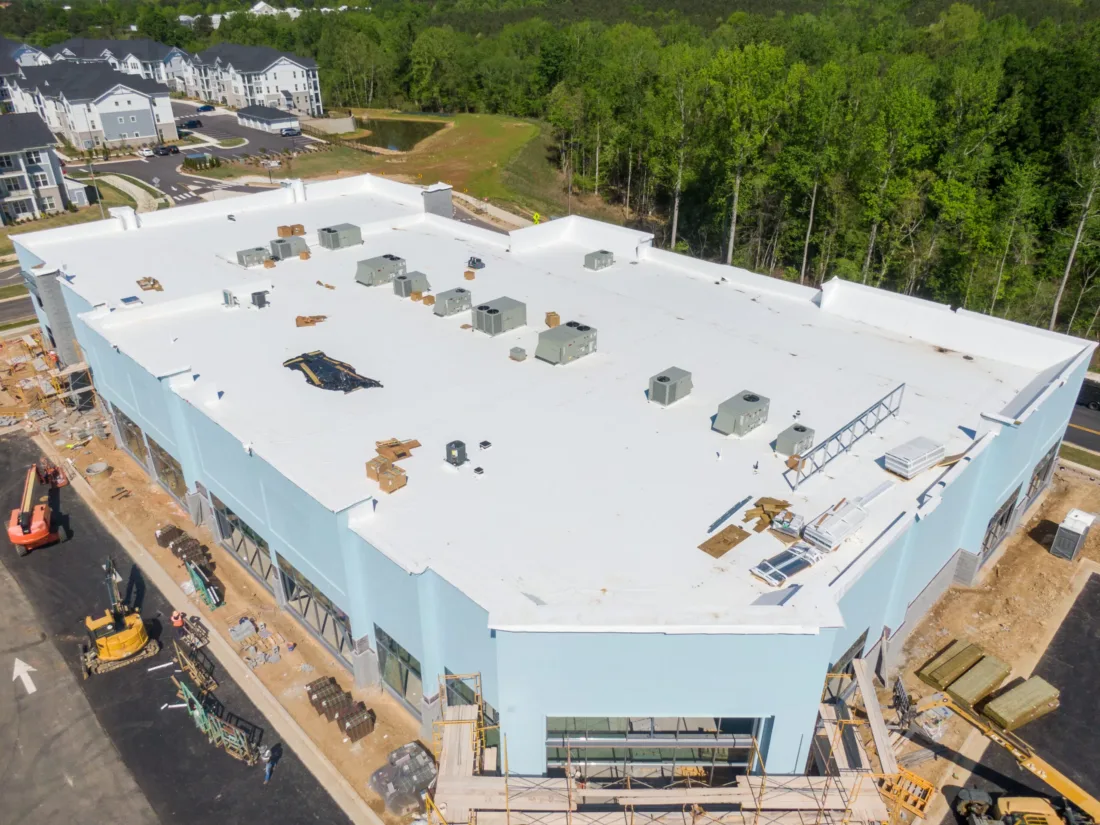
TPO Roofing and Parker, CO’s Climate
High-altitude UV: well-handled with quality TPO.
Modern TPO formulations from established manufacturers handle Parker, CO UV well over 20+ year service life. Older or low-grade TPO can suffer accelerated UV degradation, another reason manufacturer selection matters.
Hail resistance: thickness-dependent.
60-mil TPO handles typical Colorado hail well; 80-mil and impact-resistant TPO products handle major hail events significantly better. We recommend 60-mil minimum for Parker, CO commercial buildings, with 80-mil or impact-rated products on high-risk applications.
Temperature swings: strong performance.
TPO accommodates Parker, CO’s 50-degree daily temperature swings well. The thermoplastic chemistry handles thermal cycling without the brittleness issues that affect some lesser-quality membranes.
Wind exposure: variable by installation method.
Mechanically-fastened TPO performs to wind-uplift code when fastener pattern is engineered to the building’s exposure category. Fully-adhered and induction-welded systems handle higher wind exposure with no membrane fastener penetrations. We engineer the system to the actual building, not a generic pattern.
Cool-roof energy savings: significant.
White TPO reflects roughly 80% of incoming solar radiation, dramatically reducing summer cooling loads compared to dark roofs. On Parker, CO’s hot summers, this is one of TPO’s strongest practical benefits.
Frequently Asked Questions: Commercial TPO Roofing in Parker, CO
-
How long does a TPO roof last in Parker, CO?
Manufacturer warranties on commercial TPO typically run 15 to 30 years depending on membrane thickness and warranty type. Real-world service life on properly installed TPO from established manufacturers commonly meets or exceeds the warranty period. Hail and severe weather events can shorten any roof’s service life, which is why thickness selection and impact-resistant options matter on Parker, CO buildings.
-
How much does a TPO roof cost in Parker, CO?
TPO pricing depends on square footage, membrane thickness (45/60/80-mil), installation method (mechanically-fastened vs. fully-adhered vs. induction-welded), insulation requirements, deck condition, and the complexity of penetrations. Per square foot, TPO is typically the most cost-competitive single-ply option for new commercial work. We provide written estimates after inspecting the actual roof.
-
Is TPO better than EPDM for Parker, CO commercial buildings?
It depends on the building. TPO offers heat-welded seams, white reflectivity, and competitive pricing, making it the better choice for most general commercial applications in Parker, CO. EPDM offers proven longevity, exceptional thermal cycling tolerance, and is typically available in long-life formulations, making it preferred on certain applications where those properties matter most. Our inspection and the building’s specific use will tell us which fits better.
-
What thickness of TPO should I install?
For typical Parker, CO commercial buildings, 60-mil is our most-recommended thickness, strong impact resistance, longer warranties than 45-mil, modest cost premium. For high-hail-risk areas, high-traffic roofs, or applications where the longest warranty term is valued, 80-mil is often worth the upgrade. We don’t typically recommend 45-mil for Parker, CO unless specific cost constraints require it and hail exposure is minimal.
-
Can a TPO roof be installed over my existing commercial roof?
In some cases, yes. TPO can be installed as a recover system over certain existing substrates when the existing roof is sound, dry, and code allows it. More often, a tear-off is preferable on aged roofs because it lets us inspect and address insulation, deck, and substrate issues that recover wouldn’t reveal. Our inspection will tell you which approach makes sense.
-
Does TPO qualify for ENERGY STAR or cool-roof rebates?
Most major manufacturers’ white TPO membranes carry ENERGY STAR ratings and meet cool-roof code requirements. Specific rebates and tax incentives vary by program, year, and jurisdiction, talk to your tax advisor or local utility about what’s currently available.
-
How is hail damage repaired on a TPO roof?
Hail-damaged TPO is repaired with manufacturer-approved patches heat-welded over the damaged area. Localized hail damage on a 60-mil or 80-mil membrane is straightforward to repair. Widespread hail damage may warrant full replacement, our post-storm inspection will tell you which applies.
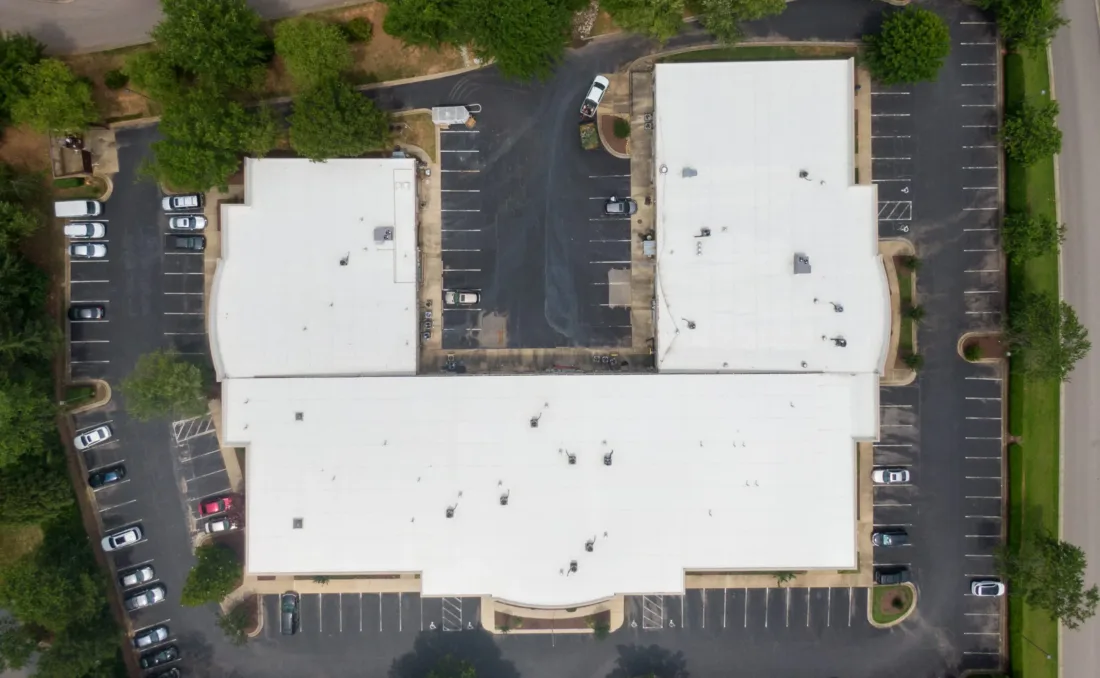
Get a Commercial TPO Roofing Estimate in Parker, CO
Whether you need a new TPO roof installed on a commercial building, an existing roof replaced with TPO, or a comparison between TPO and other single-ply systems for your specific application, Baseline Roofing and Solar is ready to help. We’re certified across every major TPO manufacturer, install all three TPO methods (mechanically-fastened, fully-adhered, induction-welded), and specify the membrane thickness that fits your building rather than the cheapest option that hits a price point.
-
More TPO Roofing Locations +
- TPO Roofing in Colorado
- TPO Roofing in Arvada, CO
- TPO Roofing in Aurora, CO
- TPO Roofing in Berthoud, CO
- TPO Roofing in Boulder, CO
- TPO Roofing in Brighton, CO
- TPO Roofing in Broomfield, CO
- TPO Roofing in Castle Pines, CO
- TPO Roofing in Castle Rock, CO
- TPO Roofing in Centennial, CO
- TPO Roofing in Cherry Creek, CO
- TPO Roofing in Cherry Hills Village, CO
- TPO Roofing in Colorado Springs, CO
- TPO Roofing in Commerce City, CO
- TPO Roofing in Englewood, CO
- TPO Roofing in Erie, CO
- TPO Roofing in Firestone, CO
- TPO Roofing in Fort Collins, CO
- TPO Roofing in Frederick, CO
- TPO Roofing in Golden, CO
- TPO Roofing in Greeley, CO
- TPO Roofing in Greenwood Village, CO
- TPO Roofing in Gunbarrel, CO
- TPO Roofing in Highlands Ranch, CO
- TPO Roofing in Lafayette, CO
- TPO Roofing in Lakewood, CO
- TPO Roofing in Littleton, CO
- TPO Roofing in Lone Tree, CO
- TPO Roofing in Longmont, CO
- TPO Roofing in Louisville, CO
- TPO Roofing in Loveland, CO
- TPO Roofing in Mead, CO
- TPO Roofing in Niwot, CO
- TPO Roofing in Northglenn, CO
- TPO Roofing in Parker, CO
- TPO Roofing in Superior, CO
- TPO Roofing in Thornton, CO
- TPO Roofing in Westminster, CO
- TPO Roofing in Wheat Ridge, CO
- TPO Roofing in Windsor, CO