Solar Panel Removal & Reinstallation in Loveland, CO
Most Loveland, CO homes with rooftop solar will need solar detach and reset, the safe removal of the existing solar array, completion of the underlying roof work, and proper reinstallation of the array on the new roof, at least once during the array’s service life. Colorado hail seasons drive roof replacements every several years on most homes, and a rooftop solar array has to come off for the roof work to happen properly. This isn’t an unusual situation; it’s the typical situation for solar-equipped homes in Colorado’s hail belt over time. Done well, the detach-and-reset is straightforward and the array generates the same power after the project as before. Done poorly, it becomes a coordination disaster between roofing contractors and solar installers, broken panels, voided warranties, electrical issues, and arrays that don’t perform the way they did before the work.
Baseline Roofing and Solar handles solar detach-and-reset coordination on residential roof replacements across Loveland, CO and surrounding Colorado communities. We integrate the solar work cleanly with the underlying roof project, coordinate with the original solar installer when appropriate, handle panels carefully through the entire process, and verify array performance after reinstallation. For Loveland, CO homeowners with existing solar facing a roof replacement, this is often the single most-needed service we offer. We do it because it’s the service most solar-equipped Loveland, CO homeowners actually need, and because the alternative, uncoordinated work between contractors who don’t talk to each other, produces avoidable problems.
This page covers what detach and reset actually involves, why coordination between roofing and solar work matters, the failure modes that come up when the work is done badly, our specific process from initial conversation through final commissioning, what insurance typically covers in storm-driven scenarios, and the realistic costs and timelines.
What Detach & Reset Actually Involves
Solar detach and reset is a specific multi-stage process that has to be done in coordination with the underlying roof work. It’s not just “unscrew the panels and screw them back on.”
Stage 1: Pre-Removal Coordination
Before any panels come off, several things need to happen:
- Confirmation of array specifications, original installer, and warranty status
- Coordination with the homeowner on timing, particularly if the array is generating significant power that affects monthly utility billing
- Notification to the utility (in some jurisdictions) that the system will be temporarily offline
- Verification of insurance coverage if the work is part of a storm claim
- Discussion with original solar installer in cases where their continued involvement makes sense
Stage 2: Electrical Disconnect
Solar arrays are electrical systems with specific safe-disconnect procedures. Proper disconnection includes:
- Shutting down the inverter according to manufacturer rapid-shutdown procedures
- Locking out the disconnect at the service panel
- Verifying the system is fully de-energized before any panel handling begins
- Documenting the existing wiring configuration for accurate reinstallation
- Capping or protecting any exposed conductors during the disconnected period
Improper disconnection is one of the more common failure modes, particularly when the work is done by roofing contractors without solar electrical expertise, or when solar contractors aren’t involved at all.
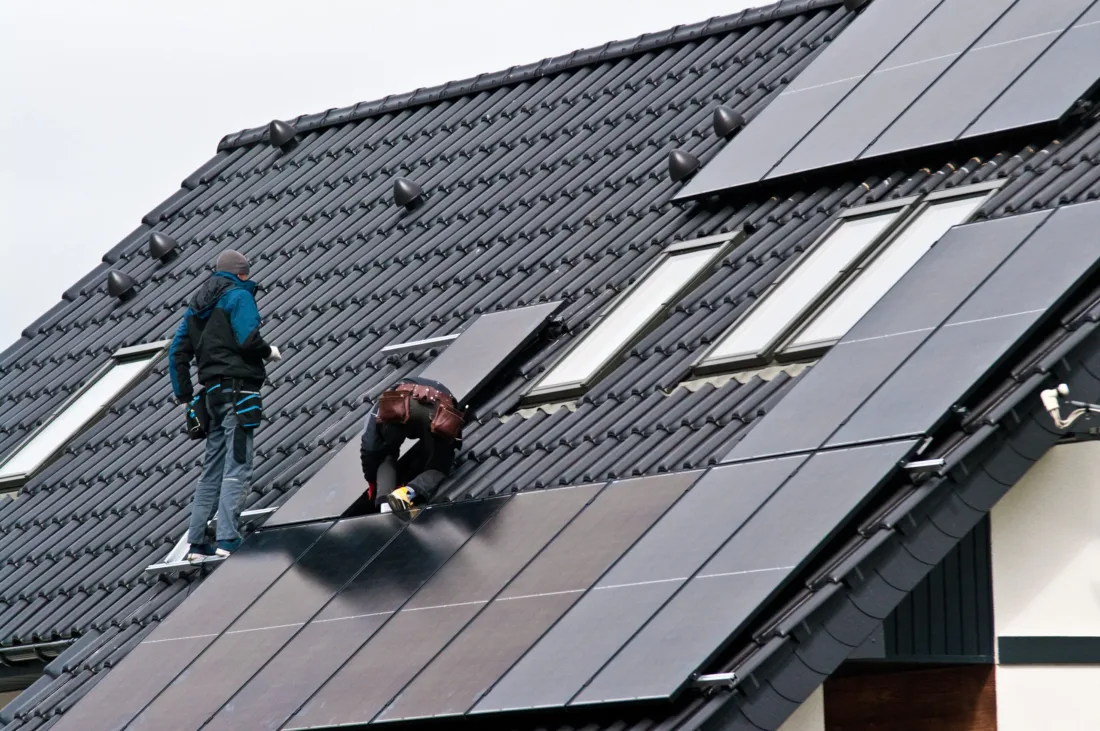
Stage 3: Panel Removal
Each panel is unbolted from the racking, lifted off, and placed in protective storage. Specific considerations:
- Documenting the layout and panel positions for accurate reinstallation
- Careful handling, solar panels are surprisingly fragile in specific ways (stress on the back side, edge impacts, micro-cracking from drops)
- Protective storage during the roof work, typically panels are stored on padded surfaces, protected from weather and accidental damage
- Wire management during the disconnected period, preventing damage from weather, animals, or accidental disconnection
Stage 4: Racking Removal
After panels come off, the racking system itself comes off, exposing the roof for replacement. This is where roofing-side expertise specifically matters:
- Proper removal of attachment hardware to expose underlying roof
- Identification of any leaks or roof issues at attachment points (sometimes hidden under solar)
- Documentation of attachment point locations for reinstallation planning
- Coordination with the roof replacement crew on timing
Stage 5: Roof Replacement
The actual roof replacement happens with the solar array out of the way, clean access, proper installation, no compromises forced by working around an installed array. This is the main reason detach-and-reset matters: roofing through, around, or under an installed array can’t be done properly.
Stage 6: Racking Reinstallation
On the new roof, racking is reinstalled, sometimes in the same locations as before, sometimes in slightly different locations to optimize for the new roof or to address issues identified during removal. Proper flashing of new attachment penetrations is critical.
Stage 7: Panel Reinstallation
Panels are placed back on the racking and bolted in. Layout typically matches the original (occasionally improved if that makes sense). Wiring is reconnected following the documented original configuration.
Stage 8: Electrical Reconnect and Commissioning
The system is reconnected, the inverter brought back online, and array performance verified. Specifically:
- Wiring reconnections following manufacturer specifications
- Inverter startup and configuration verification
- Performance check, confirming the array is generating power as expected
- Monitoring system verification, confirming the homeowner’s monitoring app/portal is showing accurate data
- Documentation of the completed reinstallation

Why Coordination Between Roofing and Solar Matters
The fundamental problem with split contractors.
On many detach-and-reset projects, the homeowner ends up with two separate contractors, a roofer doing the roof work and a solar contractor handling the array. The two scopes have to interlock cleanly, but the contractors often have different schedules, different priorities, and limited communication with each other. The homeowner ends up coordinating between them, often without the technical knowledge to catch issues at the boundary.
Specific failure modes from poor coordination.
- Roof work done before solar removal, damaging panels and racking unnecessarily
- Solar removed but stored badly during a long roof project, weather damage, accidental damage, theft
- Roof completed but solar reinstallation delayed weeks or months, homeowner pays for two trips and loses generation in the meantime
- Reinstallation on the new roof not properly flashed, slow leaks that don’t appear for years
- Electrical reconnection done improperly, array performs at reduced output without anyone noticing for months
- Original solar installer warranty voided by detach-and-reset done by a different contractor without coordination
How we approach coordination.
On detach-and-reset projects we handle, we coordinate both the roofing and solar scopes, either directly with our own crews or through close collaboration with specialty solar contractors when project specifics warrant it. The homeowner doesn’t have to coordinate between contractors who don’t talk to each other; we manage that integration.
Common Detach & Reset Scenarios in Loveland, CO
Storm-Driven Roof Replacement on Solar-Equipped Home
By far the most common detach-and-reset scenario in Loveland, CO. Major hail event causes claim-worthy roof damage, the existing solar array has to come off so the roof can be replaced, and the array is reinstalled on the new roof. Insurance typically covers the roof replacement and (in most cases) the detach-and-reset work as part of the storm claim.
Internal link: link to Storm & Hail Damage Roof Replacement Loveland, CO page from this section.
Planned Roof Replacement on Aging Solar-Equipped Home
Roof has reached the end of its service life (less storm-driven, more age-driven). Homeowner schedules roof replacement and detach-and-reset together. Insurance typically doesn’t cover age-driven roof replacement, so this is usually a homeowner-paid project.
Roof Repair Requiring Limited Solar Removal
Specific roof issues (leaks under or near the array, flashing failures, decking concerns) sometimes require partial solar removal to address. Smaller scope than full detach-and-reset on a complete roof replacement, but still requires proper handling.
Major Solar System Service or Upgrade
Less common: significant array changes (panel upgrades, electrical rework, expansion) sometimes warrant temporary panel removal even without roof work. We can coordinate this when relevant.

Insurance Coverage for Storm-Driven Detach & Reset
On storm-driven roof replacement claims, detach-and-reset is typically covered as part of the claim, but specific policy terms vary.
What’s typically covered.
Most homeowner insurance policies that cover the storm-driven roof replacement also cover the detach-and-reset work necessary to complete the roof replacement. The reasoning: the array has to come off for the covered work to be done, so the removal/reinstallation cost is part of properly completing the covered work. Carriers vary somewhat in their treatment, but coverage is generally available.
What may not be covered.
- Damage to panels during detach-and-reset (sometimes covered, sometimes excluded, varies by policy)
- Upgrades to the array during reinstallation (homeowner-paid)
- Significant time without operating array (lost generation typically not reimbursable)
- Repair work to roof penetrations from prior solar attachment (often part of standard scope)
Documentation we provide.
For insurance-covered detach-and-reset, we provide the documentation the carrier needs, scope of work, line-item pricing, completion certificates, photos of the work. We coordinate with adjusters as needed within Colorado contractor scope limits.
Our Detach & Reset Process
- Initial conversation. We discuss the project, type of array, original installer, age of system, the underlying roof situation, insurance coverage if applicable. We identify whether detach-and-reset is the right approach or whether other options should be considered.
- Site assessment. On-site review of the array, racking, electrical configuration, and roof condition. Documentation of the existing system for accurate reinstallation.
- Coordination with original installer. When appropriate, we contact the original solar installer to coordinate, sometimes they should remain involved (specific manufacturer warranties, monitoring system access), sometimes the work transfers to us cleanly.
- Project planning. Detailed plan for the integrated roofing-and-solar project, sequencing, timing, access, equipment, and any homeowner-side considerations.
- Insurance coordination (if applicable). For storm-driven projects, coordination with the homeowner’s adjuster on the detach-and-reset scope as part of the broader claim.
- Written quote. Detailed line-item quote covering removal, storage, roofing work coordination, reinstallation, and commissioning.
- Scheduling. Project scheduled with attention to weather windows, original solar installer involvement, and any utility coordination requirements.
- Pre-removal walkthrough. Final review with the homeowner before work begins, what to expect, timing, communication during the project.
- Removal phase. Electrical disconnect, panel removal, racking removal, panel storage. Typically a full day on a standard residential array.
- Roof replacement. The roofing work happens with clean access. Typically 1 to 3 days on standard residential projects.
- Reinstallation phase. Racking reinstalled with proper flashing on the new roof, panels remounted, electrical reconnection. Typically a full day on a standard residential array.
- Commissioning. Inverter startup, performance verification, monitoring system check. Confirmation that the array is operating as expected.
- Final walkthrough and documentation. Project documentation, photos, warranty information for any new components, and confirmation that the homeowner’s monitoring shows accurate data.

Realistic Cost and Timeline
Cost ranges.
Detach-and-reset costs vary based on array size, complexity, panel handling requirements, and project context. Typical residential detach-and-reset on a standard array commonly runs $3,000 to $8,000+ on top of the roof replacement cost, exact pricing depends on your specific array and project. We provide written line-item estimates.
What affects pricing.
- Number of panels and total array size
- Panel handling difficulty (panel size, weight, accessibility)
- Inverter type, string, microinverter, optimizer (microinverter systems sometimes require more work because each panel has its own electronics)
- Electrical complexity (service panel work, monitoring system, battery storage)
- Coordination requirements with the original installer or for warranty preservation
- Weather windows during the project
- Insurance vs homeowner-paid context (insurance scope often differs slightly from homeowner-paid)
Timeline.
Typical detach-and-reset coordinated with a standard residential roof replacement runs about 5 to 7 working days total, one day removal, 1-3 days roofing, one day reinstallation, with weather windows and coordination affecting the actual schedule. The system is offline for that period.
Generation lost during the project.
During the detach-and-reset period, the array isn’t generating power. On a standard residential array operated for a week during the work, lost generation is typically modest in dollar terms (often well under $100 in summer, less in winter), meaningful but not material in the context of the broader project.

Honest Trade-Offs and Considerations
Some panels don’t survive detach-and-reset.
Panel handling is careful, but occasionally a panel develops issues during the process, micro-cracking from accidental impact, electrical damage from improper handling, or pre-existing weakness that’s exposed by the disconnect-reconnect cycle. On most projects, all panels reinstall and operate normally; on a small portion, individual panels need to be replaced after reinstallation. Insurance sometimes covers this; sometimes it’s a homeowner cost.
Original installer warranty considerations.
Some solar manufacturer warranties have specific provisions about who can perform service work, including detach-and-reset. Coordination with the original installer can preserve warranty terms; uncoordinated work by a third party can void specific warranty provisions. We discuss this during planning.
Performance verification matters.
After reinstallation, the array’s performance should be verified to ensure it’s generating as expected. Sometimes problems aren’t immediately obvious, output drops 10% but no one notices for months because the homeowner doesn’t track generation closely. Our process includes commissioning verification.
Multiple detach-and-reset cycles.
On Loveland, CO homes specifically, the question “how many detach-and-reset cycles will this array see?” matters. Typical asphalt-shingle homes face hail-driven replacement every 15-20 years; solar arrays designed for 25-30 year service life will see at least one cycle, often more. Class 4 roofs reduce that frequency significantly, which is one of the practical arguments for Class 4 + solar combinations.
Frequently Asked Questions: Solar Detach & Reset
-
How much does solar detach and reset cost in Loveland, CO?
Typical residential detach-and-reset on a standard array runs $3,000 to $8,000+ on top of the roof replacement cost. Specific pricing depends on array size, complexity, electrical work, and project context. On insurance-covered storm replacements, much of this cost is typically covered by the claim. We provide written line-item estimates after on-site review.
-
Will my insurance cover detach and reset?
On storm-driven roof replacement claims, detach-and-reset is typically covered as part of the claim, the array has to come off for the covered work to happen properly, so the removal and reinstallation are part of properly completing the covered work. Specific coverage varies by policy. Talk to your broker if you have questions about your specific situation.
-
How long is my solar offline during the project?
Typical detach-and-reset coordinated with a standard residential roof replacement keeps the array offline for about 5 to 7 working days, with weather and coordination affecting the actual timing. Lost generation during this period is typically modest in dollar terms.
-
Can my original solar installer handle the detach and reset?
Sometimes, yes. Some solar installers offer detach-and-reset services. Others don’t. When the original installer can handle it and coordinate cleanly with the roofer. That’s often a clean approach. When they can’t, or when coordination would be difficult, we handle the work ourselves. We discuss the options during initial conversation.
-
What if my panels are damaged during detach and reset?
On most projects, all panels reinstall and operate normally. Occasionally a panel develops issues during the process. Replacement panels can typically be sourced and installed; insurance sometimes covers this, sometimes it’s a homeowner cost. Quality handling minimizes the risk.
-
Will my solar still work the same after reinstallation?
Properly executed detach-and-reset produces an array that performs the same as before the project. Our commissioning process specifically verifies array performance after reinstallation. Issues with post-reinstallation performance are usually identified and addressed during commissioning.
-
Should I just leave my solar in place and roof around it?
In nearly all cases, no. Roofing through, around, or under an installed solar array can’t be done properly, the work compromises the new roof’s performance, voids manufacturer warranties, and produces problems that come back later. Proper roof replacement requires the array to come off. Detach-and-reset is the standard approach for good reason.

Get a Detach & Reset Estimate in Loveland, CO
If your Loveland, CO home has rooftop solar and your roof needs replacement, particularly storm-driven replacement that’s increasingly common in this market, Baseline Roofing and Solar can coordinate the detach-and-reset alongside the roof replacement as a single integrated project. We handle both sides of the work, coordinate cleanly with your original solar installer when appropriate, and produce an array that performs the same after the project as before. The coordination is what separates clean detach-and-reset projects from the messes that result when the work is split between contractors who don’t talk to each other.
-
More Solar Removal & Reinstallation Locations +
- Solar Removal & Reinstallation in Colorado
- Solar Removal & Reinstallation in Arvada, CO
- Solar Removal & Reinstallation in Aurora, CO
- Solar Removal & Reinstallation in Berthoud, CO
- Solar Removal & Reinstallation in Boulder, CO
- Solar Removal & Reinstallation in Brighton, CO
- Solar Removal & Reinstallation in Broomfield, CO
- Solar Removal & Reinstallation in Castle Pines, CO
- Solar Removal & Reinstallation in Castle Rock, CO
- Solar Removal & Reinstallation in Centennial, CO
- Solar Removal & Reinstallation in Cherry Creek, CO
- Solar Removal & Reinstallation in Cherry Hills Village, CO
- Solar Removal & Reinstallation in Colorado Springs, CO
- Solar Removal & Reinstallation in Commerce City, CO
- Solar Removal & Reinstallation in Englewood, CO
- Solar Removal & Reinstallation in Erie, CO
- Solar Removal & Reinstallation in Firestone, CO
- Solar Removal & Reinstallation in Fort Collins, CO
- Solar Removal & Reinstallation in Frederick, CO
- Solar Removal & Reinstallation in Golden, CO
- Solar Removal & Reinstallation in Greeley, CO
- Solar Removal & Reinstallation in Greenwood Village, CO
- Solar Removal & Reinstallation in Gunbarrel, CO
- Solar Removal & Reinstallation in Highlands Ranch, CO
- Solar Removal & Reinstallation in Lafayette, CO
- Solar Removal & Reinstallation in Lakewood, CO
- Solar Removal & Reinstallation in Littleton, CO
- Solar Removal & Reinstallation in Lone Tree, CO
- Solar Removal & Reinstallation in Longmont, CO
- Solar Removal & Reinstallation in Louisville, CO
- Solar Removal & Reinstallation in Loveland, CO
- Solar Removal & Reinstallation in Mead, CO
- Solar Removal & Reinstallation in Niwot, CO
- Solar Removal & Reinstallation in Northglenn, CO
- Solar Removal & Reinstallation in Parker, CO
- Solar Removal & Reinstallation in Superior, CO
- Solar Removal & Reinstallation in Thornton, CO
- Solar Removal & Reinstallation in Westminster, CO
- Solar Removal & Reinstallation in Wheat Ridge, CO
- Solar Removal & Reinstallation in Windsor, CO