Louisville, CO Roofing Contractor for Solar Panels
Working with a roofing contractor for solar panels is a meaningfully different experience from working with a pure-play solar installer, and for many Louisville, CO homeowners, particularly those facing the combination of an aging roof and an interest in solar generation, the roofing contractor route produces better long-term outcomes. The reason comes down to where each kind of contractor’s expertise actually sits. Pure-play solar installers know solar deeply but often treat the roof underneath as a generic substrate to attach panels to. Roofing contractors who do solar know what makes for a solar-ready roof, what the panel attachment system does to long-term roof integrity, and how to coordinate the timing of roofing and solar work so the homeowner doesn’t pay for the same coordination problem twice.
Baseline Roofing and Solar handles solar work from the roofing-contractor side. Our solar services include detach-and-reset coordination on existing arrays during roof replacement, new solar installation on roofs we’ve already done or are about to do, pre-solar roof condition assessment, and ongoing coordination on solar-equipped homes. We focus on the integration where roofing and solar meet, where most of the failure modes happen and where roofing-side expertise actually changes the outcome.
This page covers what a roofing contractor genuinely brings to solar work that pure-play solar contractors typically don’t, the roof-side considerations every solar project should address, why roof condition assessment before solar installation matters more than most homeowners realize, how the timing of roofing and solar projects should be coordinated, and the situations where you actually want a pure-play solar contractor instead.
What a Roofing Contractor Brings to Solar Work
The differences between roofing-contractor solar and pure-play solar are real and matter for specific homes.
Roof condition assessment expertise.
Pure-play solar contractors typically perform a basic visual roof check before quoting an installation. Roofing contractors do a real roof inspection, checking actual condition, remaining service life, ventilation adequacy, decking condition, flashing integrity, and the dozens of other factors that affect whether the roof can support solar long-term. The depth of inspection matters because installing solar on a roof that needs replacement in 3 to 7 years is one of the most costly mistakes homeowners make.
Long-term roof integrity protection.
Solar attachment systems involve fasteners and flashing penetrations through the roof. Done right, these have minimal impact on long-term roof performance. Done wrong, they create leak pathways and accelerate roof aging. Roofing contractors understand attachment-system fastening, manufacturer-spec roof penetration sealing, and the long-term consequences of installation choices in ways pure-play solar typically doesn’t.
Manufacturer warranty preservation.
Most quality roof manufacturer warranties have specific provisions about roof penetrations. A solar installation that doesn’t follow manufacturer-spec penetration handling can void portions of the warranty even on a relatively new roof. Roofing contractors know what the manufacturer warranties require and install solar in ways that preserve them.
Future detach-and-reset preparation.
Most Louisville, CO homes will face roof replacement at least once during the solar array’s service life, often driven by hail. Solar installations done with future detach-and-reset in mind use attachment systems and routing that make the future work cleaner. Pure-play installers sometimes don’t think about the day the array has to come off; roofing contractors do.
Integrated coordination on combined projects.
Storm-driven roof replacement combined with new solar installation is increasingly common in Louisville, CO. Coordinating the two sides, replacement timing, solar design integration, fastener and flashing details, the eventual array reinstallation if relevant, is materially easier when the same contractor handles both, or when the contractors involved have direct working relationships.
Roof-Side Considerations Every Solar Project Should Address
These considerations are routine for roofing contractors and sometimes overlooked by pure-play solar installers.
Roof Age and Remaining Service Life
Solar arrays are designed for 25 to 30 year service life. Installing on a roof with less than 10 years of remaining service life means committing to detach-and-reset costs (typically $3,000 to $8,000+) before the array realizes much of its value. Honest roof age assessment is the first conversation.
Roof Condition Beyond Age
Age is one factor; actual condition is another. A 15-year-old roof with significant hail damage, ventilation issues, or compromised flashings may not be solar-ready even though its nominal age suggests it should be. Real inspection identifies these issues.
Decking Condition
Solar attachment fasteners go through the roofing material into the underlying decking. Sound decking is required to hold the array securely and to prevent fastener pull-out over time. Decking issues identified during pre-solar inspection sometimes need to be addressed before installation.
Roof Geometry and Solar Layout
South-facing slopes with minimal shading are ideal for solar. Roof geometry, slope, dimensions, orientation, vent placement, dormers, chimneys, affects how many panels can be installed and where. Pure-play solar typically focuses on layout optimization for power generation; integrated roofing-solar thinking also considers how the layout affects future roof maintenance and detach-and-reset operations.
Attic Ventilation
Adequate attic ventilation extends roof life and prevents moisture problems. Solar installations sometimes affect attic ventilation by changing roof airflow patterns. Coordination during installation can preserve ventilation balance.
Flashings and Penetrations
Solar attachment hardware involves penetrations through the roof. Quality penetration sealing, proper flashing, manufacturer-approved sealants, attention to long-term water management, is what separates installations that perform for decades from those that develop slow leaks. Roofing contractors take this seriously because they understand what poor penetration sealing produces over time.
Class 4 Compatibility
On Class 4 impact-resistant roofs, solar installation should preserve the Class 4 rating to the extent possible. Some attachment systems are better suited to Class 4 than others. Roofing contractors familiar with Class 4 systems can specify attachment hardware that doesn’t compromise the impact resistance.
Why Pre-Solar Roof Inspection Matters More Than Homeowners Realize
This is the highest-value service a roofing contractor provides on solar projects, and the one most often skipped on pure-play solar installations.
The expensive mistake.
Installing solar on a roof that needs replacement in the next several years means:
- Paying for the solar installation now
- Paying for the roof replacement when it becomes necessary (which it will)
- Paying for solar detach-and-reset when the roof is replaced ($3,000-$8,000+)
- Realizing only a fraction of the solar array’s value before the major coordination expense
On a roof with 5 years of remaining service life, the homeowner who installs solar today will pay for detach-and-reset in 5 years, costs that significantly affect the array’s economics. On a 25-year solar array, those upfront costs amortize over time; with detach-and-reset, the math gets worse fast.
The right approach.
Pre-solar roof condition assessment with honest answers about remaining service life. If the roof has substantial remaining life (15+ years), solar installation is reasonable. If the roof is approaching end of service (less than 10 years remaining), replacing the roof first and installing solar on the new roof is typically the better economic decision.
What we look at.
Our pre-solar inspection includes:
- Overall roof condition assessment
- Specific aging indicators (granule loss, sealant condition, shingle integrity)
- Decking condition visible from the attic
- Flashing condition at vulnerable areas
- Ventilation adequacy
- Realistic estimate of remaining service life given Colorado’s climate exposure
- Recommendations on whether to proceed with solar or address roof first
Timing Roofing and Solar Projects Together
On Louisville, CO homes specifically, the timing of roofing and solar projects matters more than in milder climates. Several scenarios:
Roof Replacement Coming, Solar Already Installed
Existing array, roof needs replacement (often storm-driven). The work flow is: detach the array → roof replacement → reinstall the array. We coordinate both sides if Baseline is doing the roof, and coordinate cleanly with other roofers and the original solar installer when scope works that way.
Roof Replacement Coming, Considering Adding Solar
Roof needs replacement (often storm-driven), homeowner considering adding solar at the same time. Strong opportunity, install solar on the new roof, get the longest possible time before any future detach-and-reset is necessary, optimize the roof + solar combination from the start. Often the right configuration is Class 4 roof + solar.
Considering Solar on an Aging but Functional Roof
Roof has years of life remaining but isn’t new. The pre-solar inspection determines whether to proceed (substantial remaining life) or to replace the roof first (approaching end of service).
Considering Solar on a Recent Roof
Roof is relatively new (5 years or less), in good condition, with most of its service life ahead. Solar installation can proceed with confidence, the array’s service life will probably mostly elapse before any roof replacement becomes necessary.
When You Actually Want a Pure-Play Solar Contractor Instead
Honest framing: roofing-contractor solar isn’t the right approach for every project. Some situations are better-served by pure-play solar.
Volume installations on standard configurations.
If your project is a straightforward installation on a sound roof with standard parameters, pure-play solar contractors offer competitive pricing and efficient installation. The added value of roofing-contractor expertise is smaller when the roof side of the project is uncomplicated.
Complex grid-tie or commercial-scale projects.
Specialty equipment, complex utility interconnections, large-scale arrays, off-grid configurations, and similar specialized work is typically outside our scope. Pure-play solar contractors with specific expertise in these applications are better-equipped.
Solar shingles or building-integrated photovoltaics.
Tesla Solar Roof, GAF Energy, CertainTeed Apollo and similar building-integrated systems require specific manufacturer training and certifications we don’t necessarily hold for every product line. For these specific systems, manufacturer-certified specialty installers are typically the right choice.
Specific manufacturer or panel preferences.
If you have specific preferences for solar panel manufacturers, inverter brands, or other equipment that requires specific dealer relationships, the contractor with those relationships is appropriate. We work across multiple manufacturers but don’t have exclusive dealer agreements with all of them.
On any project where pure-play solar makes more sense than us. We’ll say so. Honest scope acknowledgment is part of how we work.
Working With Us on Roofing-Contractor Solar
Our solar engagement process is designed to address the roof-side considerations that pure-play solar typically skips.
- Initial conversation. We discuss what you’re trying to accomplish, new solar, detach-and-reset coordination, combined roof + solar project. We ask about your roof age, recent storm history, energy use, and ownership horizon.
- Roof inspection. We conduct a real roof inspection focused on solar readiness, overall condition, remaining service life, decking, flashings, ventilation, and any issues that affect solar installation.
- Honest assessment. Based on the inspection, we tell you whether the roof is ready for solar, whether replacement should come first, or whether a combined project makes the most sense. We don’t push solar on roofs that aren’t ready.
- Solar design (when appropriate). For projects we’re going to handle directly, we design the array layout, identify equipment specifications, and coordinate with electrical work. For projects better-served by pure-play solar, we make introductions to qualified local installers.
- Project execution. Whether the project is detach-and-reset coordination, new installation, or combined roof + solar work, we execute with attention to roof-side details that protect long-term roof integrity and array performance.
- Documentation and warranty support. We provide installation documentation, warranty registration support, and ongoing relationship for future maintenance, detach-and-reset, or other coordination.
Frequently Asked Questions: Roofing Contractors and Solar
-
Why would I use a roofing contractor for solar instead of a pure-play solar installer?
For projects involving roof condition concerns, future detach-and-reset planning, combined roof + solar work, or solar on aging roofs that may need replacement during the array’s life, roofing-contractor solar produces better long-term outcomes. For straightforward new installations on sound roofs, pure-play solar contractors are often appropriately equipped. The right choice depends on your specific project.
-
Will my roof manufacturer warranty be voided by solar installation?
Properly installed solar by a contractor who understands the manufacturer warranty requirements doesn’t void the warranty. Improperly installed solar, wrong fasteners, inadequate flashing, unauthorized modifications, can void portions of the warranty. We install solar in ways that preserve manufacturer warranties on the underlying roof.
-
Is roofing-contractor solar more expensive than pure-play?
Pricing depends on project specifics. For volume installations on standard configurations, pure-play solar may be more cost-competitive. For projects where roof-side coordination matters, the integrated approach often produces better total cost of ownership over the array’s life, even if the upfront price is comparable. We provide written estimates so you can compare directly.
-
Should I install solar on a roof that’s 10+ years old?
It depends on actual condition rather than just age. A well-maintained 10-year-old roof in good condition may have substantial remaining life and be solar-ready. A 10-year-old roof with hail damage or other issues may not be. Pre-solar inspection produces the honest answer for your specific roof.
-
How does Class 4 hail-resistant roofing affect solar?
Class 4 + solar is a strong combination for Louisville, CO homes. The Class 4 roof handles hail substantially better than standard, reducing the frequency of storm-driven replacements that would require detach-and-reset. Solar installation should use attachment hardware that doesn’t compromise the Class 4 impact rating. This is one area where roofing-contractor expertise specifically matters.
-
Can you install solar on metal roofs?
Yes, and metal roofs are particularly favorable for solar. Standing seam metal systems allow attachment without roof penetrations using specialized clamps that grip the seams, eliminating one of the major potential failure points in solar installation. Stone-coated steel and other metal systems use different attachment approaches but work well with solar.
-
What if I need solar work and you’re not the right contractor for it?
We tell you straight and recommend appropriate alternatives. For volume new installations, complex grid-tie, specialty equipment, or projects outside our scope, we make introductions to qualified local solar contractors. We’re not trying to be the largest solar installer in Louisville, CO. We’re trying to be the right contractor for projects where roofing-and-solar integration matters.
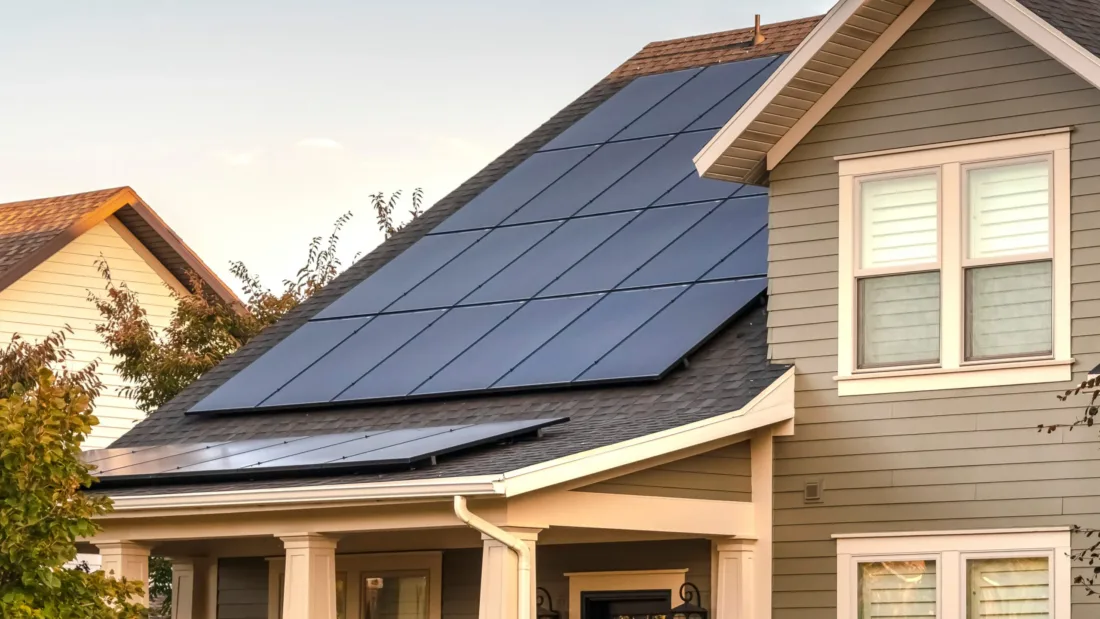
Get a Solar Service Estimate in Louisville, CO
Whether you’re planning new solar installation, navigating detach-and-reset coordination with a roof replacement, or evaluating whether your roof is solar-ready, working with a roofing contractor that understands solar produces better long-term outcomes than working with a pure-play solar installer that doesn’t fully understand the roof underneath. Baseline Roofing and Solar approaches solar from the roofing side and tells you straight what fits your project.
-
More Roofing & Solar Contractor Locations +
- Roofing & Solar Contractor in Colorado
- Roofing & Solar Contractor in Arvada, CO
- Roofing & Solar Contractor in Aurora, CO
- Roofing & Solar Contractor in Berthoud, CO
- Roofing & Solar Contractor in Boulder, CO
- Roofing & Solar Contractor in Brighton, CO
- Roofing & Solar Contractor in Broomfield, CO
- Roofing & Solar Contractor in Castle Pines, CO
- Roofing & Solar Contractor in Castle Rock, CO
- Roofing & Solar Contractor in Centennial, CO
- Roofing & Solar Contractor in Cherry Creek, CO
- Roofing & Solar Contractor in Cherry Hills Village, CO
- Roofing & Solar Contractor in Colorado Springs, CO
- Roofing & Solar Contractor in Commerce City, CO
- Roofing & Solar Contractor in Englewood, CO
- Roofing & Solar Contractor in Erie, CO
- Roofing & Solar Contractor in Firestone, CO
- Roofing & Solar Contractor in Fort Collins, CO
- Roofing & Solar Contractor in Frederick, CO
- Roofing & Solar Contractor in Golden, CO
- Roofing & Solar Contractor in Greeley, CO
- Roofing & Solar Contractor in Greenwood Village, CO
- Roofing & Solar Contractor in Gunbarrel, CO
- Roofing & Solar Contractor in Highlands Ranch, CO
- Roofing & Solar Contractor in Lafayette, CO
- Roofing & Solar Contractor in Lakewood, CO
- Roofing & Solar Contractor in Littleton, CO
- Roofing & Solar Contractor in Lone Tree, CO
- Roofing & Solar Contractor in Longmont, CO
- Roofing & Solar Contractor in Louisville, CO
- Roofing & Solar Contractor in Loveland, CO
- Roofing & Solar Contractor in Mead, CO
- Roofing & Solar Contractor in Niwot, CO
- Roofing & Solar Contractor in Northglenn, CO
- Roofing & Solar Contractor in Parker, CO
- Roofing & Solar Contractor in Superior, CO
- Roofing & Solar Contractor in Thornton, CO
- Roofing & Solar Contractor in Westminster, CO
- Roofing & Solar Contractor in Wheat Ridge, CO
- Roofing & Solar Contractor in Windsor, CO