Built-Up Tar & Gravel Roofing in Firestone, CO
Built-up roofing, almost always called BUR or tar and gravel roofing, is the original commercial flat roofing system, with over 100 years of real-world performance history. While modern single-ply membranes have taken substantial market share over the past two decades, BUR remains the right answer for specific commercial applications: buildings where the gravel surface’s exceptional hail and impact resistance genuinely matters (and Firestone, CO’s place in Colorado’s hail belt makes that a real consideration), institutional buildings where the multi-ply redundancy and fire resistance are valued, and re-roof projects on existing BUR systems where chemistry compatibility favors continuing with the same approach. For the right Firestone, CO commercial building, BUR is still genuinely competitive, and on certain applications, still the best choice.
Baseline Roofing and Solar installs commercial built-up roofing systems across Firestone, CO and surrounding Colorado communities. We install BUR using traditional hot-asphalt methods and modern cold-applied alternatives, work with smooth-surfaced and gravel-surfaced systems, and coordinate the specific structural and access considerations that BUR projects require. Because we’re certified across competing systems too (modified bitumen, TPO, EPDM, PVC, spray foam). We’ll tell you straight whether BUR is the right call for your specific roof or whether a different system would actually serve you better.
On this page. We’ll explain what BUR actually is, the multi-ply construction in detail, why BUR still has a strong place in 2026 commercial roofing, the honest trade-offs (because the system has them), how BUR compares to its closest cousin, modified bitumen, and how BUR performs in Colorado’s specific climate.
What Built-Up Roofing Actually Is
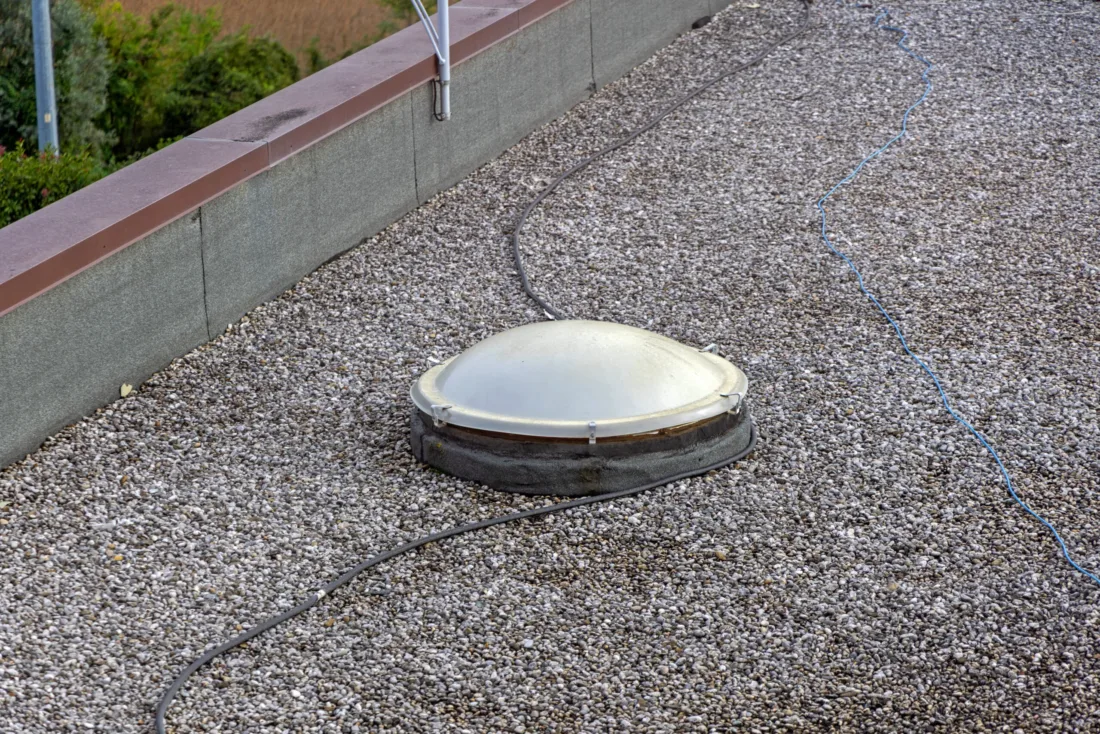
Built-up roofing is a multi-ply commercial flat roofing system built up, hence the name, from alternating layers of hot-applied asphalt (or alternative bonding compound) and reinforcing ply sheets, finished with a protective surface layer of gravel ballast or a granulated cap sheet. The system has been installed on commercial buildings since the late 1800s, making it the longest-running commercial roofing technology by a substantial margin. There are commercial buildings in Firestone, CO and throughout the country with BUR roofs that have been performing for 30, 40, even 50+ years, a track record no other system can match.
A typical commercial BUR system consists of three to five plies of asphalt-saturated felt or fiberglass reinforcement embedded in hot asphalt (typically 400-450°F coal tar pitch or asphalt mopping). Each ply is mopped onto the previous layer while the asphalt is hot, creating a continuous bonded membrane assembly when cured. The final layer of asphalt is flooded thicker and embedded with gravel ballast (typically 3/4-inch to 1-inch washed roofing gravel) that provides UV protection, impact resistance, and the finished surface appearance. Smooth-surfaced BUR systems exist for applications where ballasted construction isn’t appropriate, finished with a granulated cap sheet instead of loose gravel.
The “tar” in tar-and-gravel historically referred to coal tar pitch, which is genuinely different from asphalt, coal tar has self-healing properties at temperature and superior chemical resistance but releases more volatile compounds during application. Most modern BUR systems use asphalt rather than coal tar, though specific applications (particularly low-slope roofs with significant ponding water tolerance requirements) sometimes still specify coal tar systems. The terminology persists for both.
Why Built-Up Roofing Still Matters in 2026
BUR has been displaced as the dominant commercial roof system by single-ply membranes and modified bitumen, but it retains specific advantages that still make it the right answer on certain buildings.
Exceptional impact and hail resistance from the gravel ballast.
This is BUR’s strongest argument in Firestone, CO specifically. The gravel surface absorbs and disperses hail energy before it reaches the underlying membrane plies, making BUR genuinely the most hail-resistant commercial roofing system available. On a hail-prone Colorado building where impact resistance is the dominant concern, BUR’s gravel surface provides protection that no membrane system, regardless of thickness, can match.
Strongest fire resistance among commercial roof systems.
Gravel-surfaced BUR carries Class A fire ratings inherent to the assembly. The gravel ballast itself doesn’t burn, the underlying asphalt has limited flame spread, and the multi-ply construction provides redundancy. For commercial buildings with elevated fire-rating requirements, schools, hospitals, government buildings, certain industrial applications, BUR is often the simplest path to compliance.
Longest proven track record of any commercial roof system.
BUR has 100+ years of real-world commercial performance data. Properly installed and maintained BUR systems delivering 30 to 40+ years of service are common. For property owners who value the longest possible track record over newer technology, BUR’s history is unmatched.
Multi-ply redundancy.
A typical BUR system has three to five plies. Damage that affects one ply doesn’t compromise the overall waterproofing function, the underlying plies continue to provide watertight integrity while repair is scheduled. For commercial buildings where roof failure has high consequences, this redundancy is meaningful.
Excellent foot traffic durability.
The gravel-surfaced BUR system handles foot traffic substantially better than single-ply membranes or even modified bitumen systems. On commercial buildings with frequent rooftop access, institutional buildings, manufacturing with rooftop equipment service, BUR’s traffic resistance is a real practical advantage.
Strong UV resistance.
The gravel ballast layer protects the underlying asphalt from UV exposure, dramatically extending the service life of the membrane plies underneath. This is one of the design features that contributes to BUR’s exceptional longevity.
Re-roof compatibility on existing BUR.
On older commercial buildings with existing BUR roofs, applying a new BUR system as a recover or partial replacement preserves chemistry compatibility cleanly. Single-ply recover applications over BUR introduce compatibility considerations that BUR-on-BUR avoids.
Built-Up Roofing Construction in Detail
Understanding what’s in a BUR system helps you understand both why it performs the way it does and why it costs what it costs.
Base Sheet
The first ply, typically a heavier-weight felt or fiberglass mat, mechanically fastened directly to the deck or to insulation. The base sheet establishes the foundation for the rest of the assembly and provides the initial waterproofing layer.
Ply Sheets
Two to four additional plies of asphalt-saturated felt or fiberglass reinforcement, each mopped onto the previous layer with hot asphalt. The plies are cross-laminated (offset between layers) to ensure full coverage and eliminate continuous seam paths through the system. More plies generally mean longer expected service life.
Flood Coat or Asphalt Layer
A final layer of hot asphalt mopped over the top ply, applied thicker than the inter-ply mopping to support the ballast or cap sheet above.
Surface Layer
The visible finished surface, in one of three primary configurations:
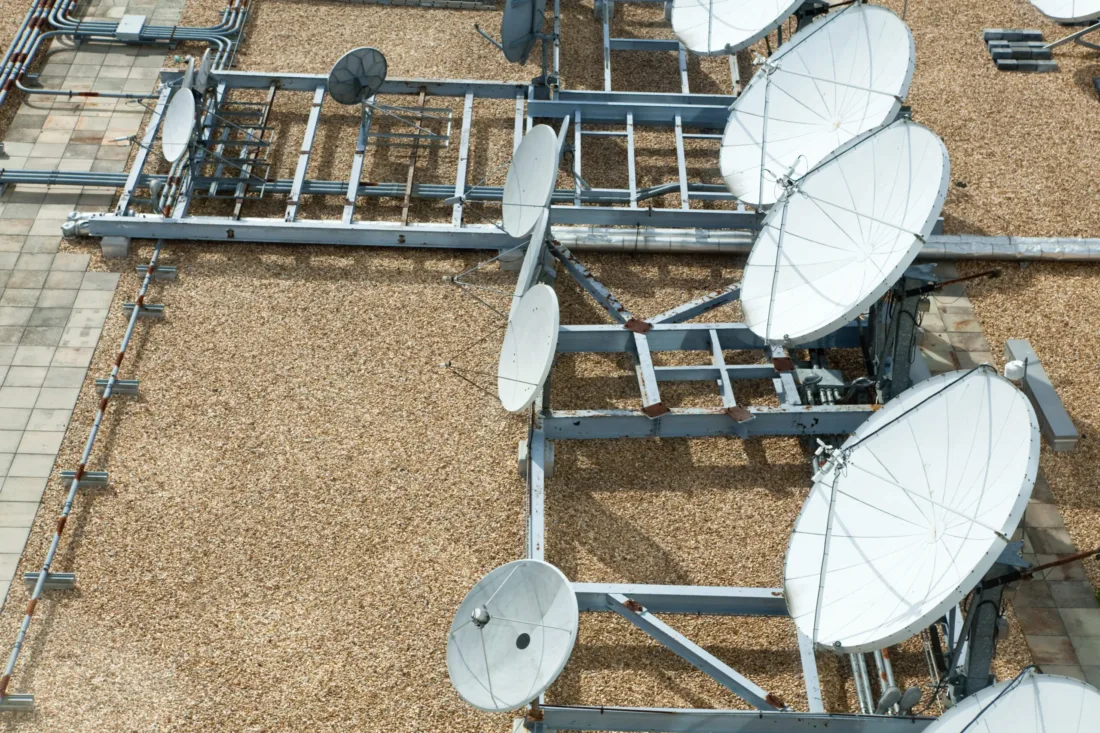
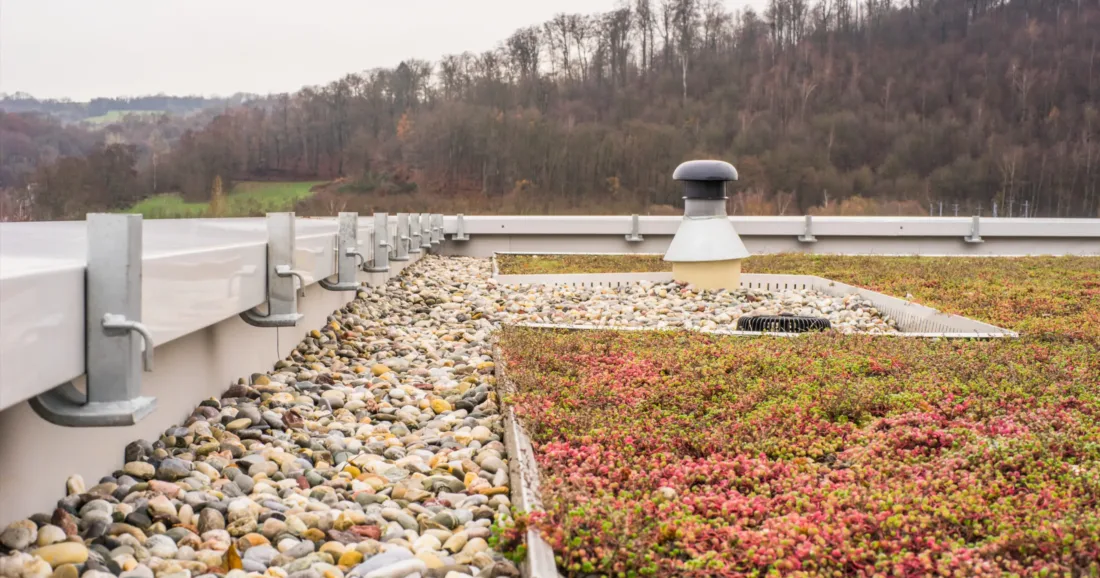
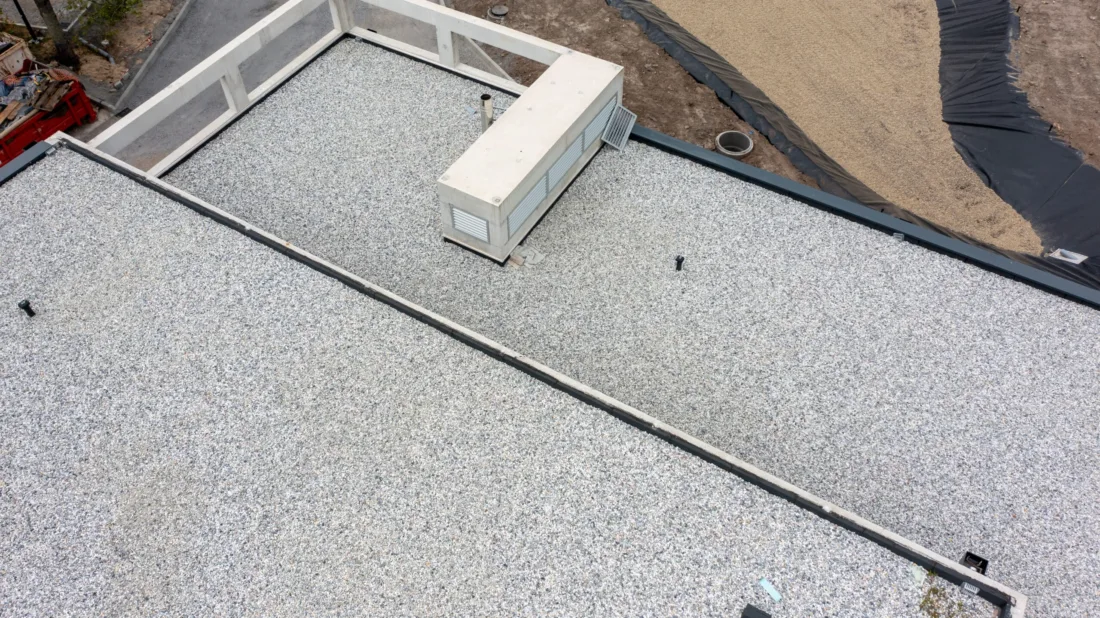
- Gravel ballast. The traditional finish, washed 3/4-inch to 1-inch roofing gravel embedded into the flood coat while the asphalt is hot. Provides UV protection, impact resistance, and the classic tar-and-gravel appearance. Most common.
- Granulated cap sheet. Smooth-surfaced BUR uses a final layer of mineral-surfaced cap sheet (a granulated mod-bit-style cap) instead of loose gravel. Used where structural load constraints disqualify gravel ballast or where the smooth surface is preferred.
- Mineral-surfaced cap with reflective coating. Cool-roof BUR options use white granular cap sheets or field-applied reflective coatings to achieve the cool-roof performance that loose gravel doesn’t deliver.
The Honest Built-Up Roofing Trade-Offs
Heavy weight.
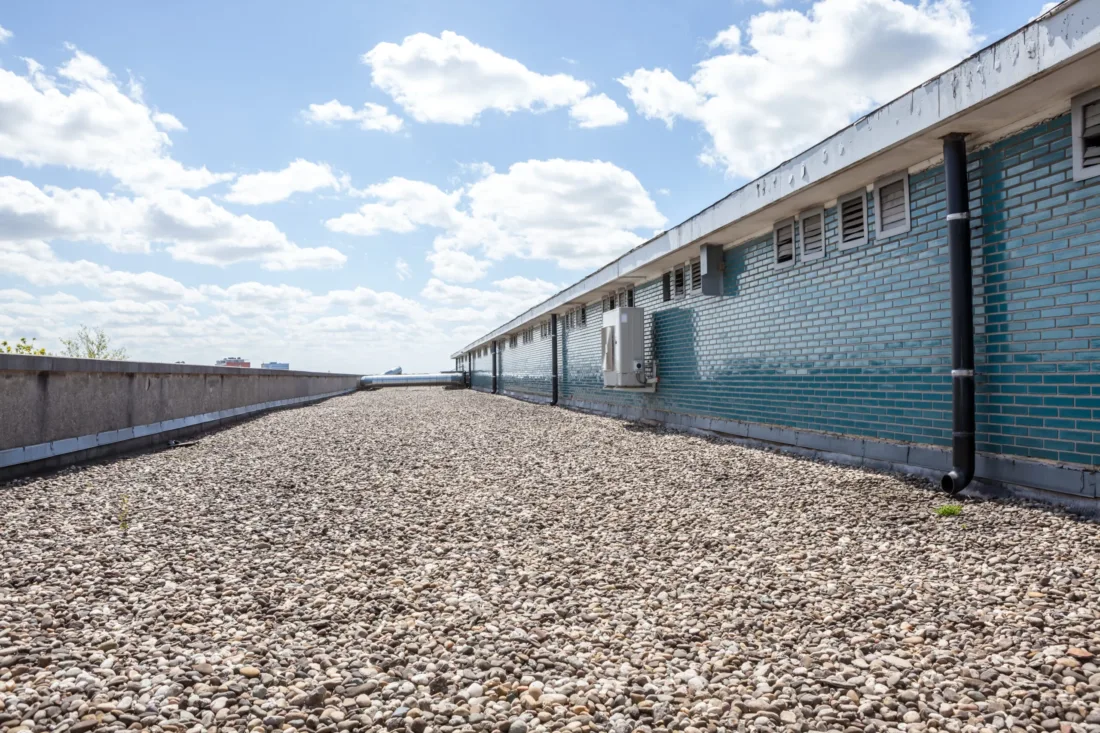
BUR systems with gravel ballast typically weigh 6 to 8 pounds per square foot, substantially more than single-ply systems (1 to 1.5 lbs/sq ft) or modified bitumen (2 to 3 lbs/sq ft). On older buildings or buildings with structural load constraints, this weight matters and may disqualify BUR. Smooth-surfaced BUR is lighter but still heavier than membrane alternatives.
Slow installation.
Multi-ply hot-asphalt construction takes longer to install than rolling out a single-ply membrane. Total installed cost on BUR is typically higher than equivalent single-ply due to labor intensity. Installation timelines are longer.
Hot kettles, smoke, and odor.
Hot asphalt application requires kettles operating at 400-450°F, which produce smoke and odor that can be problematic on occupied commercial buildings. For schools, hospitals, restaurants, and properties where indoor air quality and tenant comfort are sensitive, BUR application logistics can be challenging. Cold-applied BUR alternatives address this at additional cost.
Fire-safety discipline during installation.
Hot asphalt kettles are a fire risk. Hot-work permits, fire watch protocols, and proper kettle operation are non-negotiable on BUR projects. The roofing industry’s history with hot-asphalt installations includes some preventable fires; professional execution requires proper protocols.
Lower cool-roof performance with traditional gravel surface.
Standard gray or earth-tone gravel ballast is not a cool-roof surface. Solar reflectance is low, surface temperatures get hot, and summer cooling loads are higher than on white single-ply or white granulated mod-bit roofs. White gravel and reflective coatings exist for cool-roof BUR applications, but they add cost and aren’t universally available.
Difficult leak detection on gravel-surfaced systems.
When a BUR system develops a leak, finding the exact failure point can be challenging because the gravel ballast obscures the membrane underneath. Repair often requires removing gravel in a search pattern around the suspected failure area. Smooth-surfaced BUR doesn’t have this issue.
Specialized labor pool.
BUR installation requires specific skills that are increasingly less common as single-ply has dominated new commercial work. Qualified BUR crews still exist (we have them), but the talent pool isn’t growing the way single-ply crews are.
BUR vs. Modified Bitumen: How They Compare
Built-up roofing and modified bitumen are both multi-ply asphalt-based commercial roofing systems, but they differ in important ways. Understanding the comparison helps you understand when each is the right choice.
Construction approach.
BUR is field-built, plies are unrolled and installed one at a time on the roof, with hot asphalt mopped between layers. Modified bitumen uses pre-manufactured rolls with the asphalt and polymer modifiers already integrated, requiring fewer plies and faster installation.
Surface.
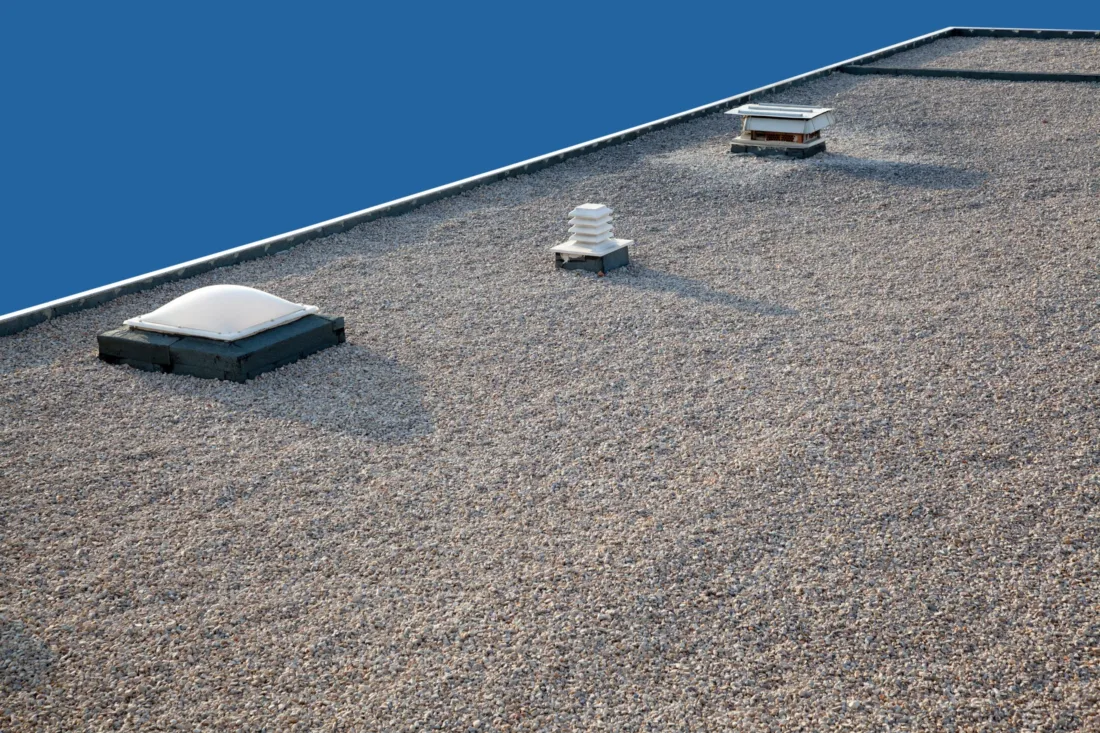
BUR is most often gravel-surfaced; modified bitumen typically has a factory-applied granular cap sheet. Both can carry white surfaces for cool-roof performance, but gravel ballast is exclusive to BUR.
Installation speed.
Modified bitumen installs significantly faster than BUR. On larger commercial projects, this translates to lower labor cost and shorter project timelines.
Hail and impact resistance.
Gravel-surfaced BUR has the strongest impact resistance available. Modified bitumen’s granular cap sheet provides good impact resistance, but the loose gravel of BUR absorbs more energy.
Weight.
BUR is heavier; modified bitumen is lighter. On structurally constrained buildings, modified bitumen may be the only viable multi-ply option.
Cool-roof performance.
White granulated cap sheets on modified bitumen typically deliver better cool-roof reflectivity than reflective-coated gravel BUR systems.
Track record.
BUR has the longer history (100+ years vs. 50+ for modified bitumen), but both are well-proven.
Bottom line.
On a typical new commercial flat roof, modified bitumen has largely replaced BUR for the practical reasons above. On hail-exposed buildings where gravel-surface impact resistance is the dominant priority, BUR is still genuinely competitive. On re-roof projects over existing BUR systems, BUR is often the simplest and most compatible answer.
Where Built-Up Roofing Works Best in Firestone, CO
- Hail-prone commercial buildings where gravel-surface impact resistance is the dominant concern
- Institutional, government, and educational buildings where the multi-ply redundancy and fire resistance are valued
- Buildings with strict fire-rating requirements that BUR’s Class A assembly addresses simply
- Re-roof projects over existing BUR systems where chemistry compatibility favors continuing with BUR
- Buildings where the longest possible track record is a decision factor
- Properties with heavy rooftop foot traffic where the gravel surface’s durability matters
- Commercial buildings with structural capacity to handle the BUR system weight
BUR is generally not the right answer on structurally constrained buildings, projects where cool-roof reflectivity is the dominant priority, occupied buildings where hot-asphalt kettle smoke and odor would be disruptive, or projects where installation timeline is a major constraint.
Built-Up Roofing and Firestone, CO’s Climate
Hail performance: BUR’s strongest argument in Firestone, CO.
This is genuinely worth emphasizing. Gravel-surfaced BUR is the most hail-resistant commercial roofing system available. The loose gravel ballast absorbs and disperses hail energy before it reaches the membrane underneath. On Colorado buildings with significant hail exposure, BUR’s hail performance is a real practical advantage that no membrane system can match, and the resulting reduction in storm-driven repair and replacement costs over the system’s life can offset BUR’s higher upfront cost.
Fire resistance: matters more in Colorado than many realize.
Wildfire risk on Colorado commercial properties, particularly those near foothills or grasslands, makes Class A fire rating a meaningful consideration. BUR’s inherent fire resistance is a real advantage on these applications.
Cold weather installation: limited windows.
Hot-asphalt application requires substrate temperatures above specific thresholds for proper cure, which limits Firestone, CO winter installation. Cold-applied BUR alternatives extend the season but at additional cost.
Snow loading: structural capacity matters.
BUR’s heavy weight plus Colorado snow loading means structural capacity needs verification on older or marginal commercial buildings before specifying BUR. Most modern commercial structures handle the combined load without issue.
UV at altitude: well-handled with gravel surface.
The gravel ballast protects the underlying asphalt from Firestone, CO’s high-elevation UV exposure. This is one of the design features that contributes to BUR’s exceptional service life in this climate.
Cool-roof energy savings: only with reflective options.
Standard gravel BUR is not a cool roof. For cool-roof economics on Firestone, CO buildings, white gravel, reflective coatings, or a different system entirely deliver better performance.
Frequently Asked Questions: Commercial Built-Up Tar & Gravel Roofing in Firestone, CO
-
How long does a built-up roof last?
Manufacturer warranties on commercial BUR systems typically run 20 to 30 years. Real-world service life on properly installed and maintained BUR commonly exceeds the warranty significantly, 30 to 40+ year service is well-documented, with some systems delivering 50+ years. BUR has the longest proven track record of any commercial roof system.
-
How much does built-up roofing cost in Firestone, CO?
BUR cost depends on the number of plies, asphalt type (asphalt vs. coal tar), surface configuration (gravel vs. cap sheet), and application method (hot-applied vs. cold-applied). Per square foot, traditional hot-applied gravel BUR is typically priced higher than equivalent single-ply or modified bitumen due to labor intensity. Total project economics vary widely based on building specifics.
-
BUR vs. modified bitumen: which is better?
It depends on the application. Modified bitumen offers faster installation, lower weight, and competitive cost, making it the better choice for most new commercial work in Firestone, CO. BUR offers stronger hail and impact resistance through its gravel surface, longer track record, and stronger fire resistance, making it the better choice for hail-exposed buildings, institutional applications, and re-roof projects over existing BUR. Our inspection and the building’s specific use will tell us which fits better.
-
Is the gravel surface really better for hail than other systems?
Yes, meaningfully. The loose gravel ballast absorbs and disperses hail energy before it reaches the underlying membrane plies. On Colorado buildings with significant hail exposure, BUR’s hail performance materially exceeds membrane systems. This is one of the strongest practical arguments for BUR on Firestone, CO commercial buildings.
-
Can BUR be installed in cold weather in Firestone, CO?
Hot-applied BUR has limited cold-weather installation windows because the asphalt requires adequate substrate temperatures for proper cure. Cold-applied BUR uses asphalt-based emulsion adhesives that extend the installation season, at additional cost. Most BUR projects in Firestone, CO are scheduled for warmer months.
-
How is hail damage repaired on a BUR roof?
Localized hail damage on BUR is typically repaired by carefully removing gravel around the affected area, exposing and repairing damaged plies with new asphalt and reinforcement, and re-distributing or replacing the gravel surface. The gravel-surface inspection challenge can make leak diagnosis more complex than on smooth-surfaced systems, but the multi-ply redundancy means a single damaged area rarely compromises the entire roof.
-
Is BUR a cool-roof system?
Standard gravel-surfaced BUR is not a cool roof, gravel surfaces have low solar reflectance and high heat absorption. White gravel BUR and reflective-coated BUR systems can deliver some cool-roof performance, but typically not at the level of white single-ply or white granular modified bitumen. For cool-roof-priority projects, BUR is rarely the right system.
Get a Commercial Built-Up Roofing Estimate in Firestone, CO
Whether you need a new BUR system installed, an existing built-up roof replaced or repaired, or a comparison between BUR and other commercial roofing systems for your specific building, Baseline Roofing and Solar is ready to help. We install hot-applied and cold-applied BUR systems with gravel-ballast and smooth-surfaced configurations. And we specify the system that fits your building rather than the one we install most often.
-
More Built-Up Tar & Gravel Roofing Locations +
- Built-Up Tar & Gravel Roofing in Colorado
- Built-Up Tar & Gravel Roofing in Arvada, CO
- Built-Up Tar & Gravel Roofing in Aurora, CO
- Built-Up Tar & Gravel Roofing in Berthoud, CO
- Built-Up Tar & Gravel Roofing in Boulder, CO
- Built-Up Tar & Gravel Roofing in Brighton, CO
- Built-Up Tar & Gravel Roofing in Broomfield, CO
- Built-Up Tar & Gravel Roofing in Castle Pines, CO
- Built-Up Tar & Gravel Roofing in Castle Rock, CO
- Built-Up Tar & Gravel Roofing in Centennial, CO
- Built-Up Tar & Gravel Roofing in Cherry Creek, CO
- Built-Up Tar & Gravel Roofing in Cherry Hills Village, CO
- Built-Up Tar & Gravel Roofing in Colorado Springs, CO
- Built-Up Tar & Gravel Roofing in Commerce City, CO
- Built-Up Tar & Gravel Roofing in Englewood, CO
- Built-Up Tar & Gravel Roofing in Erie, CO
- Built-Up Tar & Gravel Roofing in Firestone, CO
- Built-Up Tar & Gravel Roofing in Fort Collins, CO
- Built-Up Tar & Gravel Roofing in Frederick, CO
- Built-Up Tar & Gravel Roofing in Golden, CO
- Built-Up Tar & Gravel Roofing in Greeley, CO
- Built-Up Tar & Gravel Roofing in Greenwood Village, CO
- Built-Up Tar & Gravel Roofing in Gunbarrel, CO
- Built-Up Tar & Gravel Roofing in Highlands Ranch, CO
- Built-Up Tar & Gravel Roofing in Lafayette, CO
- Built-Up Tar & Gravel Roofing in Lakewood, CO
- Built-Up Tar & Gravel Roofing in Littleton, CO
- Built-Up Tar & Gravel Roofing in Lone Tree, CO
- Built-Up Tar & Gravel Roofing in Longmont, CO
- Built-Up Tar & Gravel Roofing in Louisville, CO
- Built-Up Tar & Gravel Roofing in Loveland, CO
- Built-Up Tar & Gravel Roofing in Mead, CO
- Built-Up Tar & Gravel Roofing in Niwot, CO
- Built-Up Tar & Gravel Roofing in Northglenn, CO
- Built-Up Tar & Gravel Roofing in Parker, CO
- Built-Up Tar & Gravel Roofing in Superior, CO
- Built-Up Tar & Gravel Roofing in Thornton, CO
- Built-Up Tar & Gravel Roofing in Westminster, CO
- Built-Up Tar & Gravel Roofing in Wheat Ridge, CO
- Built-Up Tar & Gravel Roofing in Windsor, CO