Commercial Single-Ply Membrane Roofing in Cherry Creek, CO
Single-ply membrane roofing is the dominant category of commercial flat roofing in the United States today, and the most-installed type of new commercial roof system in Cherry Creek, CO and across Colorado. Commercial single-ply membrane roofing covers three specific systems, TPO, EPDM, and PVC, that share a common installation approach (a single layer of waterproofing membrane installed over insulation) but differ significantly in chemistry, performance characteristics, cost, and the applications where each performs best. Choosing the right single-ply system for your specific commercial building is one of the most consequential decisions in any commercial roof project, and getting it right requires understanding what each system does well, and where each falls short.
Baseline Roofing and Solar specifies and installs all three commercial single-ply membrane systems across Cherry Creek, CO and surrounding Colorado communities. We’re certified across every major manufacturer in each system category, which lets us write recommendations based on what your building actually needs rather than the system we happen to sell. This page provides the category overview, what single-ply membranes are, how they compare to each other, and which one is right for which application. Each system also has its own dedicated page with full technical detail, linked throughout.
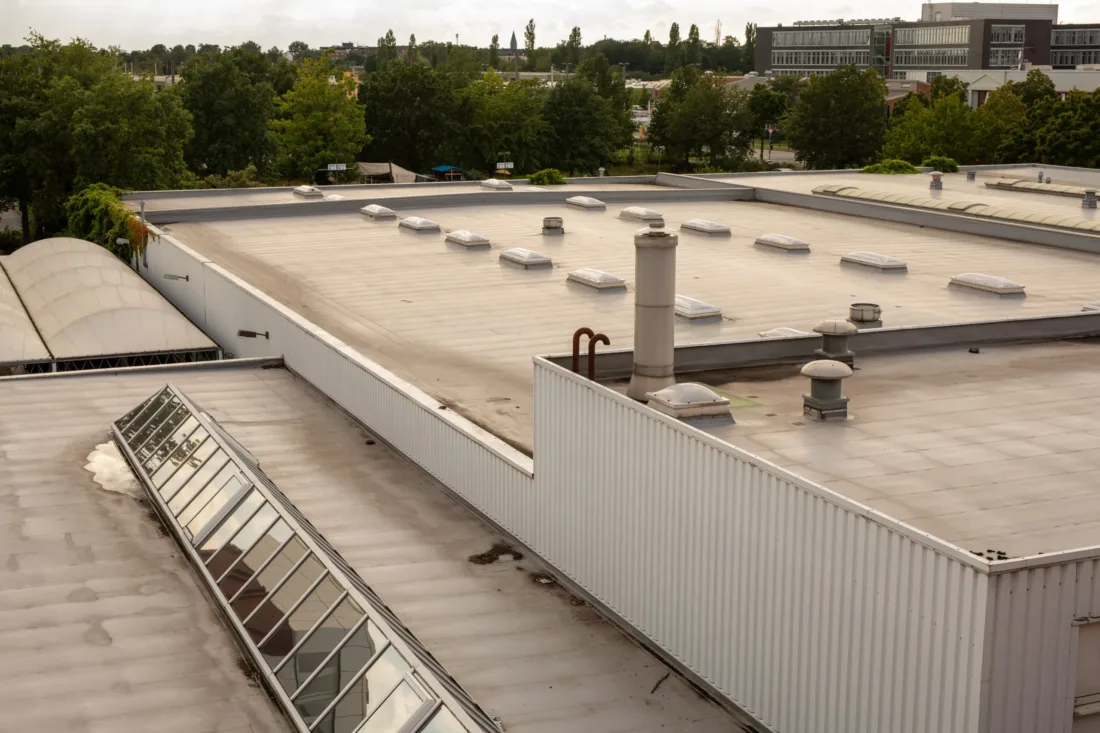
What Single-Ply Membrane Roofing Actually Is
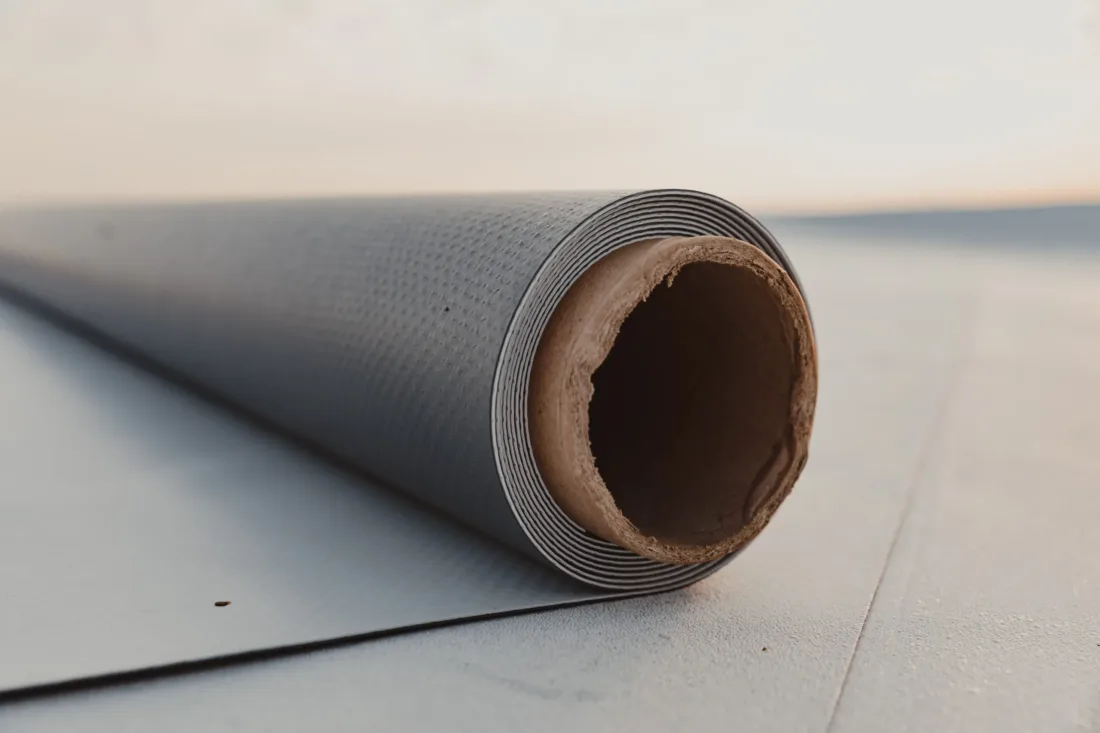
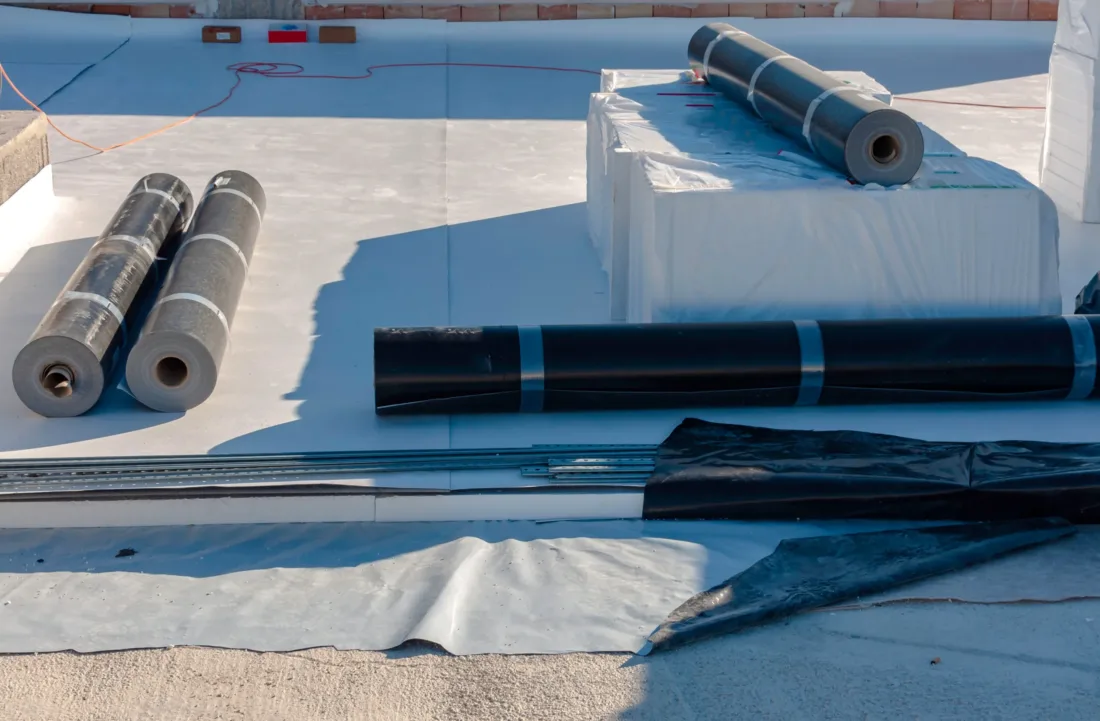
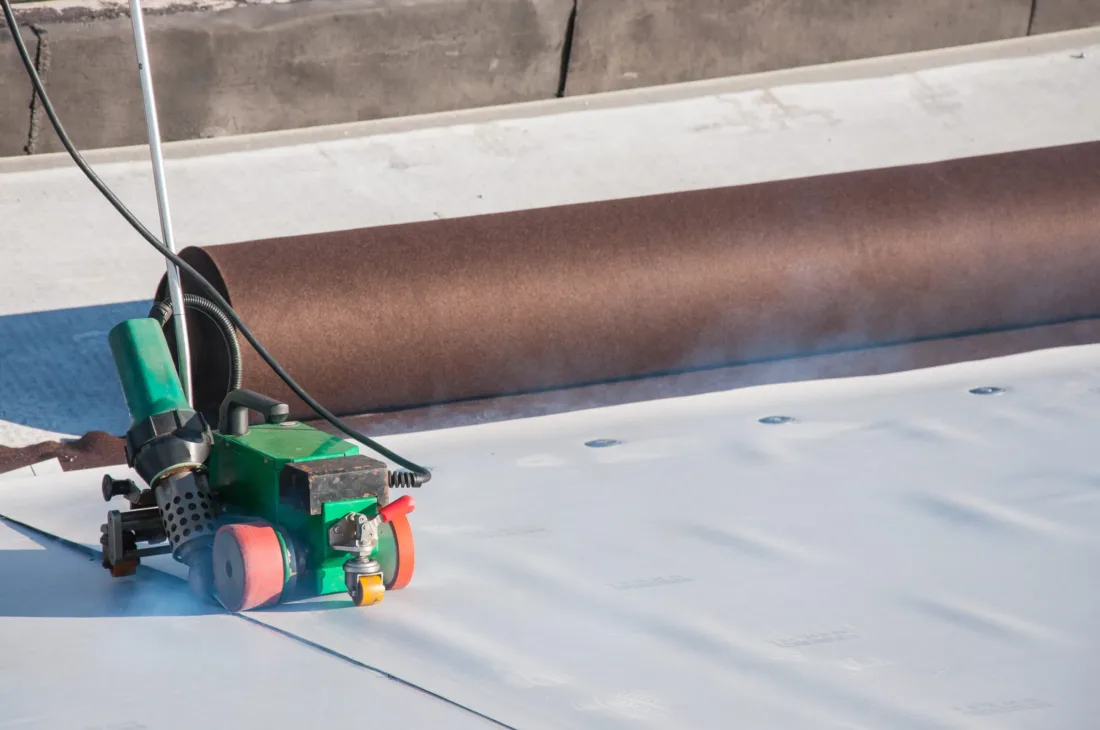
Single-ply membrane roofing is a category of commercial roofing systems where the primary waterproofing layer is a single sheet of factory-manufactured membrane, typically rolled out in widths of 10 feet or wider, installed in a single layer over a substrate of rigid insulation board or directly over a structurally sound deck. The membrane is joined at seams between sheets either by heat-welding (TPO and PVC) or by adhesive splicing (EPDM), creating a continuous waterproof surface across the entire roof.
The category is distinguished from older multi-ply systems, built-up tar and gravel, modified bitumen, where waterproofing is created by stacking multiple plies of asphalt-saturated felt or bitumen membrane and joining them with hot asphalt or torch-applied seams. Single-ply systems achieve the same waterproofing function with a single factory-engineered membrane and substantially less labor and weight.
Modern commercial single-ply membranes are typically 45 to 90 mils thick (thousandths of an inch), with a polyester reinforcement scrim layer that provides tensile strength and impact resistance. The membrane comes in standardized roll widths and is installed using one of three common attachment methods, mechanically-fastened, fully-adhered, or induction-welded (for TPO and PVC; EPDM uses ballasted, mechanically-fastened, or fully-adhered).
The Three Commercial Single-Ply Systems: TPO, EPDM, and PVC
All three single-ply systems share the basic single-membrane installation approach, but the underlying chemistry and resulting performance characteristics differ significantly. Here’s the side-by-side comparison.
| Feature | TPO | EPDM | PVC |
|---|---|---|---|
| Chemistry | Thermoplastic | Thermoset rubber | Thermoplastic |
| Seam type | Heat-welded | Tape / adhesive | Heat-welded |
| Standard color | White | Black or white | White or many colors |
| Cool roof? | Yes (white) | Only with white | Yes (white) |
| Chemical resistance | Moderate | Moderate | Excellent |
| Track record | ~25 years | 50+ years | ~50 years |
| Typical cost | Moderate | Lower | Higher |
| Best for | General commercial | Thermal cycling, ballasted | Restaurants, chemical exposure |
TPO
- Chemistry
- Thermoplastic
- Seam type
- Heat-welded
- Standard color
- White
- Cool roof?
- Yes (white)
- Chemical resistance
- Moderate
- Track record
- ~25 years
- Typical cost
- Moderate
- Best for
- General commercial
EPDM
- Chemistry
- Thermoset rubber
- Seam type
- Tape / adhesive
- Standard color
- Black or white
- Cool roof?
- Only with white
- Chemical resistance
- Moderate
- Track record
- 50+ years
- Typical cost
- Lower
- Best for
- Thermal cycling, ballasted
PVC
- Chemistry
- Thermoplastic
- Seam type
- Heat-welded
- Standard color
- White or many colors
- Cool roof?
- Yes (white)
- Chemical resistance
- Excellent
- Track record
- ~50 years
- Typical cost
- Higher
- Best for
- Restaurants, chemical exposure
TPO (Thermoplastic Polyolefin)
Currently the dominant new-install commercial single-ply system in the United States. Heat-welded seams, white reflectivity for cool-roof performance, competitive pricing, and good performance across general commercial applications make TPO the default choice for most new commercial flat roof projects in Cherry Creek, CO. Three installation methods (mechanically-fastened, fully-adhered, induction-welded) and three thickness options (45/60/80-mil) give it strong flexibility across applications.
EPDM (Ethylene Propylene Diene Monomer)
The original commercial single-ply system, with a 50+ year proven track record. Synthetic rubber chemistry, adhesive seam construction, exceptional thermal cycling tolerance, and wider roll widths (fewer seams) make EPDM particularly strong on buildings with extreme temperature swings, a meaningful advantage across Colorado. Available in black (lower cost, not a cool roof) or white (cool-roof performance at higher cost), with three installation methods including ballasted systems.
PVC (Polyvinyl Chloride)
The chemical-resistance specialist. Heat-welded seams similar to TPO, but with chemistry that handles grease, oils, animal fats, and chemical exhaust that would degrade TPO or EPDM. The required system on restaurants, food service, manufacturing facilities, and any building with rooftop chemical or grease exposure. Higher cost than TPO and EPDM, but the only acceptable choice on certain applications.
Why Single-Ply Replaced Older Commercial Roofing Systems
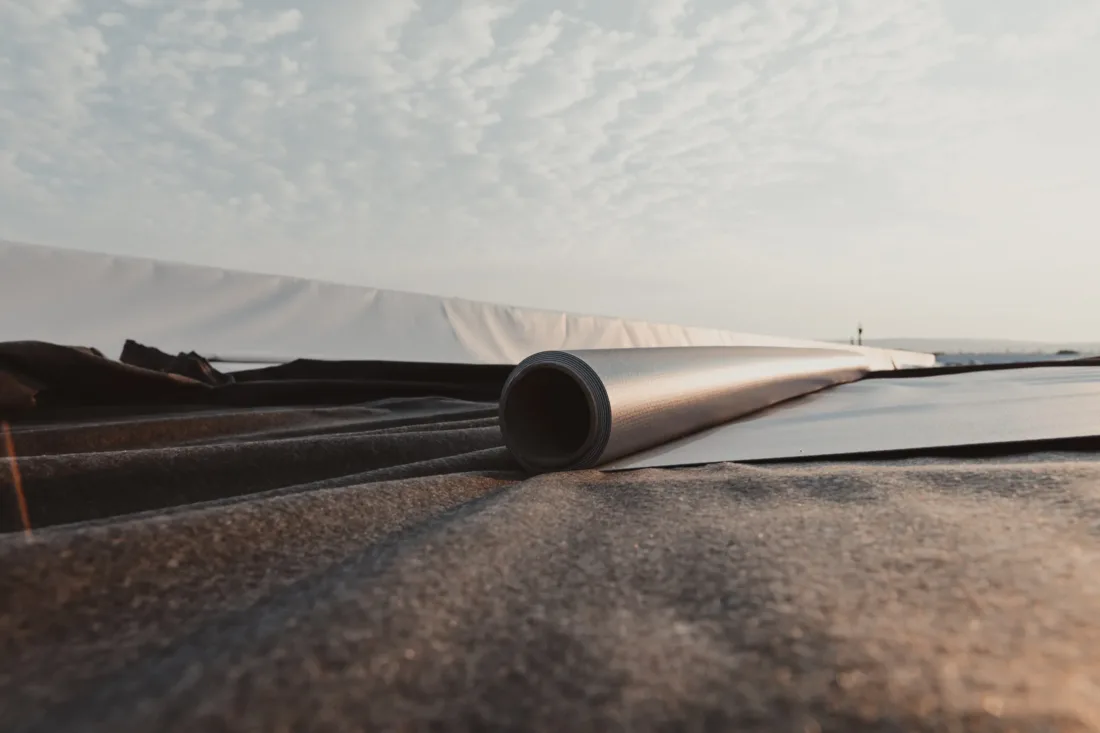
Single-ply membrane systems didn’t emerge in a vacuum. They replaced earlier commercial roofing technologies, primarily built-up tar and gravel (BUR) and modified bitumen, for specific reasons that still apply today.
- Lower installed weight. Single-ply systems are dramatically lighter than multi-ply BUR systems, which matters on older buildings with structural load constraints.
- Faster installation. A single layer of membrane installs in a fraction of the time a multi-ply hot-mopped or torch-applied system requires.
- Improved cool-roof performance. White single-ply membranes deliver substantially higher solar reflectivity than dark BUR or asphalt-based modified bitumen systems.
- Better seam reliability over time. Heat-welded thermoplastic seams (and properly installed EPDM adhesive seams) have proven more reliable than the failure-prone seams of older multi-ply systems.
- Cleaner installation environment. No hot asphalt, no torches, no kettle smoke, single-ply systems install cleaner, with less risk to building tenants and the surrounding environment.
- Manufacturer-engineered quality control. Factory-manufactured single-ply membranes have consistent thickness, properties, and quality that field-built BUR systems cannot match.
This doesn’t mean modified bitumen and BUR are obsolete, they still have applications where their multi-ply construction and inherent durability make them the right choice. We install both. And we discuss them on their own pages. But for the typical commercial flat roof in 2026 Cherry Creek, CO, a single-ply system is usually the right answer.
How to Choose the Right Single-Ply System for Your Building
The single-ply selection decision usually comes down to a small number of building-specific factors. Here’s how we approach the decision on every Cherry Creek, CO commercial project.
Is there rooftop chemical, grease, or oil exposure?
If yes, restaurant, food service, manufacturing, auto service, dry cleaner, PVC is the answer. Other single-plies will degrade under these conditions. Don’t compromise on this one.
Is cool-roof reflectivity a priority?
If yes, most Cherry Creek, CO commercial buildings benefit from cool-roof performance, white TPO or white PVC are the strongest choices. White EPDM works but typically costs more than white TPO for similar performance.
Is the building subject to extreme thermal cycling or significant structural movement?
If yes, older buildings with settlement, buildings with significant temperature differential between interior and exterior, or applications where membrane elasticity matters, EPDM has the strongest track record.
Is cost the dominant decision factor?
If yes and the application allows, TPO usually wins on installed cost, with EPDM (especially ballasted) sometimes lower on certain applications.
Is the longest possible track record valued?
If yes, EPDM is the only single-ply with 50+ years of real-world commercial performance data. PVC is close. TPO is younger.
Does the project require non-white color?
If yes, PVC offers the broadest color availability. EPDM is available in black; TPO is essentially always white.
When Single-Ply Is Not the Right Answer
Single-ply membrane roofing isn’t the right answer for every commercial building. Specific scenarios where another system is preferred:
- Spray foam (SPF) is often a better answer for re-roof projects where tear-off would be expensive, for buildings with complex roof geometry and many penetrations, and for projects where the dual insulation/waterproofing benefit and high R-value matter most.
- Modified bitumen still has strong applications on roofs with heavy foot traffic, frequent rooftop access, or where the multi-ply construction’s redundancy is valued.
- Built-up roofing (BUR) remains a valid choice on buildings where the gravel surface’s UV protection and impact resistance are specifically valued, or on certain re-roof applications over compatible existing systems.
- Roof coatings often beat tear-off and re-membrane on aging roofs that are structurally sound but have surface aging, silicone coatings particularly excel on Cherry Creek, CO flat roofs with ponding water issues.
Frequently Asked Questions: Commercial Single-Ply Membrane Roofing in Cherry Creek, CO
-
What is the most common commercial single-ply membrane in Cherry Creek, CO?
TPO is currently the most-installed new commercial single-ply membrane system in Cherry Creek, CO and nationally. EPDM remains common on re-roof projects matching existing systems and on applications where its specific advantages matter. PVC dominates the restaurant, food service, and chemical-exposure category but is less common on general commercial buildings.
-
How long does a commercial single-ply membrane roof last?
Manufacturer warranties on commercial single-ply systems typically run 15 to 30 years, depending on system, membrane thickness, and warranty type. Real-world service life often meets or exceeds the warranty period when installation is done properly. Hail and severe weather events can shorten any single-ply roof’s service life.
-
Are all single-ply membranes good for cool-roof performance?
White single-ply systems, white TPO, white PVC, and white EPDM (or coated EPDM), all deliver strong cool-roof performance and qualify for ENERGY STAR ratings on most major manufacturer products. Standard black EPDM is not a cool roof. The cool-roof decision is driven by membrane color and surface, not by chemistry alone.
-
How much does single-ply membrane roofing cost in Cherry Creek, CO?
Cost varies by system, thickness, installation method, building size, and substrate condition. EPDM is typically the lowest-cost material; TPO is moderately priced and very common on new installations; PVC is the highest cost. Installation method (mechanically-fastened vs fully-adhered vs ballasted vs induction-welded) significantly affects total project cost. We provide written estimates after inspecting the actual roof.
-
Can a single-ply membrane be installed over my existing commercial roof?
In some cases, yes, single-ply systems can be installed as recovers over certain existing substrates when the existing roof is structurally sound and code allows it. Each substrate has compatibility considerations, particularly for PVC. Our inspection will tell you whether recover is appropriate for your building or whether tear-off and re-roofing makes more sense.
-
How does hail affect single-ply membrane roofs in Cherry Creek, CO?
All three single-plies can be damaged by severe hail, and the damage profile differs by system: TPO and PVC tend to show fractures and punctures at impact sites; EPDM tends to show bruising and elastic-deformation damage. Thicker membranes (60-mil and 80/90-mil options) handle hail substantially better than the thinnest options. Impact-rated and reinforced products improve hail performance further. We strongly recommend not specifying the thinnest membrane options on Cherry Creek, CO buildings.
-
Do all single-ply systems require manufacturer-certified installers?
Most manufacturer warranty programs require installation by certified contractors to remain valid. Each major manufacturer maintains its own certification program for installer training and quality control. Baseline holds certifications across all major commercial single-ply manufacturers for TPO, EPDM, and PVC systems.
Get a Commercial Single-Ply Membrane Roofing Estimate in Cherry Creek, CO
Whether you need a new commercial single-ply roof installed, an existing roof replaced with a different single-ply system, or guidance on which of the three systems fits your specific building, Baseline Roofing and Solar is ready to help. We’re certified across every major manufacturer for TPO, EPDM, and PVC, and we’ll specify the system that fits your building rather than the one we happen to sell most often.
-
More Single-Ply Membrane Roofing Locations +
- Single-Ply Membrane Roofing in Colorado
- Single-Ply Membrane Roofing in Arvada, CO
- Single-Ply Membrane Roofing in Aurora, CO
- Single-Ply Membrane Roofing in Berthoud, CO
- Single-Ply Membrane Roofing in Boulder, CO
- Single-Ply Membrane Roofing in Brighton, CO
- Single-Ply Membrane Roofing in Broomfield, CO
- Single-Ply Membrane Roofing in Castle Pines, CO
- Single-Ply Membrane Roofing in Castle Rock, CO
- Single-Ply Membrane Roofing in Centennial, CO
- Single-Ply Membrane Roofing in Cherry Creek, CO
- Single-Ply Membrane Roofing in Cherry Hills Village, CO
- Single-Ply Membrane Roofing in Colorado Springs, CO
- Single-Ply Membrane Roofing in Commerce City, CO
- Single-Ply Membrane Roofing in Englewood, CO
- Single-Ply Membrane Roofing in Erie, CO
- Single-Ply Membrane Roofing in Firestone, CO
- Single-Ply Membrane Roofing in Fort Collins, CO
- Single-Ply Membrane Roofing in Frederick, CO
- Single-Ply Membrane Roofing in Golden, CO
- Single-Ply Membrane Roofing in Greeley, CO
- Single-Ply Membrane Roofing in Greenwood Village, CO
- Single-Ply Membrane Roofing in Gunbarrel, CO
- Single-Ply Membrane Roofing in Highlands Ranch, CO
- Single-Ply Membrane Roofing in Lafayette, CO
- Single-Ply Membrane Roofing in Lakewood, CO
- Single-Ply Membrane Roofing in Littleton, CO
- Single-Ply Membrane Roofing in Lone Tree, CO
- Single-Ply Membrane Roofing in Longmont, CO
- Single-Ply Membrane Roofing in Louisville, CO
- Single-Ply Membrane Roofing in Loveland, CO
- Single-Ply Membrane Roofing in Mead, CO
- Single-Ply Membrane Roofing in Niwot, CO
- Single-Ply Membrane Roofing in Northglenn, CO
- Single-Ply Membrane Roofing in Parker, CO
- Single-Ply Membrane Roofing in Superior, CO
- Single-Ply Membrane Roofing in Thornton, CO
- Single-Ply Membrane Roofing in Westminster, CO
- Single-Ply Membrane Roofing in Wheat Ridge, CO
- Single-Ply Membrane Roofing in Windsor, CO