Commercial Metal Roof Coatings in Colorado
Aging commercial metal roofs face a specific set of problems that flat membrane roofs don’t, rust progression, fastener back-out, seam separation, and failed factory paint systems. Commercial metal roof coatings are a restoration system specifically designed to address those failure modes. A properly specified and applied metal coating system can stop active rust, seal seam and fastener leaks, restore reflectivity, and add 15 to 20 years of service life to an aging metal roof, at a fraction of what full metal roof replacement would cost.
Baseline Roofing and Solar specifies and installs metal roof coating systems on commercial buildings across Colorado and communities throughout Colorado. We work with manufacturers’ restoration systems specifically designed for aging metal substrates, not generic flat-roof coatings repurposed for metal. The chemistry, the prep work, and the installation sequence are different on metal, and getting all three right is what separates a 20-year metal roof restoration from a 3-year cosmetic touch-up.
This page covers the specific failure modes metal coating systems address, what’s actually in a metal roof restoration system, the metal roof types we coat, when coating versus replacement makes sense, and how metal coatings perform in Colorado’s specific climate and hail exposure.
How Aging Commercial Metal Roofs Actually Fail
To understand metal roof coatings, you have to understand how metal roofs fail, because the coating system is engineered specifically to address those failure modes. Aging commercial metal roofs in Colorado typically show some combination of the following.
Rust and Surface Oxidation
The original galvanized or Galvalume coating on metal panels eventually wears through, and once the bare steel underneath is exposed, rust starts. Rust progresses outward from the failure point, and on a metal roof, untreated rust eventually punches through the panel. The earlier rust is caught and stopped, the smaller the repair scope.
Failed Factory Paint Systems
Painted metal panels, Kynar, polyester, siliconized polyester, and other factory finishes, eventually chalk, fade, and lose adhesion. When the paint goes, the panel underneath becomes vulnerable to rust and UV degradation. Recoating restores the protective layer.
Fastener Back-Out and Leaks Around Screws
Screw-down metal roof panels have hundreds or thousands of fasteners holding them to the structure. Thermal expansion and contraction over years of Colorado’s temperature swings work fasteners loose. Loose fasteners back out, gaskets fail, and water finds its way through fastener holes. A metal restoration system addresses every fastener as part of the prep work.
Seam Separation and Sealant Failure
Standing seam panels rely on properly seamed and sealed joints. Over decades, sealants in seam laps fail, panels can shift slightly, and seams open up. Coating systems with reinforced seam treatment seal these failures.
Hail Damage
Colorado’s hail seasons leave dents, dimples, and sometimes punctures on metal roofs. Cosmetic dents may or may not be covered by insurance (depending on policy exclusions), but functional damage, paint system damage, rust starting at impact sites, fastener-area damage, is generally covered and worth repairing as part of a coating restoration.
UV-Driven Color Loss and Reflectivity Decline
At Colorado’s altitude, UV ages painted metal panels faster than at lower elevations. Panels that started life as a reflective white can chalk and lose reflectivity over 15 to 20 years, taking cool-roof energy savings with them. White elastomeric metal coatings restore reflectivity and lock in cool-roof performance for the next 15+ years.
What’s Actually in a Metal Roof Coating System
Metal roof restoration is not a one-product, one-coat job. A proper metal roof coating system is a multi-component sequence engineered to address each failure mode. Skip any layer and the result is a coating that fails in years instead of decades.
1. Surface Preparation
Power-washing to remove dirt, oxidation, biological growth, chalking paint, and contaminants. Loose paint and rust are removed mechanically. Clean substrate is non-negotiable, coating over contamination is the most common cause of metal coating failure.
2. Rust Treatment
Active rust areas are treated with rust converters or primers specifically formulated to neutralize existing rust and prevent further progression underneath the coating. This is the single most important difference between a metal coating system and a flat-roof coating: metal needs rust chemistry that flat membranes don’t.
3. Fastener Treatment
Every loose fastener is re-driven or replaced with oversized fasteners. Failed gaskets are replaced. The coating sequence then seals over the head of every fastener, eliminating the most common metal roof leak path system-wide.
4. Seam Reinforcement
Seams, end-laps, and side-laps are reinforced with manufacturer-approved fabric or seam tape embedded in the coating, creating a continuous waterproof bridge across the seam. This addresses the seam separation and sealant failure that commonly drives metal roof leaks.
5. Primer (Where Required)
Most metal coating systems require a metal-specific primer for reliable long-term adhesion to galvanized, Galvalume, or aged painted substrates. Primer specification is product-specific and substrate-specific, we follow manufacturer specs precisely.
6. Top Coat (Field Coating)
The protective elastomeric top coat, typically a high-build acrylic, urethane, or silicone-acrylic hybrid, is applied at the manufacturer-specified mil thickness, often in two or more passes for proper film build and color uniformity.
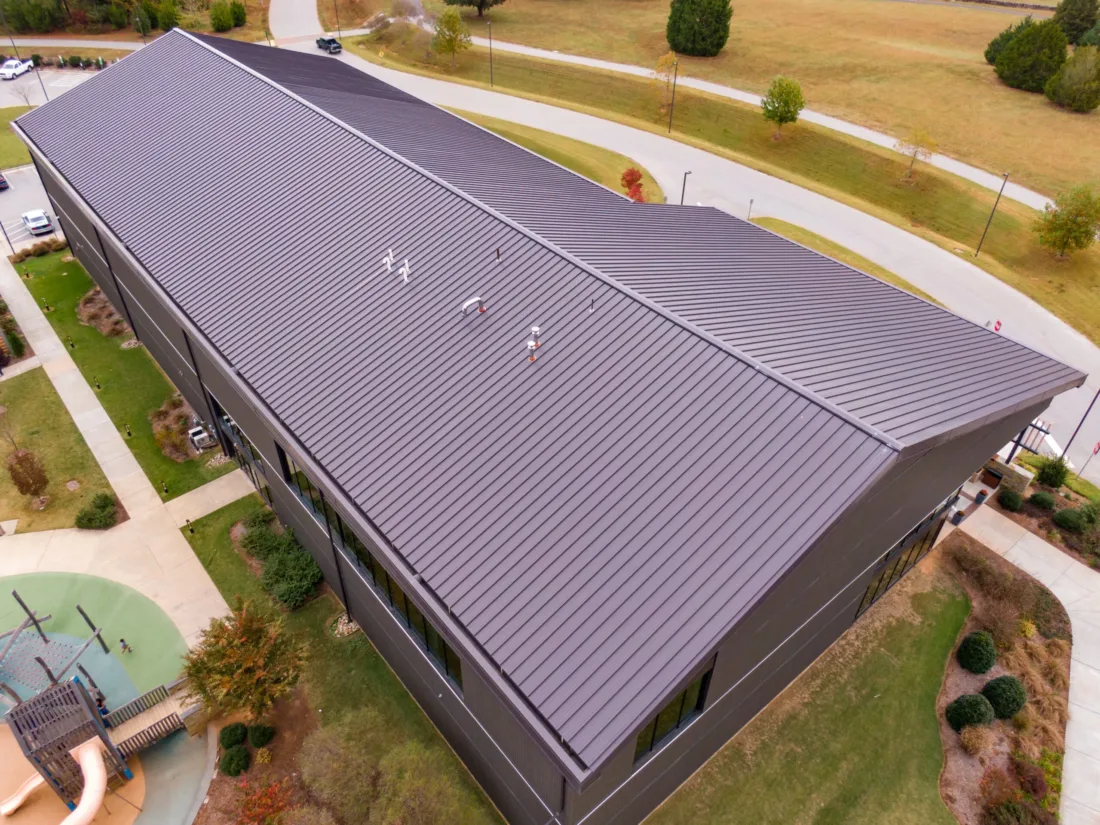
Metal Roof Types We Coat in Colorado
Commercial metal roofing comes in several panel profiles and substrate types, and each has slightly different prep requirements and coating considerations.
Standing seam metal roofs.
Vertical-rib panels with raised seams that interlock or are mechanically seamed. Common on modern commercial buildings, agricultural facilities, and architectural applications. Coating systems with reinforced seam treatment work well on standing seam profiles.
R-panel and screw-down metal roofs.
Horizontal-rib or R-panel metal panels fastened with exposed screws. Common on warehouses, industrial buildings, and pre-engineered commercial structures. The fastener-treatment step is particularly important on screw-down systems because of the high fastener count.
Corrugated metal roofs.
Wavy-profile panels common on older commercial and agricultural buildings. Often the oldest metal roofs we work on, with the most rust and the most accumulated repairs to address during prep.
5V-crimp and similar profiles.
Older commercial profiles still common on certain Colorado buildings. Coatings work well on these substrates with proper prep.
Metal roofs over different substrates.
Galvanized steel, Galvalume (aluminum-zinc-coated steel), aluminum, and weathering steel (Cor-Ten) all have specific compatibility requirements. We confirm substrate type during inspection and specify the right primer and coating chemistry.
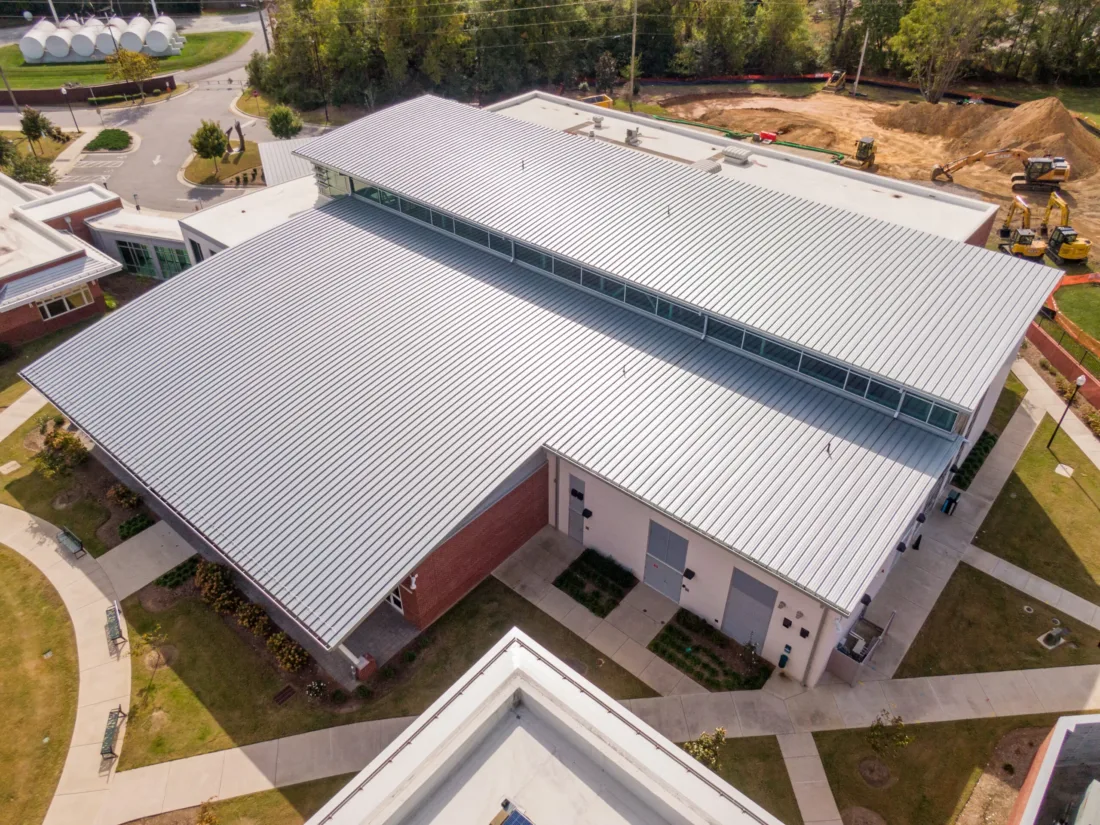
When Metal Roof Coating Makes Sense (vs. Replacement)
Metal roof replacement is one of the most expensive things you can do to a commercial building, typically several times the cost of replacing a comparable flat membrane roof. That cost gap is part of why coating restoration is so attractive on metal. But coating isn’t always the right answer.
Coating is the right call when:
- Rust is surface-level, not punched through panels
- Panel structure is sound, no major dents, no buckling, no panel deflection
- Fasteners can be re-secured or replaced rather than full panel replacement
- Seam separation is repairable with reinforcement
- Insulation underneath (where present) is dry and intact
- You want to preserve a functional roof for another 15 to 20 years
- Replacement cost is significantly higher than restoration cost
Replacement is the right call when:
- Rust has punched through panels in multiple locations
- Panels are structurally compromised, buckled, or deflecting
- Insulation is saturated and the panels need to come off to address it
- Hail or storm damage has caused widespread functional panel damage
- You’re planning major building changes that justify a fresh roof regardless
Our inspection report will tell you straight which path your roof actually needs.
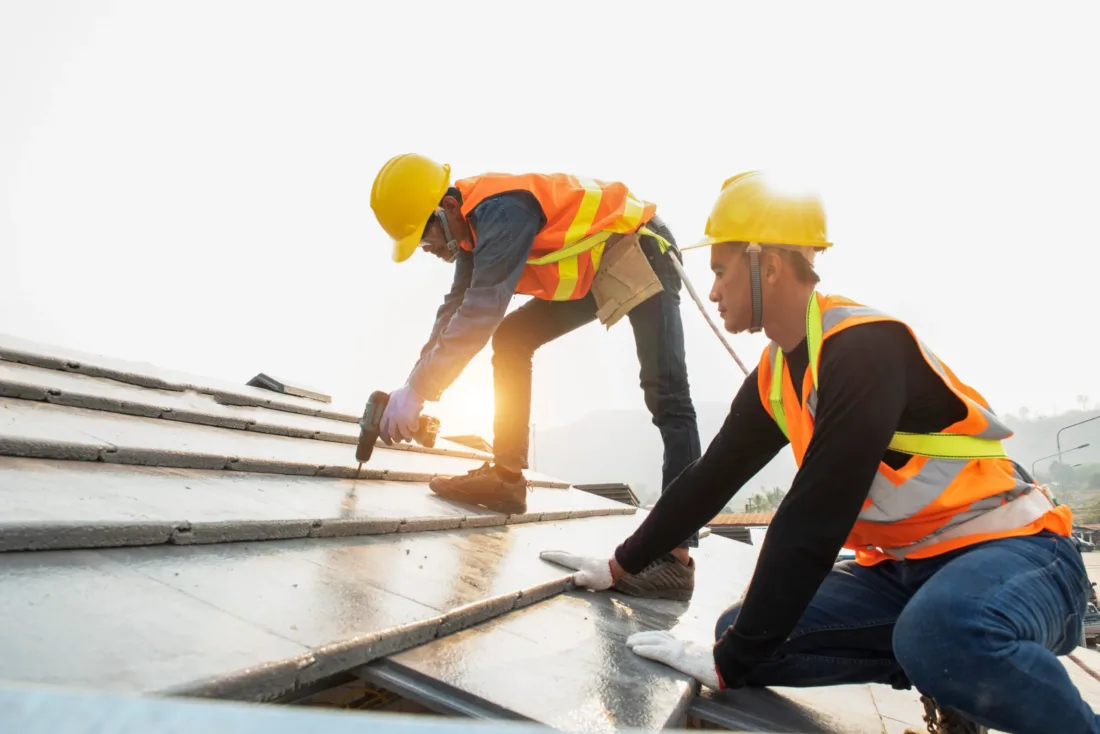
Metal Roof Coatings and Colorado’s Climate
Colorado’s climate creates specific challenges and opportunities for metal roof coating systems.
Hail exposure.
Colorado hail seasons hit metal roofs hard. Coating systems can include impact-resistant reinforcement layers that improve hail performance compared to bare aged paint. The coating itself doesn’t make a roof hail-proof, but reinforced systems take impact better than unreinforced surfaces and can often be touched up after hail rather than replaced.
Temperature swings and thermal cycling.
Metal expands and contracts dramatically with Colorado’s 50-degree temperature swings. Elastomeric coatings designed specifically for metal flex with the panel, rigid coatings or hardware-store paint don’t, and crack at seams within months. Manufacturer-specified metal restoration systems are formulated for this thermal cycling.
High-altitude UV.
Colorado’s UV exposure ages painted metal panels faster than at sea level. White elastomeric coatings with strong UV stability deliver dramatically better long-term reflectivity than the original factory paint they replace.
Energy savings on metal roofs.
Metal roofs heat up dramatically more than reflective membrane roofs in Colorado summers, bare or aged metal roof surface temperatures can exceed 160°F on a hot summer day. White cool-roof coatings on metal can reduce that surface temperature by 50 to 80°F, cutting cooling loads on the building and extending HVAC equipment life.
Frequently Asked Questions: Commercial Metal Roof Coatings in Colorado
-
How long does a metal roof coating last?
Manufacturer warranties on properly applied metal coating systems typically run 10 to 20 years depending on the product, substrate, and application specifications. Real-world service life on well-applied systems with proper prep often runs 15 to 20+ years before recoating is needed.
-
How much does metal roof coating cost compared to metal roof replacement?
Metal roof restoration coating typically costs 50% to 75% less per square foot than full metal roof replacement, depending on the substrate condition, prep work required, and system specifications. Given how expensive metal roof replacement is, this is often the largest cost-savings comparison in commercial roof restoration.
-
Will a coating stop rust on my metal commercial roof?
Yes, when proper rust treatment is part of the system. Rust converters or rust-inhibiting primers neutralize active rust and prevent further progression. The top coat then seals out moisture and oxygen, addressing the conditions that cause new rust to start. Skipping the rust-treatment step is the most common cause of “coated” metal roofs that continue rusting underneath the coating.
-
Can a coating fix leaking fasteners on my metal roof?
Yes. The fastener-treatment step in a proper metal coating system addresses every fastener, re-driving loose ones, replacing failed ones, and sealing over each fastener head as part of the coating application. This is one of the most reliable benefits of metal roof restoration coatings.
-
Will the coating qualify my metal roof for cool-roof rebates or ENERGY STAR?
Most major manufacturers’ white metal coating systems carry ENERGY STAR ratings and meet cool-roof code requirements. Specific rebates vary by program and jurisdiction, talk to your tax advisor or local utility about what’s currently available.
-
Can you coat a metal roof that has hail damage?
Yes, and this is often the right approach when hail damage is functional but not structurally severe. We document the damage for any insurance claim, repair functional issues (rust starting at impact sites, paint system damage, panel-level repairs where needed), and apply the restoration system as part of the work. On metal roofs with widespread severe hail damage, replacement may be the right call instead, our inspection will tell you which.
-
How disruptive is metal roof coating application to my building operations?
Significantly less disruptive than tear-off and replacement. There’s no demolition and the roof is never opened to weather. Crews work primarily on the exterior, with minimal noise penetration into the building below. Most commercial properties remain fully operational throughout the application.
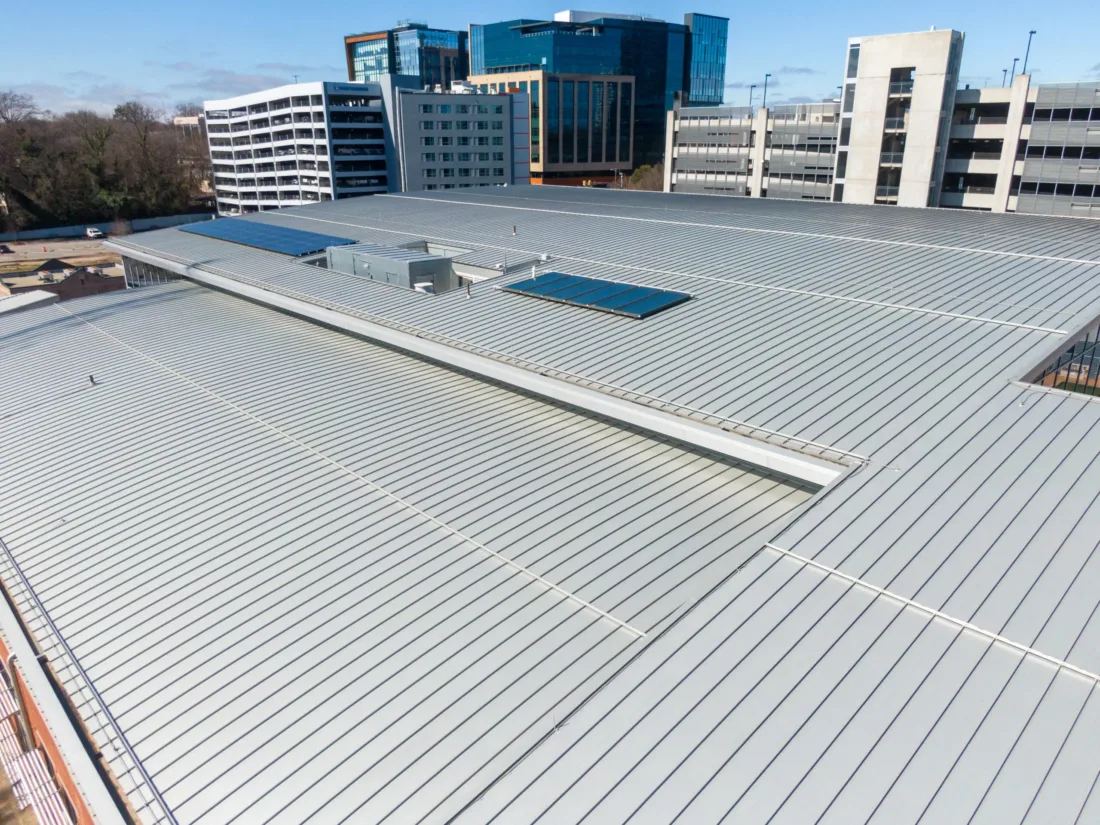
Get a Metal Roof Coating Estimate in Colorado
If your commercial metal roof shows rust, fastener leaks, seam separation, faded paint, or aging factory finish, a metal roof coating system may be the right answer, preserving the existing roof for another 15 to 20 years at a fraction of replacement cost. Baseline Roofing and Solar inspects, specifies, and installs commercial metal roof restoration systems across Colorado and surrounding Colorado communities, and we’ll tell you straight whether coating is the right call for your specific roof or whether replacement actually makes more sense.
-
More Metal Roof Coatings Locations +
- Metal Roof Coatings in Colorado
- Metal Roof Coatings in Arvada, CO
- Metal Roof Coatings in Aurora, CO
- Metal Roof Coatings in Berthoud, CO
- Metal Roof Coatings in Boulder, CO
- Metal Roof Coatings in Brighton, CO
- Metal Roof Coatings in Broomfield, CO
- Metal Roof Coatings in Castle Pines, CO
- Metal Roof Coatings in Castle Rock, CO
- Metal Roof Coatings in Centennial, CO
- Metal Roof Coatings in Cherry Creek, CO
- Metal Roof Coatings in Cherry Hills Village, CO
- Metal Roof Coatings in Colorado Springs, CO
- Metal Roof Coatings in Commerce City, CO
- Metal Roof Coatings in Englewood, CO
- Metal Roof Coatings in Erie, CO
- Metal Roof Coatings in Firestone, CO
- Metal Roof Coatings in Fort Collins, CO
- Metal Roof Coatings in Frederick, CO
- Metal Roof Coatings in Golden, CO
- Metal Roof Coatings in Greeley, CO
- Metal Roof Coatings in Greenwood Village, CO
- Metal Roof Coatings in Gunbarrel, CO
- Metal Roof Coatings in Highlands Ranch, CO
- Metal Roof Coatings in Lafayette, CO
- Metal Roof Coatings in Lakewood, CO
- Metal Roof Coatings in Littleton, CO
- Metal Roof Coatings in Lone Tree, CO
- Metal Roof Coatings in Longmont, CO
- Metal Roof Coatings in Louisville, CO
- Metal Roof Coatings in Loveland, CO
- Metal Roof Coatings in Mead, CO
- Metal Roof Coatings in Niwot, CO
- Metal Roof Coatings in Northglenn, CO
- Metal Roof Coatings in Parker, CO
- Metal Roof Coatings in Superior, CO
- Metal Roof Coatings in Thornton, CO
- Metal Roof Coatings in Westminster, CO
- Metal Roof Coatings in Wheat Ridge, CO
- Metal Roof Coatings in Windsor, CO